
Uterine fibroids are common benign growths that can cause heavy menstrual bleeding, pelvic pressure, abdominal discomfort and, in some women, fertility concerns. During my review of fibroid treatment options in Mumbai, I found that the choice of treatment depends on factors such as fibroid size, location, number, symptoms, age and future pregnancy plans. For women exploring Fibroid removal in Mumbai, Dr. Maitreyee Parulekar provides minimally invasive and fertility-conscious surgical options, including laparoscopic, hysteroscopic and robotic-assisted myomectomy. She practises at Kirit Nursing Home and other hospitals across Mumbai.
Fibroid Removal in Mumbai: Understanding Myomectomy
Fibroids, also called uterine myomas, are non-cancerous growths that develop in or around the uterus. They can range from very small nodules to larger masses capable of changing the shape of the uterus. Some women have no symptoms, while others experience significant menstrual, pelvic or reproductive problems.
A myomectomy is a surgical procedure that removes fibroids while preserving the uterus. This differentiates it from hysterectomy, in which the uterus is removed. For women who wish to retain their reproductive potential, myomectomy may be an important treatment option when fibroids are contributing to symptoms or fertility difficulties.
However, not every fibroid requires surgery. The decision should follow a proper gynaecological evaluation and imaging assessment.
What Symptoms Can Fibroids Cause?
The symptoms of fibroids vary depending on their size, number and location. Common complaints include:
- Heavy or prolonged menstrual bleeding
- Pelvic pain or pressure
- Abdominal bloating or fullness
- Frequent urination
- Difficulty emptying the bladder
- Pain during intercourse
- Difficulty conceiving
- Problems maintaining a pregnancy in selected cases
Heavy menstrual bleeding can also contribute to iron-deficiency anaemia, potentially causing tiredness and weakness. Women experiencing unusually heavy periods or persistent pelvic symptoms should discuss them with a gynaecologist rather than assuming they are a normal part of menstruation.
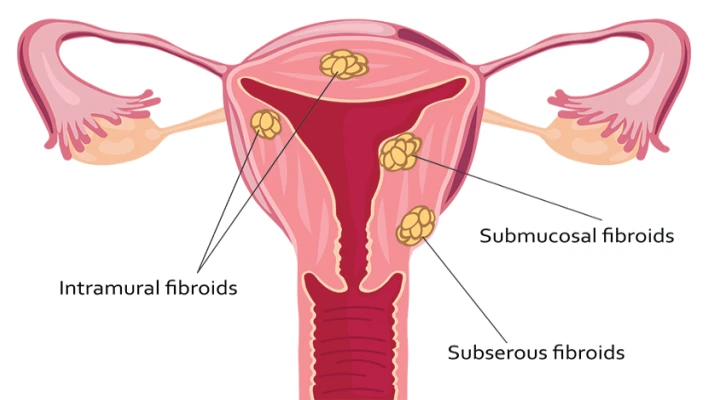
Types of Uterine Fibroids
Fibroids are classified according to where they develop in the uterus.
Intramural fibroids grow within the muscular wall of the uterus and are among the commonly encountered types.
Submucosal fibroids develop beneath the inner uterine lining. They can be particularly associated with heavy menstrual bleeding and may interfere with implantation in some patients.
Subserosal fibroids develop on the outer surface of the uterus and can sometimes press against nearby organs, contributing to pelvic pressure or urinary symptoms.
Pedunculated fibroids grow on a stalk and can develop either inside or outside the uterus.
The location of a fibroid is important because it can influence both symptoms and the type of procedure considered.
When Is Myomectomy Considered?
Myomectomy may be considered when fibroids cause significant symptoms that do not respond adequately to conservative treatment. It can also be discussed when fibroids are suspected of affecting fertility or pregnancy outcomes.
For women planning future pregnancies, preserving the uterus may be an important consideration. Dr. Maitreyee Parulekar’s practice includes fertility-preserving surgery as well as advanced treatment for difficult fibroids.
The decision for surgery is individualised. Factors such as the patient’s age, symptoms, reproductive plans, fibroid characteristics and previous treatments should all be assessed before selecting a surgical approach.
Different Myomectomy Techniques
There is no single surgical technique suitable for every fibroid.
Hysteroscopic Myomectomy
Hysteroscopic myomectomy is generally considered for suitable fibroids projecting into the uterine cavity. The surgeon accesses the uterus through the vagina and cervix, avoiding external abdominal incisions.
Laparoscopic Myomectomy
Laparoscopic myomectomy uses small abdominal incisions and specialised instruments to remove selected fibroids. Compared with open surgery, minimally invasive approaches may offer smaller scars, less postoperative discomfort and a shorter recovery for appropriately selected patients.
Robotic-Assisted Myomectomy
Robotic-assisted surgery can provide enhanced visualisation and instrument control during technically demanding procedures. It may be considered for selected complex fibroids depending on their number, size and location. Dr. Maitreyee Parulekar has specialised fellowship training in robotic surgery and offers robotic-assisted surgery for difficult fibroids.
Abdominal Myomectomy
Open abdominal surgery may be considered for very large or multiple fibroids where minimally invasive surgery may not be appropriate. The choice depends on the individual surgical situation.
Why Minimally Invasive Surgery May Be Considered
Minimally invasive surgery can offer several potential advantages in appropriately selected patients. The fibroid treatment information on Dr. Maitreyee Parulekar’s website notes that 3D laparoscopic and robotic-assisted techniques can provide precision while using smaller incisions. These approaches may be associated with reduced postoperative pain, less blood loss, shorter hospital stays and a quicker return to normal activities compared with traditional open surgery.
However, minimally invasive surgery is not automatically the best option for every patient. Large, numerous or unusually positioned fibroids can make surgery more complex. A specialist assessment is therefore necessary before deciding on the approach.
Dr. Maitreyee Parulekar: Qualifications and Expertise
Dr. Maitreyee Parulekar is a gynaecological surgeon with specialised expertise in gynaecological oncology and minimally invasive surgery. Her qualifications include MBBS, MS in Obstetrics and Gynaecology from KEM Hospital, MRCOG (UK) and FMAS from MUHS. She completed her master’s training at Seth GS Medical College and KEM Hospital, Mumbai, where she secured a University Gold Medal.
Her advanced training includes a fellowship in Gynaecological Oncosurgery and Robotic Surgery at Seoul National University Hospital, South Korea, and a visiting scholar programme in Minimally Invasive Gynaecology at Mount Sinai Hospital and Women’s College Hospital in Toronto, Canada. She has also completed fellowship training in minimally invasive gynaecology and gynaecological oncology at Galaxy Care Laparoscopy Institute, Pune.
Her clinical expertise extends to laparoscopic and robotic procedures for both benign and malignant gynaecological conditions, including difficult fibroids, endometriosis, hysterectomy and fertility-preserving surgery. She is also involved in research and has contributed to national and international peer-reviewed publications.
For women researching a Top Gynae Oncologist In Mumbai, her specialised training in minimally invasive surgery and gynaecological oncology provides relevant clinical context when evaluating surgical care.
Clinic and Hospital Environment
Dr. Maitreyee Parulekar practises at multiple hospitals across Mumbai, including Kirit Nursing Home, Gleneagles Hospital in Parel, Nalini Speciality Hospital, AllCure SuperSpeciality Hospital, Criticare Hospital in Andheri and Surya Hospitals in Santacruz.
Kirit Nursing Home is among her listed practising locations for consultations and surgical care. The treatment environment is supported by her focus on minimally invasive, laparoscopic and robotic surgical techniques. Patients can discuss their symptoms, imaging findings, fertility plans and treatment preferences during consultation before a surgical approach is selected.
For women looking for a Gynecologist In Vile Parle, Mumbai, it is useful to consider not only location but also the doctor’s relevant surgical training, hospital affiliations, experience and the availability of treatment options suited to the individual condition.
Recovery After Myomectomy
Recovery varies according to the surgical approach. The clinic’s treatment information states that minimally invasive procedures may allow patients to return to daily activities within approximately one to two weeks, while open surgery generally requires a longer recovery period.
Patients should follow their surgeon’s instructions regarding physical activity, medication, wound care and follow-up. Recovery timelines can differ depending on the complexity of the procedure and individual healing.
Does Myomectomy Improve Fertility?
Fibroids can sometimes affect fertility, particularly when they distort the uterine cavity. Submucosal fibroids may interfere with implantation, and removal can improve the uterine environment in appropriately selected patients.
However, fertility depends on multiple factors, including age, ovarian reserve, sperm health, fallopian tube function and other uterine conditions. Therefore, removal of fibroids does not guarantee pregnancy, and fertility planning should be discussed before surgery.
Can Fibroids Return After Surgery?
Myomectomy removes existing fibroids but does not necessarily prevent new fibroids from developing. The possibility of recurrence varies between individuals and can be influenced by age, hormonal factors and genetic predisposition. Regular gynaecological follow-up can help monitor future changes.
Frequently Asked Questions
1. Is myomectomy better than hysterectomy for fibroids?
They are different procedures. Myomectomy removes fibroids while preserving the uterus, whereas hysterectomy removes the uterus. For women who wish to preserve their uterus or future fertility, myomectomy may be considered when clinically appropriate.
2. Which type of myomectomy is suitable for me?
The choice depends on the fibroid’s size, number and location. Hysteroscopic, laparoscopic, robotic-assisted and open abdominal approaches may each have a role in selected patients.
3. How quickly can I return to normal activities after myomectomy?
Recovery depends on the surgical approach. Minimally invasive procedures may allow a return to daily activities in approximately one to two weeks, while open surgery usually requires longer recovery.
4. Can I become pregnant after fibroid removal?
Women may become pregnant after myomectomy, and removing selected fibroids can improve fertility outcomes in some cases. However, individual fertility depends on several factors and pregnancy planning should be discussed with the treating gynaecologist.
Consult Dr. Maitreyee Parulekar
If fibroids are causing heavy periods, pelvic pressure, pain or fertility concerns, a specialist evaluation can help determine whether observation, medication or surgery is appropriate. If you are considering Fibroid removal in Mumbai, Dr. Maitreyee Parulekar can assess your fibroid characteristics and discuss minimally invasive, robotic-assisted or other suitable treatment options.
📞 +91 72087 27500 | +91 97023 58222
📧 info@drmaitreyeegynec.in
Get Directions to the Clinic – Kirit Nursing Home, Vile Parle