
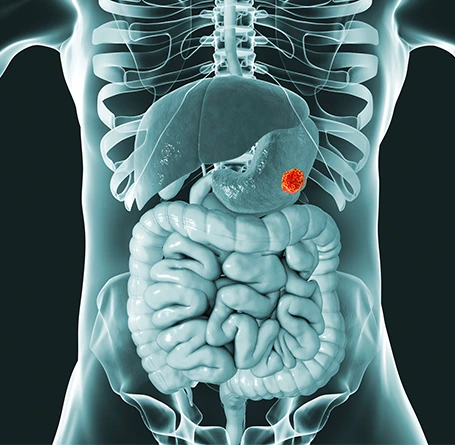
Gastric cancer, also called stomach cancer, develops in the lining of the stomach and may initially cause symptoms that resemble common digestive problems. Persistent indigestion, reduced appetite, early fullness, unexplained weight loss, vomiting or gastrointestinal bleeding should be medically evaluated. Gastric cancer treatments in Mumbai depend on the cancer’s location, stage, spread, tumour characteristics and the patient’s overall health. Dr. Ganesh Nagarajan is a surgical oncologist specialising in gastrointestinal, hepatobiliary and pancreatic cancers. His practice includes complex gastrointestinal cancer surgery, while Cancer Surgery Clinic provides a multidisciplinary approach involving surgery, chemotherapy and radiation when appropriate.
Gastric Cancer Treatments in Mumbai: Diagnosis and Treatment Options
Gastric cancer treatments in Mumbai begin with accurate diagnosis and staging. Understanding how deeply the tumour has invaded the stomach wall and whether lymph nodes or distant organs are involved is essential for developing an appropriate treatment strategy.
According to Cancer Surgery Clinic, upper-GI endoscopy is used to visualise the stomach and obtain a biopsy. Endoscopic ultrasound can be useful for selected early tumours, while CT or PET-CT may help assess the extent of disease. Staging laparoscopy can also be considered for bulky or locally advanced cancers before chemotherapy.
The treatment plan is generally individualised. Depending on the stage, patients may require surgery, chemotherapy, radiation therapy or a combination of these approaches.
Common Symptoms of Gastric Cancer
Early stomach cancer can sometimes produce vague symptoms, which means patients may not immediately associate them with cancer. Symptoms that warrant medical assessment include:
- Persistent indigestion or stomach discomfort
- Reduced appetite
- Feeling full after eating a small amount
- Unexplained weight loss
- Persistent vomiting
- Difficulty swallowing
- Black stools
- Vomiting blood
- An abdominal lump in some cases
The presence of these symptoms does not necessarily mean that a person has gastric cancer. However, persistent or progressive symptoms should not be ignored.
Risk Factors for Gastric Cancer
Several factors may increase the risk of developing stomach cancer. The Cancer Surgery Clinic reference identifies Helicobacter pylori infection, high consumption of salt or smoked foods, smoking, chronic atrophic gastritis, gastric adenomatous polyps and certain inherited conditions among the risk factors.
Risk varies between individuals, and having a risk factor does not mean that a person will necessarily develop gastric cancer.
Surgery for Gastric Cancer
For potentially curable gastric cancer, surgery is an important component of treatment. The type of operation depends primarily on the tumour’s location, size and extent.
A subtotal gastrectomy may be performed when the tumour is located in the lower or distal part of the stomach. This involves removing the affected portion while retaining part of the stomach. The remaining stomach is then connected to the small intestine to restore gastrointestinal continuity.
A total gastrectomy may be necessary when the tumour involves the upper stomach or a large portion of the stomach. The entire stomach is removed, and the oesophagus is connected to the small intestine to allow food to pass through the digestive tract.
Surgery generally also involves lymph-node removal. A D2 lymphadenectomy is a comprehensive lymph-node clearance performed around the stomach and relevant blood vessels and is an important part of oncological gastric surgery.
Chemotherapy and Radiation Therapy
Gastric cancer treatment is often multimodal, meaning more than one treatment may be used.
Chemotherapy may be administered before surgery to reduce tumour burden or after surgery to reduce the risk of recurrence. The specific drugs and treatment schedule depend on the cancer’s stage and other patient-specific factors.
Radiation therapy has a role in selected postoperative situations, including certain cases involving positive margins or extensive lymph-node involvement. The decision is made based on the pathology report and overall treatment plan.
Consequently, gastric cancer treatments in Mumbai should not be viewed as a single procedure. A multidisciplinary team may determine the appropriate sequence of surgery, chemotherapy and radiation based on each patient’s disease.
Dr. Ganesh Nagarajan: Qualifications and Clinical Experience
Dr. Ganesh Nagarajan is a surgical oncologist specialising in gastrointestinal and hepatobiliary-pancreatic oncology. His qualifications include MBBS from Bombay University, completed in 2000, and MS in General Surgery from Bombay University in 2004. He subsequently underwent a four-year residency training programme in Surgical Oncology at Tata Memorial Hospital, Mumbai, from 2004 to 2008.
He also completed a fellowship in Hepatobiliary Pancreatic Surgery and Liver Transplantation at Hospital Beaujon, Paris, during 2008–09. His professional profile identifies him as Vice Chairman of Hepatobiliary Pancreatic and Gastrointestinal Oncology at Nanavati Max Institute of Cancer Care.
His reported areas of expertise include gastric, liver, pancreatic, colorectal and oesophageal cancers, as well as neuroendocrine tumours and abdominal sarcomas. He also performs advanced gastrointestinal and HPB procedures, including robotic and laparoscopic oncological surgery and selected complex vascular procedures.
Expertise in Complex Gastrointestinal Cancer Surgery
Dr. Ganesh Nagarajan’s professional profile reports more than 2,000 complex GI cancer surgeries and consultations with more than 15,000 patients with gastrointestinal and hepatopancreatobiliary cancers. He previously served as a Senior Consultant at PD Hinduja National Hospital for nearly a decade.
For patients considering a Top Surgical Oncologist in Mumbai, qualifications and experience in the specific type of cancer are important factors to evaluate. Gastric cancer surgery can involve complex anatomy, lymph-node dissection and reconstruction of the digestive tract, making specialist surgical oncology expertise relevant.
Clinic Environment at Cancer Surgery Clinic
Cancer Surgery Clinic describes its approach as comprehensive care for hepatobiliary, pancreatic and gastrointestinal cancers. Patients are personally evaluated by Dr. Ganesh Nagarajan and provided with an individualised treatment plan. The clinic highlights the use of surgery alongside medical oncology and radiation therapy when required, with attention to the sequencing of different treatment modalities.
The clinic also describes itself as a tertiary referral centre for complex cancer surgery, with robotic and laparoscopic cancer surgery available in suitable cases and an experienced surgical team.
The Cancer Surgery Clinic’s Mumbai consultation location is at 2nd Floor, Kanaiya Shopping Centre, 202, Linking Road, Bandra West, Mumbai – 400050. Consultations are also associated with Nanavati Max Institute of Cancer Care in Vile Parle West.
Recovery After Gastric Cancer Surgery
Recovery following gastrectomy varies depending on the type of operation, cancer stage, overall health and whether chemotherapy or other treatment is required.
After part or all of the stomach is removed, eating patterns generally need to change. Patients may need to eat smaller, more frequent meals rather than consuming large portions at once. Nutritional monitoring is also important, and some patients may require vitamin supplementation.
Follow-up after treatment is essential because recurrence monitoring and nutritional assessment form an important part of long-term care.
Prevention and Healthy Lifestyle Measures
Not every case of gastric cancer can be prevented, but certain lifestyle and infection-related measures may help reduce risk. Cancer Surgery Clinic recommends treating H. pylori infection appropriately, maintaining a healthy weight, exercising regularly, limiting alcohol and stopping smoking. It also recommends avoiding potentially contaminated outside food and water and reducing certain dietary risk factors.
People with persistent digestive symptoms or significant risk factors should discuss appropriate evaluation with a qualified doctor.
Choosing Gastric Cancer Care
When evaluating gastric cancer treatments in Mumbai, patients and families may consider the surgical oncologist’s qualifications, experience with gastric cancer, availability of multidisciplinary treatment and access to appropriate diagnostic and surgical facilities.
Treatment decisions should be based on pathology and staging rather than on a single treatment approach. In some patients, surgery may be the primary curative treatment; others may require chemotherapy before surgery or additional postoperative treatment.
A second opinion can also be useful when the diagnosis is complex or when major surgery has been recommended.
Consultation and CTA for Dr. Ganesh Nagarajan
If you or a family member has been diagnosed with stomach cancer, timely consultation with a surgical oncologist can help clarify the stage, treatment options and potential role of surgery.
📞 +91 73046 63828 / +91 7700058024
📧 hello@cancersurgeryclinic.com
Get Directions to the Clinic- Cancer Surgery Clinic
Contact Cancer Surgery Clinic to schedule a consultation with Dr. Ganesh Nagarajan and discuss gastric cancer diagnosis and treatment options. Carry your biopsy report, endoscopy findings, CT/PET-CT scans, blood reports and previous treatment records to the appointment.
FAQs
1. What are the main treatments for gastric cancer?
Treatment may include surgery, chemotherapy and, in selected situations, radiation therapy. The appropriate combination depends on the cancer’s stage, location, spread and the patient’s overall health.
2. Is surgery always required for stomach cancer?
Not every patient has the same treatment pathway. For potentially curable gastric cancer, surgery is an important treatment, but some patients may require chemotherapy or other treatment first, depending on the stage and characteristics of the disease.
3. Can a person live normally after total gastrectomy?
Many patients can adapt to life without a stomach. However, eating patterns need to change, with smaller and more frequent meals generally recommended. Nutritional monitoring and appropriate supplementation may also be required.
4. What tests are used to diagnose gastric cancer?
Upper-GI endoscopy with biopsy is a key diagnostic test. CT or PET-CT may be used for staging, while endoscopic ultrasound and staging laparoscopy may be recommended in selected cases.