
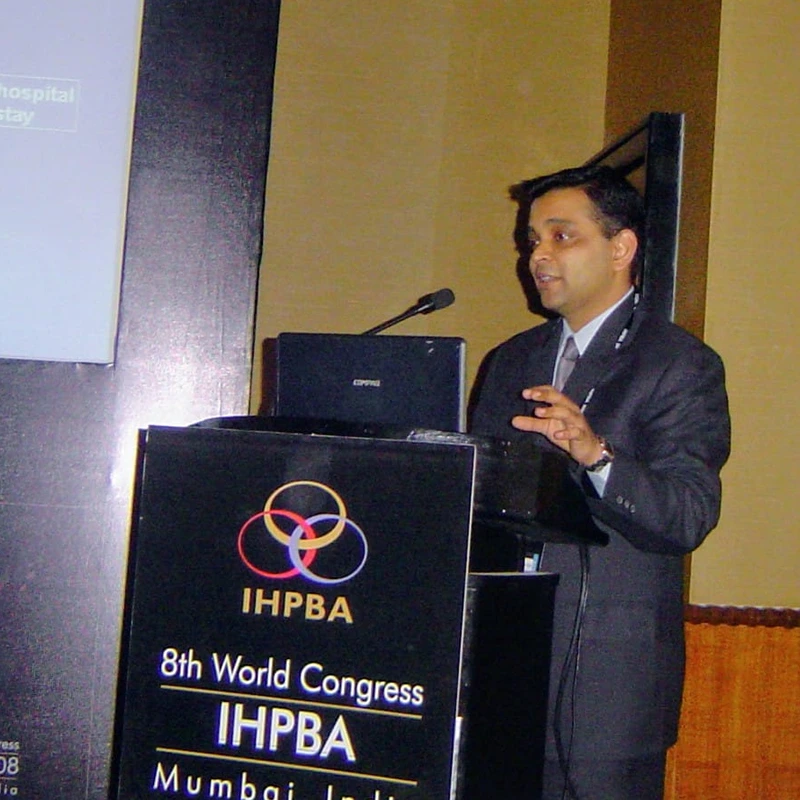
While researching complex gastrointestinal cancers in Mumbai, I found that gallbladder cancer presents a particular challenge because its early symptoms can resemble common gallstone or digestive problems. Gall Bladder Cancer Treatment depends heavily on the stage at diagnosis, whether the tumour can be completely removed, and the patient’s overall health. At Cancer Surgery Clinic, Dr. Ganesh Nagarajan specialises in complex gastrointestinal and hepatobiliary cancers and evaluates patients to develop a treatment plan based on the extent of disease.
Understanding Gallbladder Cancer
The gallbladder is a small organ located beneath the liver that stores and concentrates bile. Gallbladder cancer develops when abnormal cells in the gallbladder grow uncontrollably. It can sometimes be detected incidentally after gallbladder removal performed for gallstones, while other patients are diagnosed only after symptoms such as abdominal pain or jaundice develop.
According to the Cancer Surgery Clinic, gallbladder cancer is seen more commonly in women and is associated with factors such as gallstones, gallbladder polyps, an abnormal pancreaticobiliary junction and certain carcinogen exposures. Long-standing inflammation related to gallstones can also be associated with increased risk.
Early diagnosis is particularly important because cancers confined to the gallbladder may be treated with curative-intent surgery. Unfortunately, many cases are detected at a later stage, when treatment becomes more complex.
Symptoms That Should Not Be Ignored
Gallbladder cancer may not cause specific symptoms in its early stages. When symptoms occur, they can include:
- Pain in the upper-right part of the abdomen
- Abdominal bloating or discomfort
- Nausea
- Unexplained weight loss
- Yellowing of the skin or eyes, known as jaundice
- A lump or fullness in the upper abdomen
These symptoms can also occur with gallstones and other gastrointestinal conditions. Therefore, experiencing one of them does not mean that a person has cancer. However, persistent, worsening or unexplained symptoms should be medically evaluated.
How Is Gallbladder Cancer Diagnosed?
Accurate staging is an important part of Gall Bladder Cancer Treatment. The diagnostic process may include a physical examination, blood investigations and imaging.
Blood tests can include liver function tests, complete blood count, coagulation testing, renal function assessment and tumour markers such as CA 19-9 and CEA. Imaging may include abdominal ultrasound, a triple-phase CT scan, MRCP and PET-CT, depending on the clinical situation.
Biopsy requirements vary according to the situation. The Cancer Surgery Clinic notes that ultrasound-guided biopsy may be considered when chemotherapy or radiation is planned for gallbladder cancer, whereas a biopsy may not always be necessary before surgery when the disease appears resectable. Patients with obstructive jaundice may require ERCP or PTBD to relieve bile duct obstruction and make subsequent treatment safer.
Gall Bladder Cancer Treatment: When Is Surgery Needed?
For resectable disease, surgery is a major component of Gall Bladder Cancer Treatment. The exact operation depends on how deeply the cancer has invaded the gallbladder and surrounding structures.
For cancer confined to the gallbladder but requiring an oncological resection, radical cholecystectomy may involve removal of the gallbladder along with a wedge of adjacent liver tissue, particularly segments IVb and V, and portal lymphadenectomy. In selected cases, bile duct resection may also be required. Some advanced tumours may require a major hepatectomy.
An important situation is incidental gallbladder cancer. Some patients discover cancer only after undergoing laparoscopic gallbladder removal for presumed gallstones. Depending on the stage, revision radical cholecystectomy with liver wedge resection and portal lymphadenectomy may subsequently be recommended.
What Does Radical Gallbladder Surgery Involve?
Radical cholecystectomy is more extensive than routine gallbladder removal. It aims to remove the cancer with an appropriate margin of surrounding liver tissue.
Portal lymphadenectomy involves removal of lymph nodes draining the area so they can be evaluated for cancer involvement. In incidental cancers, revision of the cystic duct stump may also be performed, with further bile duct surgery considered when indicated.
The objective is complete removal of visible and microscopic disease wherever a curative operation is technically possible.
Role of Chemotherapy and Radiation
Not every patient can undergo immediate surgery. Treatment may need to be sequenced according to the tumour’s location, stage, spread and the patient’s general condition.
Chemotherapy may be considered for potentially unresectable gallbladder cancer or disease that has spread to distant sites. It may also be recommended after surgery in selected patients to reduce the risk of recurrence. Radiation therapy can have a role when surgical margins are positive or in selected situations before surgery to help downstage disease.
This multimodality approach is why patients may benefit from assessment at a centre experienced in surgical oncology, medical oncology, radiation oncology and hepatobiliary procedures.
Gallbladder and Bile Duct Cancers: Why Expertise Matters
Biliary cancers can involve anatomically complex structures around the liver and bile ducts. Hilar cholangiocarcinoma, for example, develops around the confluence of the right and left hepatic ducts. Depending on its extent, surgery can require major liver resection, bile duct removal and reconstruction.
For selected hilar cholangiocarcinomas, major hepatectomy combined with extrahepatic bile duct resection may be performed. Hepaticojejunostomy, in which the bile duct system is connected to the small intestine, may be required for reconstruction. Portal vein reconstruction can also become necessary when the vessel is involved.
These procedures demonstrate why treatment planning for biliary cancers requires specialised hepatobiliary surgical expertise.
Dr. Ganesh Nagarajan: Qualifications and Clinical Experience
Dr. Ganesh Nagarajan is a senior surgical oncologist specialising in gastrointestinal, hepatobiliary and pancreatic oncology. His qualifications include an MBBS from Bombay University, completed in 2000, followed by an MS in General Surgery in 2004. He subsequently completed a four-year residency training programme in Surgical Oncology at Tata Memorial Hospital, Mumbai, from 2004 to 2008.
He further trained in France through a fellowship in Hepatobiliary Pancreatic Surgery and Liver Transplantation at Hospital Beaujon, Paris, during 2008–09. His professional experience includes senior consultant work at PD Hinduja National Hospital and other major institutions. He is currently associated with Nanavati Max Institute of Cancer Care as Vice Chairman/Director in Hepatobiliary Pancreatic and Gastrointestinal Oncology.
His expertise includes complex GI and HPB cancer surgery, robotic and laparoscopic oncological procedures, vascular resections and reconstructions, HIPEC surgery, and surgery for bile duct strictures and injuries. The clinic reports more than 2,000 complex GI cancer surgeries performed and consultations involving more than 15,000 patients with GI and HPB cancers.
Cancer Surgery Clinic in Mumbai
The Cancer Surgery Clinic in Mumbai focuses on hepatobiliary, pancreatic and gastrointestinal cancers. The clinic describes its approach as comprehensive, with patients being evaluated individually and treatment plans developed according to the cancer type, stage and overall clinical condition. Surgical, chemotherapy and radiation-based approaches may be combined when clinically appropriate.
For complex gallbladder and biliary malignancies, this type of specialist environment allows the patient’s operability, nutritional status, imaging and potential treatment sequence to be considered together rather than treating surgery as an isolated procedure.
What Affects Treatment Outcomes?
Several factors influence outcomes, including the stage of cancer, whether lymph nodes or nearby organs are involved, the presence or absence of distant metastases, the ability to achieve complete tumour removal, and the patient’s general health.
Nutritional support is also important because patients with biliary cancers can be nutritionally depleted. Treatment planning therefore needs to address not only tumour control but also recovery, nutrition, liver function and postoperative monitoring.
Consult Dr. Ganesh Nagarajan
If you or a family member has been diagnosed with gallbladder cancer, an early specialist consultation can help clarify the stage, operability and available treatment options. Gall Bladder Cancer Treatment should be individualised rather than based solely on symptoms or a single scan.
To discuss your diagnosis, imaging reports or need for a second opinion with Dr. Ganesh Nagarajan:
📞 +91 73046 63828 / +91 7700058024
📧 hello@cancersurgeryclinic.com
Get Directions to the Clinic- Cancer Surgery Clinic
FAQs
1. Can gallbladder cancer be cured?
Gallbladder cancer can potentially be cured when it is detected early and can be completely removed with appropriate surgery. Advanced disease may require systemic therapy and supportive treatment, with the treatment objective depending on the stage and individual circumstances.
2. Is surgery always required for gallbladder cancer?
No. Surgery depends on whether the cancer is technically resectable and on the patient’s overall condition. Chemotherapy, radiation or a combination of treatments may be considered when surgery is not appropriate or as part of a multimodality treatment plan.
3. What happens if gallbladder cancer is discovered after gallstone surgery?
This is called incidental gallbladder cancer. Depending on the stage, some patients may require additional surgery, such as revision radical cholecystectomy with liver wedge resection and portal lymphadenectomy. The appropriate next step should be determined after reviewing the pathology and staging investigations.
4. Why consult a hepatobiliary surgical oncologist for gallbladder cancer?
Gallbladder and biliary cancers can involve the liver, bile ducts, blood vessels and regional lymph nodes. A specialist with hepatobiliary and gastrointestinal oncology experience can assess whether complex surgery is feasible and coordinate it with chemotherapy, radiation and other supportive treatments when necessary.