
Benign Prostatic Hyperplasia (BPH), commonly known as an enlarged prostate, is a frequent condition in ageing men. Although BPH is non-cancerous, the enlargement of the prostate can gradually narrow the urethra and interfere with normal urine flow. Symptoms such as a weak urinary stream, frequent urination, difficulty starting urination and waking repeatedly at night can significantly affect daily life and sleep.
The good news is that an enlarged prostate does not always require surgery. Depending on the severity of symptoms, prostate size, bladder function, overall health and associated complications, treatment may involve lifestyle changes, medication or a minimally invasive procedure.
For men seeking Enlarged Prostate Treatment in Mumbai, Dr. Vivek Venkat at Jewel Urology Center provides comprehensive evaluation and personalised treatment planning for prostate and urinary conditions.
What Is an Enlarged Prostate?
The prostate is a small gland located below the urinary bladder and surrounding part of the urethra. With age, prostate tissue may gradually grow. This condition is called Benign Prostatic Hyperplasia or BPH.
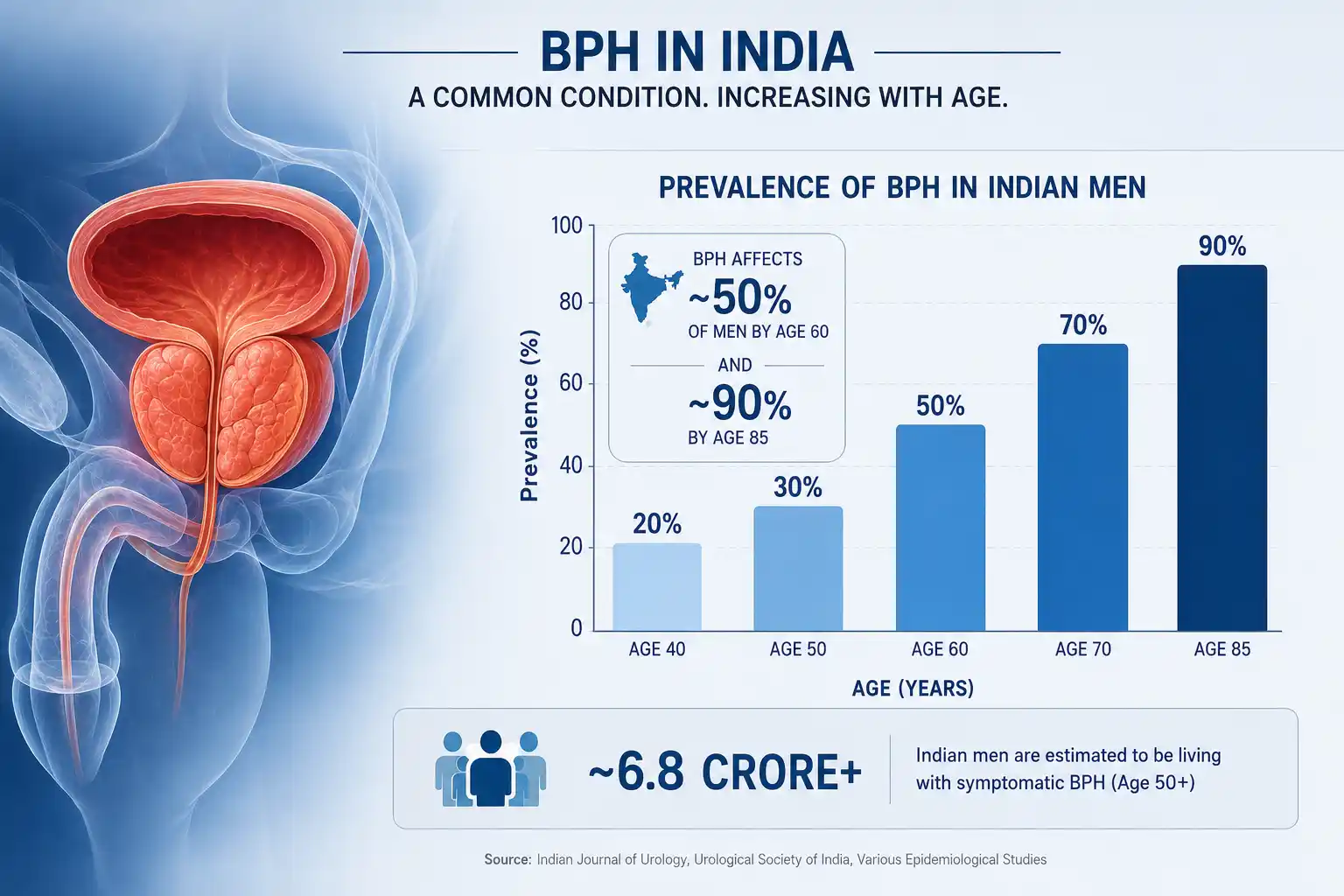
As the prostate enlarges, it can put pressure on the urethra and increase resistance to urine flow. BPH commonly develops after the age of 40–50 and becomes increasingly common with advancing age. According to the information provided on Dr. Vivek Venkat’s website, approximately 50% of men may have some degree of prostate enlargement by age 60, while the proportion approaches 90% by age 85.
Common factors associated with BPH include increasing age, family history, diabetes, obesity, metabolic syndrome and a sedentary lifestyle.
Importantly, BPH is different from prostate cancer. BPH itself does not mean that a man has prostate cancer.
Common Symptoms of BPH
An enlarged prostate may produce both urinary-flow and bladder-storage symptoms.
Problems with Urine Flow
A man with BPH may experience:
- Weak or reduced urine flow
- Difficulty starting urination
- Straining while urinating
- Interrupted urine stream
- Dribbling after urination
- Taking longer to empty the bladder
- A feeling that the bladder has not emptied completely
Bladder Storage Symptoms
Some men may also notice:
- Increased urinary frequency
- Sudden urinary urgency
- Waking multiple times during the night to urinate
- Difficulty controlling the urge to urinate
- Occasional urine leakage before reaching the bathroom
These symptoms should not simply be dismissed as a normal part of ageing. A urological evaluation can determine whether they are related to BPH or another urinary condition.
What Happens If an Enlarged Prostate Is Left Untreated?
Mild symptoms may remain stable for some time, but progressive urinary obstruction can sometimes result in complications.
These may include:
- Acute urinary retention
- Recurrent urinary tract infections
- Bladder stones
- Blood in the urine
- Chronic bladder dysfunction
- Increased pressure on the urinary system
- Kidney swelling or impaired kidney function in advanced cases
Acute urinary retention, where a person suddenly becomes unable to pass urine, can be painful and requires urgent medical attention.
How Is BPH Diagnosed?
A proper evaluation is important before deciding on treatment. Dr. Vivek Venkat’s reference information describes several investigations that may be used to understand prostate and bladder function.
IPSS-AUA Symptom Score
The International Prostate Symptom Score (IPSS-AUA) questionnaire helps assess the severity of urinary symptoms and monitor changes during treatment.
Prostate Examination
A clinical prostate examination may help assess the approximate size and consistency of the prostate and identify abnormalities requiring further investigation.
Urine Testing
Urine analysis can help identify infection, blood or other urinary abnormalities that may contribute to symptoms.
Uroflowmetry
Uroflowmetry measures the speed and pattern of urine flow. It can help the urologist assess whether there is significant obstruction to normal urine passage.
PSA Test
A prostate-specific antigen (PSA) blood test may be recommended as part of an overall prostate assessment and to help evaluate prostate cancer risk where appropriate.
Ultrasound
Ultrasound can provide information about prostate size, bladder condition, residual urine after urination and the kidneys. It can also help identify urinary obstruction and associated changes such as hydronephrosis.
Is Surgery Always Necessary for an Enlarged Prostate?
No. Many men with BPH can manage their symptoms successfully without surgery.
For patients with mild to moderate symptoms and without serious complications, medical treatment may be recommended. The objective is to improve urinary flow, reduce bothersome symptoms and protect bladder and kidney function.
Medication may also be appropriate when symptoms are gradually worsening but there is no indication for immediate procedural treatment.
However, treatment needs to be individualised. Prostate size alone does not determine whether a patient requires surgery.
Medications Used to Treat BPH
Several types of medicines may be used depending on the patient’s symptoms, prostate characteristics and overall health.
Alpha Blockers
Medicines such as tamsulosin, alfuzosin and silodosin work by relaxing muscles around the prostate and bladder neck. This can reduce resistance to urine flow and improve urinary symptoms.
5-Alpha Reductase Inhibitors
Finasteride and dutasteride work differently. They reduce hormonal stimulation responsible for prostate growth and can gradually decrease prostate size. Maximum benefits may take several months.
In some patients, an alpha blocker and a 5-alpha reductase inhibitor may be used together.
Other Medicines
Depending on the symptoms, doctors may consider medicines such as tadalafil for appropriate patients or bladder-directed medicines such as solifenacin, darifenacin, tolterodine or mirabegron.
Patients should not start, stop or combine prostate medicines without medical guidance because suitability depends on individual health factors and other medications being taken.
Can Lifestyle Changes Help?
Lifestyle measures can complement medical treatment and may help reduce urinary symptoms.
Patients may be advised to:
- Reduce fluids close to bedtime
- Limit caffeine
- Moderate alcohol consumption
- Maintain a healthy weight
- Stay physically active
- Avoid unnecessarily delaying urination
- Manage constipation
- Follow the prescribed medication schedule
These changes do not replace medical treatment when treatment is required, but they can support better bladder and urinary health.
When Might a Procedure or Surgery Be Considered?
Medication is not sufficient for every patient. Further intervention may be considered when symptoms remain severe or complications develop.
Possible reasons for procedural treatment include:
- Persistent troublesome urinary symptoms
- Repeated episodes of urinary retention
- Recurrent urinary infections
- Bladder stones
- Progressive bladder dysfunction
- Declining kidney function
Depending on the individual case, treatment may include minimally invasive procedures or surgical approaches such as TURP or laser-based prostate procedures. Dr. Vivek Venkat’s official website lists prostate treatments including TURP and HoLEP/laser procedures among his areas of prostate care.
The appropriate procedure depends on factors such as prostate anatomy, size, urinary symptoms, previous treatment, bladder function and overall health.
Why Choose Dr. Vivek Venkat for BPH Care?
Dr. Vivek Venkat is a fellowship-trained Urologic Oncologist and Robotic Urologist with more than 15 years of clinical experience and over 5,000 surgeries listed on his official website. He received advanced training at the University of Miami Miller School of Medicine in the USA and served as a Clinical Instructor in Urologic Oncology and Robotic Surgery at the University of Miami Hospital.
His qualifications include an M.Ch. in Urology from CMC Vellore, an M.S. in General Surgery from K.E.M. Hospital, Mumbai, and ECFMG certification in the USA. His website also highlights fellowship credentials including FEBU and experience in complex urological, minimally invasive and robotic procedures.
His clinical expertise covers prostate disorders, kidney and bladder conditions, uro-oncology, robotic surgery and complex urological procedures. For patients looking for a Best Uro Surgeon in Mumbai, his approach focuses on detailed evaluation, evidence-based treatment and personalised follow-up rather than using the same treatment for every patient.
The practice also provides access to advanced urological treatment technologies, including robotic and laser-based procedures. His broader surgical expertise includes Robotic Adrenalectomy Surgery in Mumbai, alongside robotic procedures for prostate, kidney and bladder conditions.
A Patient-Centred Approach to Prostate Care
Effective BPH management is not simply about prescribing medication. The treatment plan should consider urinary symptoms, prostate characteristics, bladder function, kidney health, medication tolerance and the patient’s quality of life.
At Jewel Urology Center, patients can discuss their symptoms and undergo an appropriate urological assessment before deciding on the next step. Dr. Venkat’s official profile describes a patient-first approach involving personalised consultation and follow-up care.
If you are experiencing frequent urination, a weak stream, difficulty emptying your bladder or repeated nighttime urination, an early consultation can help identify the cause and determine whether observation, medication or a procedure is appropriate.
Book a Consultation for Prostate Care in Mumbai
If urinary symptoms are affecting your sleep, daily routine or quality of life, timely evaluation can help identify the underlying cause and guide appropriate treatment. Dr. Vivek Venkat provides personalised evaluation and treatment for BPH and other prostate conditions at Jewel Urology Center.
📞 09136041545
📧 appointments@azure-ant-249618.hostingersite.com
📍Jewel Urology Center
Frequently Asked Questions
1. Can an enlarged prostate be treated without surgery?
Yes. Many men with BPH can manage their symptoms with medication and lifestyle measures. Surgery or a procedure may be considered when symptoms remain troublesome despite medical treatment or when complications such as urinary retention, recurrent infections, bladder stones or kidney problems develop.
2. Does BPH increase the risk of prostate cancer?
BPH and prostate cancer are different conditions. BPH itself does not develop into prostate cancer. However, men with urinary symptoms should still undergo appropriate prostate evaluation because urinary symptoms can have several causes.
3. How is the success of BPH treatment monitored?
Follow-up may include assessment of urinary symptoms, urine-flow measurements and post-void residual urine. The frequency of monitoring depends on the patient’s condition and treatment plan.
4. When should I see a urologist for an enlarged prostate?
You should consider a urological consultation if you develop a persistent weak urine stream, difficulty starting urination, frequent nighttime urination, urgency, incomplete bladder emptying or recurrent urinary problems. Sudden inability to pass urine requires urgent medical attention.