
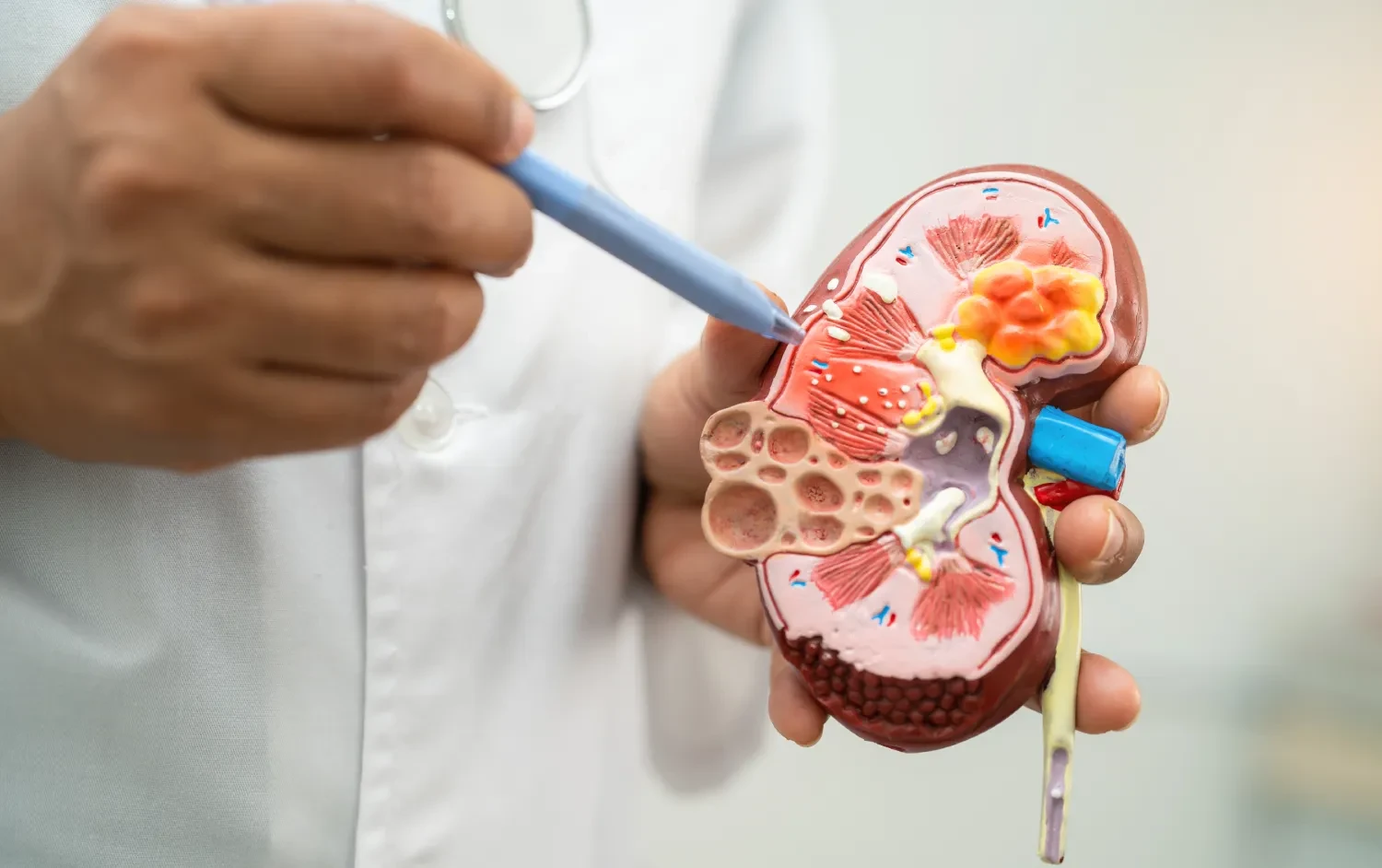
A diagnosis of a kidney tumor can naturally raise an important question: Does the entire kidney need to be removed? In many appropriately selected patients, the answer is no. Advances in imaging, surgical planning and robotic technology have made it possible to remove a kidney tumor while preserving as much healthy kidney tissue as possible.
Partial nephrectomy, also called nephron-sparing or kidney-preservation surgery, removes the tumor while leaving the remaining healthy portion of the kidney intact. When performed using robotic technology, the procedure combines minimally invasive access with enhanced visualization and precise surgical movements.
For patients searching for Robotic Partial Nephrectomy Mumbai, Dr. Vivek Venkat at Jewel Urology Center provides specialist evaluation and individualized surgical planning for kidney tumors and kidney cancer.
What Is Partial Nephrectomy?
Partial nephrectomy is a kidney-sparing operation in which only the tumor is removed instead of removing the entire kidney. The remaining healthy kidney tissue is preserved whenever technically and medically appropriate.
Many kidney tumors are now detected incidentally during ultrasound, CT or MRI scans performed for unrelated health concerns. Earlier detection can mean that a tumor is smaller and more localized, making kidney-preserving treatment possible.
For appropriately selected localized kidney tumors, partial nephrectomy can provide effective cancer control while helping preserve kidney function.
The procedure may be performed through an open approach or using minimally invasive techniques such as robotic surgery.
Who May Be a Candidate for Robotic Partial Nephrectomy?
The suitability of partial nephrectomy depends on several factors rather than tumor size alone.
Patients with small renal masses, particularly tumors under 4 cm, are commonly considered for partial nephrectomy. In selected patients, larger tumors may also be treated with kidney-sparing surgery when their location and anatomy make safe removal possible while preserving sufficient healthy kidney tissue.
Kidney-preserving surgery can be particularly important for patients with:
- A tumor in a solitary kidney
- Tumors affecting both kidneys
- Existing kidney disease
- Diabetes
- Hypertension
- Reduced baseline kidney function
- Tumors where preserving renal tissue can provide a long-term functional benefit
The final decision is made after reviewing imaging, kidney function, general health and the anatomical complexity of the tumor.
Why Is Kidney Preservation Important?
The kidneys play an essential role in filtering waste, maintaining fluid balance and supporting several important body functions. Removing an entire kidney may be necessary in certain situations, but preserving functioning renal tissue whenever safely possible can provide long-term benefits.
Kidney preservation may help:
- Maintain better kidney function
- Reduce the risk of chronic kidney disease
- Preserve additional renal reserve
- Reduce the potential for future kidney-related complications
- Provide additional functional reserve if kidney problems develop later
This can be especially relevant for people who already have diabetes, hypertension, kidney disease or a solitary kidney.
How Is a Kidney Tumor Evaluated Before Surgery?
Detailed preoperative evaluation is an important part of planning partial nephrectomy.
Contrast-Enhanced CT Scan
A contrast-enhanced CT scan can provide information about the size and location of the tumor and its relationship with blood vessels and surrounding structures. CT angiography may provide additional anatomical information when required.
MRI
An MRI may be recommended when additional imaging detail is necessary or when CT findings require further clarification.
Kidney Function Tests
Blood tests help establish baseline kidney function and assist the surgical team in evaluating the patient’s overall renal health.
Urine Tests
Urine analysis can identify infection and other urinary abnormalities that may need to be addressed before surgery.
Tumor Complexity Assessment
The depth of the tumor, its relationship with the collecting system and blood vessels, and its position within the kidney all influence the surgical approach.
In selected complex cases, three-dimensional models created from patient imaging may also assist with surgical planning and patient counselling.
What Makes Robotic Partial Nephrectomy Different?
Robotic partial nephrectomy uses a robotic surgical platform controlled by the surgeon. It does not mean that a robot independently performs the operation.
The surgeon controls the robotic instruments while using an enhanced three-dimensional, magnified view of the surgical field.
According to the reference information, robotic technology can provide:
- Magnified 3D visualization
- Greater instrument dexterity
- Precise control of surgical instruments
- Improved access to anatomically challenging areas
- Smaller incisions
- Potentially reduced blood loss
- Less postoperative discomfort
- Faster recovery compared with traditional open surgery
- Shorter hospitalisation in many cases
These capabilities can be particularly useful when a kidney tumor is located close to important blood vessels or the urinary collecting system.
How Is the Kidney Preserved During Surgery?
One of the technically demanding parts of partial nephrectomy is controlling the kidney’s blood supply while the tumor is removed.
During surgery, blood flow may be temporarily controlled. The surgeon then carefully removes the tumor and reconstructs the kidney before restoring blood circulation.
Minimising the time that blood supply is interrupted can help protect healthy kidney tissue. Robotic visualization and precise instrumentation can assist the surgeon during these delicate steps.
The overall objective is to achieve complete tumor removal while preserving the maximum amount of functioning kidney tissue that is safely possible.
Can Complex Kidney Tumors Be Treated with Kidney-Sparing Surgery?
A complex tumor does not automatically mean that the entire kidney must be removed.
With advances in imaging, surgical planning and robotic techniques, selected patients with deeply located, larger or anatomically challenging tumors may still be considered for partial nephrectomy.
Tumors located near:
- Major blood vessels
- The urinary collecting system
- Important internal kidney structures
may require more detailed planning.
However, every kidney tumor is different. The decision between partial and radical nephrectomy must balance cancer control, surgical safety and preservation of kidney function.
What Are the Advantages of Robotic Kidney-Sparing Surgery?
The main goal of robotic partial nephrectomy is not simply to use advanced technology. It is to help achieve accurate tumor removal while protecting healthy kidney tissue.
Potential advantages include:
- Smaller surgical incisions
- Less postoperative pain
- Reduced blood loss
- Lower blood transfusion requirements
- Reduced risk of wound-related complications
- Precise reconstruction of the kidney
- Detailed visualization of the tumor bed
- Potentially faster recovery
- Shorter hospital stay compared with open surgery
Individual outcomes vary depending on tumor complexity, overall health and the surgical approach required.
What Can Patients Expect After Surgery?
Recovery varies from person to person, but the reference information indicates that patients may begin a liquid diet several hours after surgery, progress to normal food the following day and start walking within a few hours when clinically appropriate.
A urinary catheter may remain in place for approximately one to two days, while an abdominal drain may be removed after a few days depending on recovery.
Hospital discharge may occur within a few days after robotic surgery, although the exact duration depends on the patient’s condition and surgical complexity. Many patients can return to work in approximately two to three weeks, subject to medical advice. Strenuous activities are generally restricted during the early recovery period.
Follow-up may include kidney-function testing, imaging, clinical examination and cancer surveillance.
What Are the Possible Risks?
Like every major surgical procedure, partial nephrectomy carries potential risks.
General surgical risks may include:
- Infection
- Blood clots
- Anaesthesia-related complications
- Pneumonia
- Cardiovascular complications
Procedure-specific risks can include bleeding, urine leakage and delayed recovery of intestinal function.
In some situations, the surgeon may need to convert a planned partial nephrectomy into a radical nephrectomy if the tumor is more advanced than anticipated or bleeding cannot be safely controlled. This decision is made in the interest of patient safety.
Patients should follow their surgeon’s postoperative instructions and seek immediate medical attention for concerning symptoms such as severe flank pain, significant blood in the urine or fainting.
Why Choose Dr. Vivek Venkat for Kidney Tumor Surgery?
Dr. Vivek Venkat is a Consultant Uro-Oncologist and Robotic Urologist with more than 15 years of experience and more than 5,000 surgeries listed on his official website. He received advanced fellowship training in Urologic Oncology and Robotic Surgery from the University of Miami Miller School of Medicine, USA, and served as a Clinical Instructor in Urologic Oncology and Robotic Surgery at the University of Miami Hospital.
He holds an M.Ch. in Urology from Christian Medical College (CMC), Vellore, and an M.S. in General Surgery from K.E.M. Hospital, Mumbai. His profile also notes ECFMG certification in the USA and experience as a former Assistant Professor of Urology and Renal Transplantation at CMC Vellore.
His clinical expertise includes kidney cancer, robotic surgery, minimally invasive urology and complex urological procedures. His kidney cancer practice includes nephron-sparing surgery, radical nephrectomy and robotic partial nephrectomy.
Patients looking for a Best Uro Surgeon in Mumbai can consult Dr. Venkat for detailed assessment, review of imaging and discussion of kidney-preserving treatment options where clinically appropriate.
His wider robotic expertise also includes Robotic Adrenalectomy Surgery in Mumbai, along with robotic procedures for prostate, kidney and bladder conditions.
Patient-Centred Care at Jewel Urology Center
Dr. Venkat’s practice emphasises personalised consultation, evidence-based treatment and postoperative follow-up. His official website highlights a patient-first approach, thorough consultation and comprehensive follow-up care.
At Jewel Urology Center in Vile Parle West, patients can discuss their diagnosis, imaging reports, treatment options and potential need for a second opinion in a specialist urological setting.
The objective is to develop an individualised treatment strategy based on the patient’s tumor characteristics, kidney function, overall health and long-term needs.
Book a Consultation with Dr. Vivek Venkat
If you or a family member has been diagnosed with a kidney tumor, understanding all available treatment options is an important first step. Kidney-preserving surgery may be appropriate for selected patients, but the decision requires detailed imaging assessment and specialist evaluation.
For personalised guidance about robotic kidney tumor surgery, schedule a consultation with Dr. Vivek Venkat at Jewel Urology Center.
📧 appointments@azure-ant-249618.hostingersite.com
CTA: Take the next step toward informed kidney cancer care. To schedule a consultation with Dr. Vivek Venkat at Jewel Urology Center and discuss whether robotic kidney-preserving surgery may be suitable for your condition.
Frequently Asked Questions
1. What is robotic partial nephrectomy?
Robotic partial nephrectomy is a minimally invasive procedure in which a kidney tumor is removed while preserving the remaining healthy kidney tissue. The surgeon controls robotic instruments using enhanced visualization and precise movements.
2. Is partial nephrectomy better than removing the entire kidney?
Partial nephrectomy can preserve functioning kidney tissue and is an important treatment option for many appropriately selected localized kidney tumors. However, radical nephrectomy may be necessary when the tumor’s size, location, complexity or other factors make kidney preservation unsafe or unsuitable.
3. How long does recovery take after robotic partial nephrectomy?
Recovery varies according to the patient and complexity of surgery. The reference information states that many patients may return to work in around two to three weeks, while strenuous activities may need to be avoided for approximately one month.
4. Can a complex kidney tumor be treated with robotic surgery?
In selected cases, yes. Tumor size, location, relationship with blood vessels and the collecting system, kidney function and overall health are considered before recommending robotic partial nephrectomy. Complex tumors require detailed imaging and individualised surgical planning.