
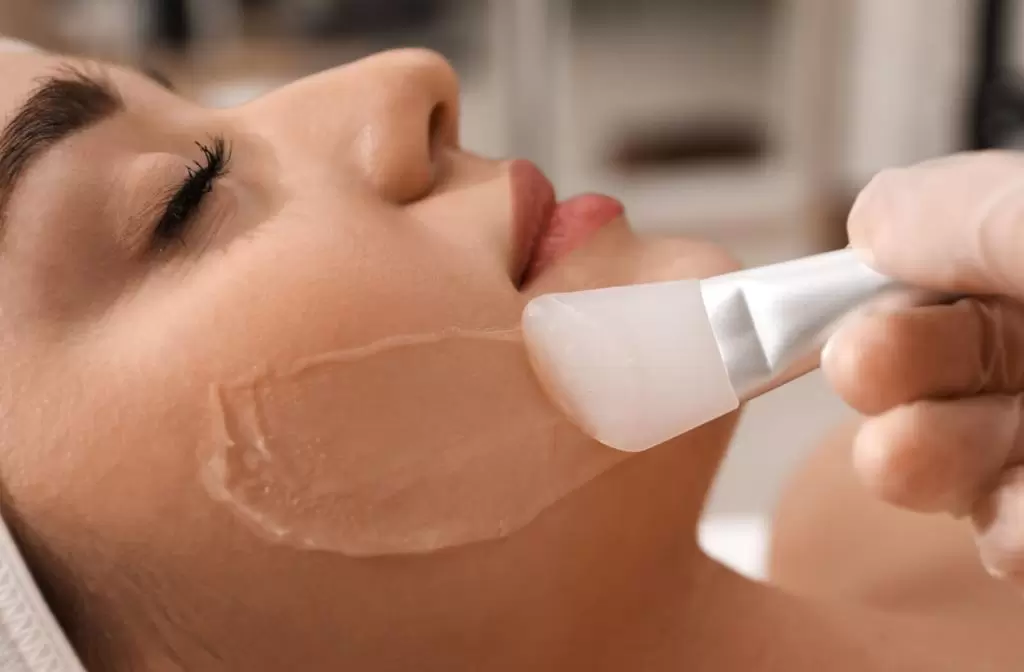
Chemical peels are commonly used in cosmetic dermatology to improve the appearance and texture of skin affected by pigmentation, acne, acne scars, dullness, uneven tone, fine lines, and other concerns. A peel works by applying a carefully selected chemical solution to the skin to exfoliate targeted layers and encourage skin renewal. At Ambrosia Aesthetics, Dr. Niketa Sonavane develops personalised treatment plans based on the patient’s skin type, concerns, and treatment goals. If you are considering peel treatment, a consultation with a qualified dermatologist can help determine which type of peel and treatment depth may be appropriate for your skin.
What Is a Chemical Peel?
A chemical peel is a dermatological procedure in which a chemical solution is applied to the skin to remove dead or damaged surface cells and promote the growth of newer skin. Depending on the formulation and concentration, peels can range from superficial treatments to medium or deeper procedures.
Chemical peels may be considered for concerns such as:
- Acne and acne-prone skin
- Acne scars and post-acne marks
- Hyperpigmentation and dark spots
- Uneven skin tone
- Dull-looking skin
- Fine lines and early signs of ageing
- Sun-related skin changes
- Uneven skin texture
The appropriate peel depends on the underlying condition, skin sensitivity, pigmentation tendency, previous treatments, and desired outcome.
Types of Chemical Peels Available
There is no single peel that is suitable for every skin concern. Dr. Niketa Sonavane’s chemical-peel information describes a wide range of formulations that can be selected according to individual requirements.
Glycolic Acid Peel
Glycolic acid is an alpha-hydroxy acid used for exfoliation and skin rejuvenation. It may be considered for dull skin, uneven texture, mild pigmentation, and other superficial concerns.
Mandelic Acid Peel
Mandelic acid is another superficial peel option. It may be considered for acne-prone skin, pigmentation, and uneven skin texture, depending on the individual’s skin assessment.
Salicylic Acid Peel
Salicylic acid is a beta-hydroxy acid that can be particularly useful for oily and acne-prone skin. It helps exfoliate within the pores and may be incorporated into treatment plans for pimples and back acne.
TCA Peel
Trichloroacetic acid, or TCA, can be used at different concentrations and depths. Dr. Sonavane’s published information discusses TCA peels for concerns including acne scars and deeper pigmentation. The concentration and depth need to be selected carefully by a dermatologist.
Cosmelan and Depigmentation Peels
Cosmelan and other depigmentation-focused peels may be considered for hyperpigmentation, melasma, and dark spots. Some treatment protocols can include an in-clinic application together with prescribed home care.
Other Peel Options
Depending on the skin concern, a dermatologist may also consider Jessner, yellow, phenol, kojic acid, retinol, lactic acid, black, pumpkin, enzyme, glutathione, or other specialised peel formulations. Not every formulation is appropriate for every patient, and treatment selection should follow professional skin assessment.
How Does a Chemical Peel Work?
Before treatment, the skin is generally cleansed to remove oils and surface impurities. The selected chemical solution is then applied carefully to the treatment area.
Patients may experience mild tingling, warmth, or stinging depending on the formulation and depth. The duration can vary considerably: light peels may take only a few minutes, while deeper procedures may take longer.
After application, the skin begins its renewal process. Depending on the peel, patients may experience dryness or peeling over the following days. The extent of visible peeling is not necessarily an indication of how effective a treatment has been.
What Skin Concerns Can Peels Address?
Chemical peels can be incorporated into treatment plans for several cosmetic skin concerns.
For acne-prone skin, formulations such as salicylic acid, mandelic acid, black peel, and Jessner peel may be considered. For pigmentation, options such as Cosmelan, Dermamelan, yellow peels, or specialised depigmentation treatments may be selected. TCA-based procedures may be considered for certain types of acne scarring.
A dermatologist may also recommend peels as part of a broader skin-rejuvenation programme when the goal is to improve uneven texture, dullness, or the appearance of fine lines.
What to Expect After a Peel
Post-treatment care is an important part of the procedure. Depending on the peel’s depth, temporary redness, dryness, sensitivity, swelling, or visible peeling may occur.
Dr. Sonavane’s published guidance recommends following the dermatologist’s aftercare instructions, protecting the skin from excessive sun exposure, using gentle skincare products, and maintaining adequate hydration. Superficial peels may have a shorter recovery period, while medium or deeper peels can require more downtime.
Patients should avoid picking or forcibly removing peeling skin because doing so can irritate the skin and potentially interfere with healing.
Why Choose Dr. Niketa Sonavane?
Dr. Niketa Sonavane is a dermatologist, skin specialist, and hair specialist practising in Mumbai. Her published profile states that she has more than 17 years of experience and has treated more than 10,000 patients.
She completed her MBBS with Distinction in 2004 and subsequently completed her Diploma in Dermatology and Venereology from Topiwala National Medical College and BYL Nair Hospital, Mumbai. Her profile also records international training between 2011 and 2014 with dermatologists and plastic surgeons in Australia, Singapore, Brazil, the UK, France, Spain, Canada, and Germany.
Her approach includes assessing the underlying factors contributing to skin and hair concerns and developing personalised treatment plans. Her areas of practice include acne, acne scars, pigmentation, skin brightening, anti-ageing procedures, laser treatments, hair-loss care, PRP, Botox, fillers, and other cosmetic dermatology services.
Patients searching for a Top Dermatologist in Mumbai can discuss their skin concerns with Dr. Sonavane to understand whether a chemical peel is appropriate and which formulation may best suit their skin.
Ambrosia Aesthetics: A Modern Dermatology Clinic
Ambrosia Aesthetics in Andheri West, Mumbai, provides dermatology, aesthetic, skin, hair, and laser treatments. The clinic focuses on personalised treatment planning and uses modern aesthetic technology for a range of procedures. Dr. Sonavane’s published chemical-peel information also describes the clinic as providing multiple peel options under medical supervision, with aftercare guidance and ongoing support.
The clinic is located at 514–515, Kamdhenu 1, 1st Cross Lane, Lokhandwala Complex, Andheri West, Mumbai, Maharashtra 400053. Clinic hours are Monday to Saturday, 10:30 AM to 7:00 PM.
Is a Chemical Peel Right for You?
The suitability of a peel depends on your skin condition, sensitivity, medical history, current skincare products, previous procedures, and the specific concern being treated. A dermatologist should assess your skin before selecting the formulation and treatment depth.
People with active skin infections, certain inflammatory skin conditions, recent procedures, or particular medication histories may need to postpone or modify treatment. A professional consultation helps identify these considerations before the procedure.
If you are looking for a Dermatologist in Mumbai for pigmentation, acne, acne scars, uneven skin tone, or skin rejuvenation, Dr. Niketa Sonavane can assess your concerns and discuss suitable treatment options.
Schedule Your Skin Consultation Today
Take the next step toward a personalised skincare plan with Dr. Niketa Sonavane at Ambrosia Aesthetics . During your consultation, your skin can be evaluated and the appropriate peel or combination treatment can be discussed based on your individual concerns.
📞 9930993600 | 9930992400
Frequently Asked Questions
1. Is a chemical peel painful?
The level of discomfort depends on the type and depth of the peel. Superficial peels may cause mild tingling or stinging, while stronger peels can produce greater discomfort. Your dermatologist can explain what to expect before treatment.
2. How long does peeling last after treatment?
Recovery varies according to the type and depth of the peel. Mild peels may cause temporary redness and light peeling for a few days, while medium or deeper peels can involve more noticeable redness, swelling, and peeling for a week or longer.
3. Can chemical peels help with pigmentation?
Certain chemical peels can be used as part of a treatment plan for hyperpigmentation, dark spots, and uneven skin tone. Options may include Cosmelan, Dermamelan, yellow peels, kojic acid peels, or other formulations depending on the diagnosis.
4. How many peel sessions will I need?
The number of sessions depends on the skin concern, peel type, treatment depth, and individual response. Some superficial peel protocols involve multiple sessions spaced at appropriate intervals. Your dermatologist can recommend a treatment schedule after examining your skin.