
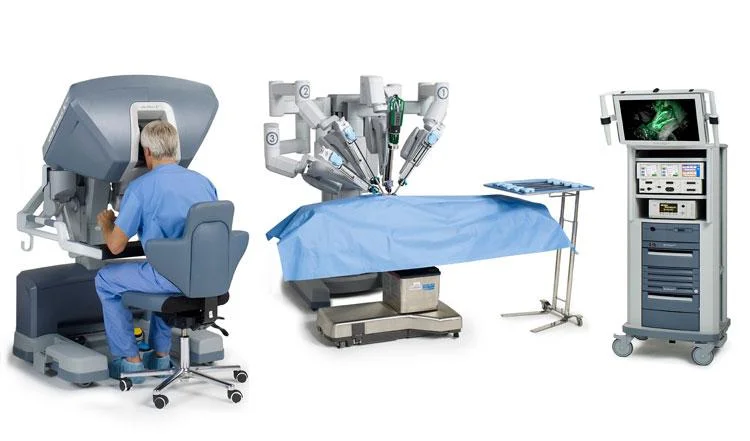
Advancements in medical technology have transformed surgical procedures, making it possible to treat complex conditions with greater precision and smaller incisions. Traditional open surgery often involves larger cuts, longer hospital stays, and extended recovery periods. Robotic surgery Mumbai offers a minimally invasive alternative for selected patients, allowing surgeons to perform complex procedures using advanced instruments and enhanced visualisation. This modern surgical approach may help reduce tissue disruption, minimise postoperative discomfort, and support faster recovery, particularly in selected colorectal procedures.
Robotic surgery Mumbai at Gadre Hospital, under the care of Dr. Chintamani Godbole, focuses on advanced surgical treatment for colorectal conditions, including colon cancer, rectal cancer, and selected gastrointestinal disorders. With specialised international training in robotic colorectal surgery, Dr. Chintamani Godbole provides personalised treatment planning and surgical care aimed at improving patient outcomes and supporting recovery.
What Is Robotic Surgery Mumbai?
Robotic surgery is a minimally invasive surgical technique in which a surgeon controls robotic instruments through a specialised console. Unlike traditional open surgery, robotic procedures generally involve several small incisions rather than one large surgical opening.
The robotic system provides magnified three-dimensional visualisation and instruments capable of precise movements within confined anatomical spaces.
Importantly, the robot does not perform surgery independently. Every surgical movement is controlled by the operating surgeon.
Robotic-assisted surgery is particularly useful for selected colorectal procedures because the rectum lies deep within the pelvis, surrounded by important structures such as the bladder, nerves, and reproductive organs.
The technology can assist surgeons in performing delicate dissections while working to preserve surrounding healthy tissues.
Conditions Treated with Robotic Colorectal Surgery
Robotic-assisted techniques may be used to treat several colorectal conditions depending on disease severity, patient health, and surgical requirements.
1. Colon Cancer
Colon cancer develops in the large intestine and may require surgical removal of the affected bowel segment.
Robotic-assisted colectomy can be considered for selected patients, allowing surgeons to remove diseased tissue and reconnect healthy bowel segments when appropriate.
2. Rectal Cancer
Rectal cancer develops in the final section of the large intestine. Surgery requires careful dissection because the rectum is located close to important pelvic nerves and organs.
Robotic surgery provides enhanced visualisation and instrument control during selected rectal cancer operations.
3. Inflammatory Bowel Disease
Conditions such as ulcerative colitis and Crohn’s disease may require surgery when medications are ineffective or serious complications develop.
Robotic techniques may be considered for selected bowel resections and reconstructive procedures.
4. Rectal Prolapse
Rectal prolapse occurs when the rectum moves downward and protrudes through the anus.
Selected patients may undergo minimally invasive rectopexy to restore anatomical support.
5. Complex Colorectal Conditions
Some patients with recurrent colorectal disorders or complicated pelvic anatomy may benefit from robotic-assisted procedures.
However, not every condition requires robotic surgery. The most appropriate approach depends on clinical assessment and surgical suitability.
How Is Robotic Colorectal Surgery Performed?
Patients considering Robotic surgery Mumbai should understand the main stages of the surgical process.
Step 1: Preoperative Evaluation
The surgeon reviews medical history, symptoms, imaging findings, and previous treatments. Investigations may include blood tests, colonoscopy, CT scans, or MRI depending on the diagnosis.
Step 2: Anaesthesia
Robotic colorectal surgery is generally performed under general anaesthesia to ensure patient comfort throughout the procedure.
Step 3: Small Surgical Incisions
Several small incisions are created in the abdomen to introduce the camera and robotic surgical instruments.
Step 4: Robotic-Assisted Dissection
The surgeon operates from a console, controlling robotic instruments with precise movements.
The system provides magnified visualisation, helping the surgeon identify important anatomical structures during dissection.
Step 5: Removal or Repair of Diseased Tissue
Depending on the condition, the surgeon removes affected bowel tissue, repairs anatomical structures, or performs reconstruction.
Step 6: Postoperative Monitoring
After surgery, patients receive monitoring, pain management, nutritional guidance, and mobilisation instructions.
Hospital stay and recovery depend on the procedure, disease complexity, and overall health.
Benefits of Robotic Surgery for Colorectal Conditions
Robotic-assisted surgery offers several potential advantages for appropriately selected patients.
- Smaller incisions: Minimally invasive access may reduce abdominal wall trauma and visible scarring.
- Enhanced precision: Articulating robotic instruments support controlled movements during complex procedures.
- Three-dimensional visualisation: Magnified images help surgeons identify delicate anatomical structures.
- Reduced blood loss: Certain robotic procedures may involve less bleeding compared with open surgery.
- Shorter hospitalisation: Some patients experience earlier discharge after minimally invasive procedures.
- Faster mobilisation: Patients may begin walking and gradually resuming activities sooner.
- Complex pelvic access: Robotic instruments can be useful when operating in narrow anatomical spaces.
These benefits vary between patients and procedures. Robotic surgery still carries risks, including infection, bleeding, bowel leakage, injury to nearby organs, and anaesthesia-related complications.
Meet Dr. Chintamani Godbole – Experienced Robotic Colorectal Surgeon
Dr. Chintamani Godbole is a consultant gastrointestinal and colorectal surgeon with specialised expertise in robotic colorectal surgery and peritoneal surface oncology.
His professional profile reports more than 10 years of experience and extensive training in India and the United Kingdom.
Educational Qualifications
Dr. Chintamani Godbole’s qualifications include:
- MBBS (2006): Maharashtra University of Health Sciences.
- MS in General Surgery (2011): Maharashtra University of Health Sciences, with training at Seth G.S. Medical College and KEM Hospital, Mumbai.
- DNB in Surgical Gastroenterology (2015): National Board of Examinations, with training at Jaslok Hospital, Mumbai.
- MRCS (2018): Royal College of Surgeons of Edinburgh.
- FRCS (2022): Royal College of Surgeons of Edinburgh, United Kingdom.
International Fellowship Training
Dr. Chintamani Godbole completed advanced training in the United Kingdom, including:
- Fellowship in Robotic Colorectal Surgery at Coventry, UK.
- Fellowship in Colorectal and Peritoneal Oncology at Basingstoke, UK.
- Training in laparoscopic and robotic colorectal procedures.
- Specialised experience in cytoreductive surgery and hyperthermic intraperitoneal chemotherapy (HIPEC).
He also worked as a locum general and colorectal surgical consultant at University Hospitals Coventry.
Clinical Experience and Expertise
According to his professional website, Dr. Chintamani Godbole has performed more than 200 minimally invasive colorectal procedures and over 50 cytoreductive surgeries with HIPEC.
His expertise includes colorectal cancer surgery, sphincter-preserving rectal procedures, robotic surgery, inflammatory bowel disease, and complex colorectal conditions.
He has also contributed to peer-reviewed medical publications and surgical research.
Why Choose Dr. Chintamani Godbole at Gadre Hospital?
Patients exploring Colorectal Surgery in Mumbai can consult Dr. Chintamani Godbole at Gadre Hospital in Dadar East.
His clinical approach emphasises individualised assessment, communication with patients and their families, and evidence-based surgical planning.
Patient-Centred Consultation Environment
Gadre Hospital provides a setting for specialist consultations, clinical evaluation, and follow-up care.
Patients can discuss their diagnosis, understand surgical options, and receive guidance about preparation and recovery.
Hospital Affiliations
Dr. Chintamani Godbole is also associated with several Mumbai hospitals, including Jaslok Hospital, Sir H. N. Reliance Foundation Hospital, Breach Candy Hospital, and Wockhardt Hospitals.
Patients should confirm the operating hospital and availability of robotic surgical facilities during consultation.
Individuals searching for a Colorectal Surgeon in Mumbai can explore Dr. Chintamani Godbole’s qualifications and experience in complex colorectal procedures.
Recovery After Robotic Colorectal Surgery
Recovery following Robotic surgery Mumbai varies depending on the procedure, underlying condition, and overall health.
Patients may experience temporary abdominal discomfort, fatigue, and changes in bowel habits during the recovery period.
Postoperative recommendations generally include:
- Following prescribed medications and pain management instructions.
- Beginning gentle walking when medically advised.
- Gradually returning to normal eating habits.
- Maintaining adequate hydration and nutrition.
- Avoiding heavy lifting during early recovery.
- Monitoring surgical wounds for signs of infection.
- Attending scheduled follow-up appointments.
Patients should seek medical attention for persistent fever, worsening abdominal pain, repeated vomiting, or unusual wound discharge.
Frequently Asked Questions (FAQs)
1. Is robotic colorectal surgery safe?
Robotic colorectal surgery can be a safe treatment option for appropriately selected patients when performed by trained surgeons. However, potential complications include bleeding, infection, injury to surrounding organs, and bowel anastomotic leakage.
2. How long does robotic colorectal surgery take?
The duration depends on the type and complexity of surgery. Some procedures take approximately two to four hours, while complex colorectal operations may require longer.
3. Is robotic surgery better than laparoscopic surgery?
Both are minimally invasive approaches. Robotic surgery offers enhanced instrument movement and three-dimensional visualisation, but it is not necessarily superior for every patient or procedure.
4. What is the cost of robotic colorectal surgery in Mumbai?
Costs depend on the diagnosis, surgical procedure, hospital facilities, robotic equipment, anaesthesia, and postoperative care. An individualised estimate can be provided after consultation.
Book Your Consultation with Dr. Chintamani Godbole
Experiencing colorectal symptoms or seeking specialist advice about minimally invasive surgery? Consult Dr. Chintamani Godbole to discuss your diagnosis and available treatment options.
+91 8108791470 | +91 8451865944 (In case of emergency)
drchintamanigodbole@gmail.com
Get Directions to the Clinic – Gadre Hospital, Mumbai