
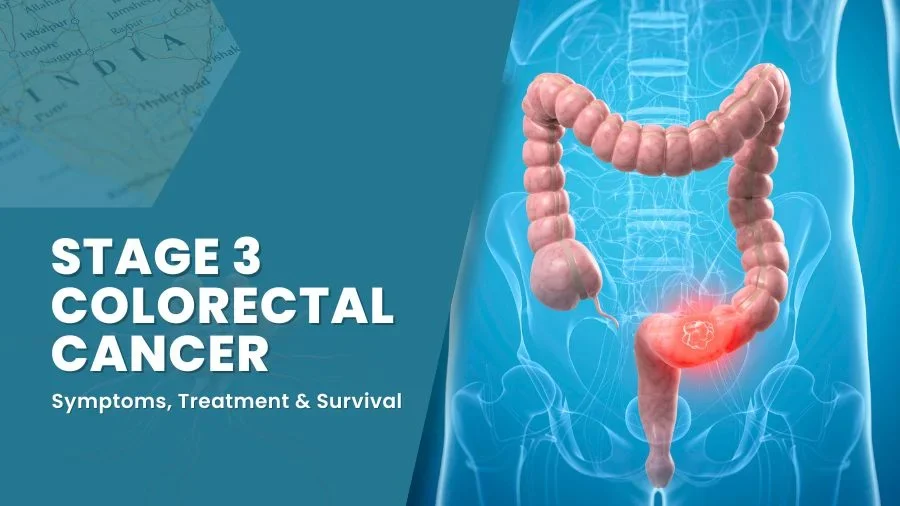
A diagnosis of colorectal cancer can be overwhelming for patients and their families, particularly when the disease has reached an advanced stage. However, advances in cancer diagnosis, surgical techniques and medical oncology have significantly improved treatment options and outcomes. With timely diagnosis and a comprehensive treatment plan, many patients with locally advanced colorectal cancer can achieve long-term disease control and, in some cases, a cure.
Stage 3 Colorectal Cancer refers to cancer that has spread beyond the inner layers of the colon or rectum to nearby lymph nodes but has not spread to distant organs. Treatment generally involves a combination of surgery, chemotherapy and, in selected rectal cancer cases, radiation therapy.
Dr. Chintamani Godbole, an experienced colorectal surgeon at Gadre Hospital, Dadar East, Mumbai, specialises in advanced colorectal cancer management, robotic surgery and minimally invasive procedures. His expertise in colorectal and gastrointestinal oncology helps patients access personalized treatment based on their diagnosis, tumour characteristics and overall health.
What Is Stage 3 Colorectal Cancer?
Colorectal cancer develops when abnormal cells grow uncontrollably in the colon or rectum. It may begin as a polyp in the inner lining of the large intestine and gradually invade deeper layers of the intestinal wall.
In the third stage, cancer has spread to nearby lymph nodes or surrounding tissues, but there is no evidence of distant metastasis to organs such as the liver or lungs.
The condition is generally classified into three substages:
- Stage 3A: Cancer has spread to a limited number of nearby lymph nodes or has invaded specific layers of the bowel wall.
- Stage 3B: The tumour has grown deeper into surrounding tissues and may involve multiple nearby lymph nodes.
- Stage 3C: Cancer has spread to several regional lymph nodes or involves more extensive local structures.
The exact classification depends on the tumour (T), lymph node involvement (N) and distant metastasis (M) findings.
Common Symptoms of Stage 3 Colorectal Cancer
Symptoms may vary depending on whether the cancer develops in the colon or rectum. Some patients experience noticeable digestive problems, while others may initially have mild symptoms.
Common warning signs include:
- Blood in the stool: Blood may appear bright red or make stools look darker than usual.
- Changes in bowel habits: Persistent diarrhoea, constipation or alternating bowel patterns may occur.
- Abdominal discomfort: Cramping, bloating or persistent abdominal pain can develop.
- Unexplained weight loss: Significant weight reduction without changes in diet or exercise may be a warning sign.
- Fatigue and weakness: Chronic blood loss may cause anemia, resulting in tiredness and reduced energy.
- Feeling of incomplete bowel emptying: Rectal tumours may create a persistent sensation of needing to pass stools.
- Narrow stools: Changes in stool shape may occur when a tumour narrows the intestinal passage.
These symptoms do not always indicate cancer. However, persistent changes in bowel habits, rectal bleeding or unexplained anemia require medical evaluation.
Stage 3 Colorectal Cancer: Diagnosis and Treatment Options
Accurate diagnosis and staging are essential for selecting the most appropriate treatment. The management approach depends on the tumour’s location, lymph node involvement, pathology findings and the patient’s overall health.
1. Diagnostic Tests and Staging
Doctors may recommend several investigations to confirm the diagnosis and determine the extent of the disease.
- Colonoscopy with biopsy: A colonoscopy allows the doctor to examine the colon and rectum. A tissue sample is collected to confirm the presence of cancer.
- CT scan: A CT scan of the chest, abdomen and pelvis helps assess the tumour and identify possible distant spread.
- MRI pelvis: This investigation is particularly important for rectal cancer because it helps evaluate tumour depth and nearby structures.
- Blood tests: Complete blood counts, liver function tests and other investigations help assess the patient’s general health.
- CEA tumour marker: Carcinoembryonic antigen may be measured to establish a baseline for monitoring treatment response and follow-up.
Accurate staging helps the multidisciplinary cancer team develop an individualised treatment strategy.
2. Surgery for Colon Cancer
For most patients with stage 3 colon cancer, surgery is an important part of treatment.
The procedure, commonly known as colectomy, involves removing the affected section of the colon along with surrounding fatty tissue and regional lymph nodes. The remaining healthy sections of the intestine are usually reconnected to restore bowel continuity.
Depending on the tumour’s location and the patient’s condition, surgery may be performed using:
- Laparoscopic surgery
- Robotic-assisted colorectal surgery
- Open surgery when clinically necessary
Minimally invasive approaches use smaller incisions and may help reduce postoperative discomfort, shorten hospital stays and support faster recovery in appropriately selected patients.
3. Chemotherapy After Surgery
Following surgery, patients with stage 3 colon cancer are generally advised to undergo adjuvant chemotherapy to eliminate microscopic cancer cells that may remain in the body.
Chemotherapy commonly lasts around three to six months, depending on the selected treatment regimen, risk factors and patient tolerance.
The medical oncologist determines the appropriate medicines, dosage and duration after reviewing the surgical pathology report and overall health.
4. Treatment for Rectal Cancer
Rectal cancer may require a slightly different treatment sequence because of its location and proximity to important pelvic structures.
In many cases, chemotherapy and radiation therapy are given before surgery to shrink the tumour and improve surgical outcomes.
The surgical procedure may involve removing the affected rectal segment while preserving the anal sphincter whenever oncologically safe.
Depending on the tumour’s location, some patients may require a temporary ileostomy or, in selected cases, a permanent colostomy. The decision depends on tumour involvement, surgical margins and the possibility of safely reconnecting the bowel.
After surgery, additional chemotherapy may be recommended according to the patient’s treatment plan.
Survival Chances and Recovery After Treatment
The prognosis of colorectal cancer depends on several factors, including the tumour stage, lymph node involvement, surgical margins, general health and response to treatment.
Many patients with stage 3 disease can achieve long-term survival with appropriate treatment. A substantial proportion may be cured through complete surgery followed by recommended chemotherapy and, when indicated, radiation therapy.
However, survival statistics represent groups of patients and cannot accurately predict an individual’s outcome. Patients should discuss their specific prognosis with their treating cancer team.
Recovery also varies from person to person. Patients may gradually return to their usual activities, work, exercise and social routines after completing treatment. Dietary adjustments, nutritional support and follow-up consultations may help manage temporary changes in bowel function.
Why Choose Dr. Chintamani Godbole for Colorectal Cancer Treatment?
Dr. Chintamani Godbole is a specialist colorectal and gastrointestinal surgeon with a particular interest in colorectal cancer and peritoneal surface oncology. He practises at Gadre Hospital, near Hindmata Cinema, Dadar East, Mumbai.
His professional qualifications include:
- MBBS from Maharashtra University of Health Sciences.
- MS in General Surgery from Seth G.S. Medical College and KEM Hospital, Mumbai.
- DNB in Surgical Gastroenterology.
- MRCS from the Royal College of Surgeons of Edinburgh, UK.
- FRCS from the Royal College of Surgeons of Edinburgh, UK.
- Fellowship in Robotic Colorectal Surgery in Coventry, UK.
- Fellowship in Colorectal and Peritoneal Oncology in Basingstoke, UK.
With more than 10 years of experience and five years of specialised colorectal surgical training in the UK, Dr. Chintamani Godbole brings extensive expertise to complex colorectal conditions.
He has performed over 200 minimally invasive colorectal surgeries and more than 50 cytoreductive surgeries with HIPEC for advanced peritoneal cancers.
His areas of expertise include robotic and laparoscopic colorectal surgery, sphincter-preserving rectal cancer surgery, colorectal cancer management, cytoreductive surgery and HIPEC.
At Gadre Hospital, patients can access a professional clinical environment for consultations, evaluation and surgical care. Treatment planning focuses on understanding each patient’s diagnosis, explaining available options and coordinating care with medical and radiation oncologists when required.
Patients looking for Colorectal Surgery in Mumbai can consult Dr. Chintamani Godbole for specialized assessment and treatment planning. His advanced surgical training and personalized communication approach also make him a suitable specialist to consult when seeking an experienced Colorectal Surgeon in Mumbai.
Follow-Up Care After Colorectal Cancer Treatment
Completing cancer treatment is an important milestone, but regular follow-up remains essential for monitoring recovery and detecting possible recurrence.
The treating specialist may recommend:
- Regular CEA blood tests.
- Periodic CT scans based on individual risk.
- Follow-up colonoscopy, commonly around one year after surgery.
- Nutritional guidance and bowel function monitoring.
- Assessment of any new or persistent symptoms.
The surveillance schedule depends on the patient’s pathology findings, treatment response and overall risk profile. Patients should follow the schedule advised by their treating team.
Book a Consultation with Dr. Chintamani Godbole at Gadre Hospital
A colorectal cancer diagnosis requires timely evaluation, accurate staging and a well-planned treatment approach. Consulting an experienced specialist can help patients understand their condition and explore appropriate surgical and non-surgical treatment options.
If you or a family member has been diagnosed with stage 3 colorectal cancer, consult Dr. Chintamani Godbole at Gadre Hospital, Dadar East, Mumbai, for specialised colorectal cancer evaluation and treatment planning.
+91 8108791470 | +91 8451865944 (In case of emergency)
drchintamanigodbole@gmail.com
Get Directions to the Clinic – Gadre Hospital, Mumbai
Take an informed step towards comprehensive colorectal cancer care with Dr. Chintamani Godbole.
Frequently Asked Questions
1. Is Stage 3 Colorectal Cancer curable?
Yes, many patients with stage 3 colorectal cancer can achieve long-term survival and may be cured with appropriate treatment. Surgery followed by chemotherapy, and radiation therapy in selected rectal cancer cases, can improve treatment outcomes. Individual prognosis depends on tumour characteristics and response to treatment.
2. What is the best treatment for Stage 3 Colorectal Cancer?
Treatment generally involves surgery and chemotherapy. Patients with rectal cancer may also require chemotherapy and radiation before surgery. The treatment plan depends on tumour location, lymph node involvement and overall health.
3. Is a permanent colostomy necessary for stage 3 colorectal cancer?
No. A permanent colostomy is not required in every case. Many patients can undergo bowel reconnection after surgery. Temporary ileostomy or colostomy may be recommended in selected cases, while some low rectal cancers may require permanent colostomy.
4. How long does treatment for Stage 3 Colorectal Cancer take?
Treatment may take approximately six to nine months, depending on the type of cancer, treatment sequence, chemotherapy duration and recovery. The exact timeline varies between patients.