
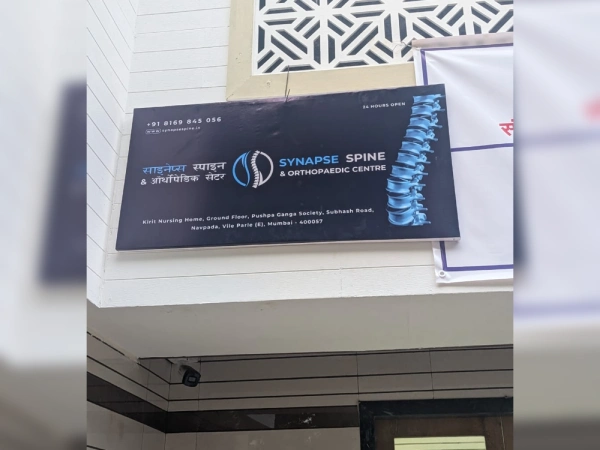
During my review of specialised spine-care facilities in Mumbai, I found that patients looking for an Orthopaedic centre Vile Parle may benefit from a centre that combines specialist consultation, diagnostic assessment, conservative treatment and advanced surgical options under one roof. Synapse Spine focuses specifically on spinal conditions and provides evaluation and treatment for back pain, neck pain, disc disorders, spinal stenosis, scoliosis and other conditions affecting the spine.
Rather than treating back pain as a single condition, a spine-focused consultation looks at the underlying cause, severity of symptoms, neurological findings, imaging and the patient’s daily functional limitations. This approach can help determine whether physiotherapy, medication, lifestyle modification, injections or surgery may be appropriate.
Orthopaedic Centre Vile Parle for Specialised Spine Treatment
Synapse Spine is positioned as a dedicated spine-care centre serving patients in and around Vile Parle and Mumbai. Its clinical approach covers both non-operative and operative management, allowing patients to be assessed according to the severity and cause of their spinal condition.
Common problems evaluated at a specialised spine centre include:
- Persistent back and neck pain
- Slipped or herniated discs
- Sciatica and nerve compression
- Lumbar spinal stenosis
- Cervical spine disorders
- Scoliosis
- Spinal fractures and instability
- Degenerative spine conditions
- Conditions requiring minimally invasive or endoscopic surgery
A detailed assessment is particularly important when pain is accompanied by numbness, weakness, difficulty walking or changes in bladder or bowel control.
Minimally Invasive Spine Surgery
One of the areas associated with modern spine care is minimally invasive surgery. Instead of using larger traditional surgical exposures where appropriate, minimally invasive techniques aim to reduce tissue disruption while addressing the underlying spinal problem.
Depending on the diagnosis, minimally invasive approaches may be considered for selected disc, stenosis and other spinal conditions. The exact procedure depends on imaging findings, symptoms, previous treatment and overall health.
Endoscopic Spine Surgery
Endoscopic spine surgery uses a small access point and specialised equipment to visualise and treat certain spinal conditions. It may be suitable for carefully selected patients and can potentially reduce soft-tissue disruption compared with some conventional procedures.
Patients should not assume that an endoscopic procedure is automatically better than traditional surgery. The appropriate technique depends on the anatomy, diagnosis and surgeon’s assessment.
Spinal Fusion Surgery
Spinal fusion may be recommended in situations where stabilisation of one or more spinal segments is necessary. It involves joining vertebrae to provide stability and address specific structural problems.
The decision to undergo fusion requires careful assessment because surgery is generally considered only when the expected benefits outweigh the risks.
Scoliosis Management
Scoliosis involves an abnormal curvature of the spine. Treatment varies according to age, degree of curvature, progression and symptoms. Some patients can be managed through monitoring and non-operative care, while others may require surgical correction.
A spine specialist can evaluate imaging and clinical findings to determine the appropriate treatment pathway.
Conservative Treatment Before Surgery
Not every patient with back pain requires an operation. In many cases, doctors initially consider conservative measures such as medication, physiotherapy, posture modification, activity changes and targeted rehabilitation.
The purpose of specialist assessment is therefore not simply to identify candidates for surgery but also to determine when surgery can be avoided.
For patients visiting an Orthopaedic centre Vile Parle, asking about non-surgical treatment options can be an important part of the consultation.
Synapse Spine Surgeons: Qualifications and Clinical Experience
The Synapse Spine team comprises spine-focused surgeons whose expertise is centred on diagnosing and treating spinal disorders. Their professional profiles provide information about their medical education, specialist surgical training, clinical experience and areas of interest.
The experience of Synapse Spine surgeons spans modern spine procedures and different approaches to spinal conditions. Their specialist focus includes minimally invasive techniques, endoscopic procedures, spinal decompression, fusion procedures and management of complex spinal disorders.
A spine surgeon’s training is particularly important because spinal procedures require detailed knowledge of spinal anatomy and the neurological structures surrounding the vertebral column. Experience in selecting appropriate patients and determining when surgery is or is not required is equally important.
Patients should review the individual surgeon’s qualifications and discuss the specific procedure being recommended during consultation.
A Dedicated Spine-Focused Clinic Environment
A dedicated spine centre offers an environment where patients can discuss their symptoms in detail and undergo specialist evaluation based on their particular condition. At Synapse Spine, the clinical focus is specifically on spinal health rather than general orthopaedic problems.
For a patient with persistent back or neck pain, this type of focused consultation can help organise the diagnostic process. The doctor may review previous scans, assess neurological function and discuss how symptoms affect mobility, work, sleep and daily activities.
The clinic environment is designed around spine consultations and treatment planning, with the objective of helping patients understand their diagnosis and available options.
When Should You See a Spine Specialist?
Occasional back pain may improve with rest and conservative measures. However, specialist evaluation may be appropriate when pain persists, repeatedly returns or interferes with normal activities.
Patients should consider medical assessment when they experience:
- Persistent or worsening back pain
- Pain radiating into the arms or legs
- Numbness or tingling
- Muscle weakness
- Difficulty walking or maintaining balance
- Pain that does not improve with initial treatment
- Symptoms following an injury
- Significant spinal deformity
Sudden severe weakness or loss of bladder or bowel control requires urgent medical evaluation rather than waiting for a routine appointment.
Benefits and Considerations of Specialist Spine Care
A spine-focused evaluation can help identify the underlying cause of symptoms and establish a structured treatment plan. It may also help patients understand whether surgery is actually necessary.
At the same time, spine procedures can involve risks. Depending on the operation, these may include infection, bleeding, nerve injury, recurrence of symptoms, blood clots, anaesthesia-related complications, persistent pain or the need for additional treatment.
Patients should ask about expected outcomes, alternatives, recovery time, restrictions and potential complications before consenting to any procedure.
Why Choose a Spine-Focused Specialist?
Searching for an Orthopaedic centre Vile Parle should involve more than looking at location alone. Patients should consider whether the centre has appropriately trained specialists, experience with their particular spinal condition, access to relevant diagnostic facilities and a clear approach to both surgical and non-surgical care.
Synapse Spine’s dedicated focus on spinal conditions makes it relevant for patients seeking specialist assessment for persistent back, neck or nerve-related symptoms.
For patients searching for a Top Spine Specialist in Mumbai, India, the most appropriate choice should ultimately be based on the diagnosis, the surgeon’s relevant experience and an informed discussion about available treatment options.
What to Expect During Your Consultation
A first consultation generally involves a discussion of symptoms, medical history and previous treatment. The surgeon may perform a physical and neurological examination and review available imaging such as X-rays, CT scans or MRI scans.
Additional investigations may be recommended when necessary.
The treatment plan depends on the diagnosis. Some patients may be advised to continue conservative management, while others may require injections or surgery. Patients should feel comfortable asking why a particular treatment is being recommended and whether alternatives are available.
Consult Synapse Spine
If you are experiencing persistent back pain, neck pain, sciatica, disc-related symptoms or another spinal concern, you can contact Synapse Spine to arrange a specialist consultation.
📞 +91 81698 45056 | +91 93726 71858 | +91 93211 24611
📧 synapsespine@gmail.com
Get Directions to the Clinic – Synapse Spine, Mumbai
A consultation with the Synapse Spine surgeons can help patients understand the cause of their symptoms and whether conservative management, minimally invasive treatment or another intervention may be appropriate.
Frequently Asked Questions
1. What conditions are treated at a spine centre?
A spine centre may evaluate conditions such as slipped discs, sciatica, spinal stenosis, scoliosis, degenerative spinal disorders, cervical conditions and other causes of back or neck pain.
2. Does every back-pain patient need surgery?
No. Many spinal conditions can initially be managed with conservative treatment, including medication, physiotherapy, rehabilitation and lifestyle changes. Surgery is considered when clinically appropriate.
3. What is endoscopic spine surgery?
Endoscopic spine surgery uses specialised instruments and a small access point to treat selected spinal conditions. Suitability depends on the patient’s diagnosis, anatomy and imaging findings.
4. How do I choose a spine surgeon?
Consider the surgeon’s qualifications, specialist training, experience with your particular condition, treatment options offered and willingness to explain the benefits, risks and alternatives before making a decision.