
Back pain is one of the leading causes of disability worldwide, affecting people of all ages and lifestyles. While many patients improve with physiotherapy, medication, and lifestyle modifications, some continue to experience persistent pain despite conservative treatment. In recent years, regenerative medicine has introduced innovative approaches that aim to promote the body’s natural healing processes. One such treatment gaining attention is PRP for back pain, which uses the patient’s own platelets to support tissue repair and reduce inflammation.
At Synapse Spine, a dedicated spine care centre, Synapse Spine surgeons evaluate whether Platelet-Rich Plasma (PRP) therapy is an appropriate option as part of a comprehensive treatment plan. PRP is not suitable for every spinal condition, but in carefully selected patients, it may complement other non-surgical treatments and potentially delay or reduce the need for surgery.
Understanding PRP for Back Pain
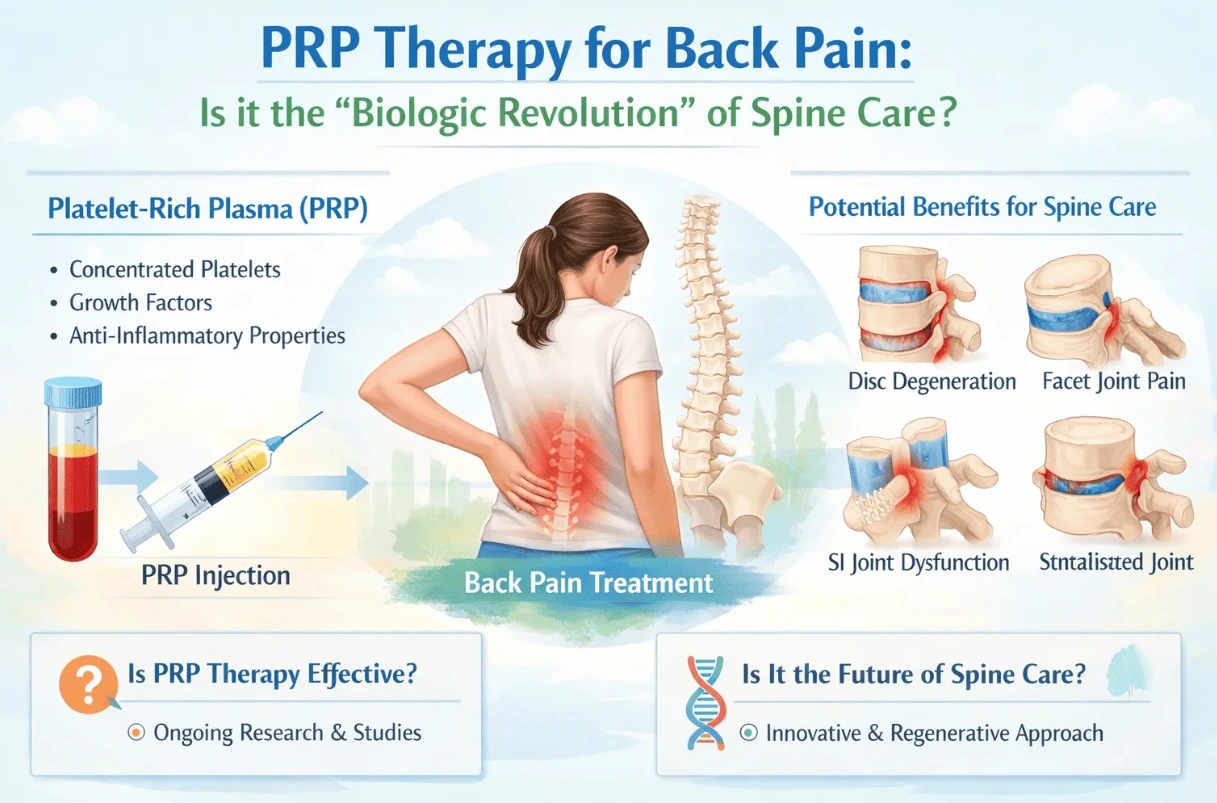
Platelet-Rich Plasma (PRP) therapy is a regenerative treatment that utilizes a concentrated sample of the patient’s own blood platelets. Platelets contain growth factors and bioactive proteins that may help stimulate tissue healing, reduce inflammation, and support the repair of damaged structures.
In spine care, PRP is being explored for conditions affecting muscles, ligaments, tendons, facet joints, sacroiliac joints, and certain degenerative spinal disorders. The goal is to encourage the body’s natural healing response rather than simply masking pain.
What is PRP Therapy?
PRP therapy involves collecting a small amount of the patient’s blood and processing it in a specialized centrifuge. This process separates platelet-rich plasma from other blood components.
The concentrated PRP is then injected into carefully selected areas under image guidance to ensure accurate placement.
The treatment is minimally invasive and is usually performed as an outpatient procedure.
How Does PRP Work?
Platelets contain numerous growth factors that may contribute to tissue repair by:
- Supporting collagen production
- Reducing inflammation
- Promoting cellular regeneration
- Encouraging blood vessel formation
- Enhancing tissue healing
- Stimulating natural repair mechanisms
Although research continues to evolve, PRP is considered a promising option for selected musculoskeletal and spine-related conditions.
Conditions That May Benefit
Following detailed evaluation, PRP may be considered for patients with:
- Chronic mechanical back pain
- Facet joint pain
- Sacroiliac joint dysfunction
- Ligament injuries
- Muscle injuries around the spine
- Mild degenerative disc disease
- Tendon-related back pain
- Sports-related spinal soft tissue injuries
Not every patient with back pain is a candidate for PRP, making proper diagnosis essential.
Who is a Suitable Candidate?
Patients may be considered for PRP therapy if they:
- Have chronic back pain lasting several months
- Have not responded adequately to conservative treatment
- Prefer minimally invasive options
- Do not have active infections
- Have realistic expectations
- Are medically suitable after evaluation
A spine specialist determines eligibility based on imaging findings, clinical examination, and overall health.
How is the Procedure Performed?
The procedure typically includes:
Clinical Assessment
The spine specialist evaluates:
- Medical history
- MRI findings
- Physical examination
- Pain pattern
- Previous treatments
- Functional limitations
Blood Collection
A small sample of blood is collected from the patient.
PRP Preparation
The blood is processed in a centrifuge to isolate platelet-rich plasma.
Guided Injection
Using ultrasound or fluoroscopic guidance, PRP is injected precisely into the targeted structure.
Recovery
Patients are generally observed briefly before returning home with individualized aftercare instructions.
Meet the Synapse Spine Surgeons
The Synapse Spine surgeons comprise a team of highly qualified spine specialists with advanced training in orthopedic spine surgery, neurosurgery, minimally invasive spine procedures, and complex spinal disorders. Their expertise includes the diagnosis and management of conditions such as herniated discs, spinal stenosis, scoliosis, spinal deformities, cervical and lumbar disorders, trauma, and degenerative spine diseases.
Recognized among the Top Spine Specialist in Mumbai, India, the team combines years of clinical experience with evidence-based treatment protocols to provide individualized patient care. Their approach emphasizes accurate diagnosis, conservative management whenever appropriate, minimally invasive interventions, and advanced surgical techniques when necessary.
Synapse Spine offers a modern, patient-focused clinical environment equipped with advanced imaging, precision-guided intervention facilities, and state-of-the-art surgical infrastructure. Patients benefit from multidisciplinary care involving spine surgeons, pain specialists, physiotherapists, rehabilitation experts, and radiologists, ensuring comprehensive evaluation and personalized treatment planning.
Potential Benefits of PRP Therapy
For appropriately selected patients, PRP therapy may offer:
- Minimally invasive treatment
- Utilization of the patient’s own blood
- Reduced inflammation
- Support for natural tissue healing
- Outpatient procedure
- Short recovery time
- Potential reduction in pain
- Improved functional mobility
Individual outcomes vary depending on the diagnosis and severity of the condition.
Benefits and Possible Risks
Benefits
- No major surgery
- Uses autologous blood products
- Minimal downtime
- Image-guided precision
- Personalized treatment
- May complement rehabilitation programs
Possible Risks
Although generally considered safe, potential risks include:
- Temporary soreness
- Mild swelling
- Bruising
- Infection (rare)
- Bleeding
- Variable treatment response
Patients are counseled regarding expected outcomes and limitations before undergoing therapy.
Recovery and Aftercare
Following PRP treatment, patients are commonly advised to:
- Avoid strenuous activity for several days
- Follow prescribed physiotherapy
- Stay hydrated
- Avoid anti-inflammatory medications if instructed
- Attend follow-up visits
- Gradually resume activities
- Follow individualized rehabilitation protocols
Recovery timelines differ based on the treated condition and the patient’s healing response.
Why Choose Synapse Spine?
Patients choose Synapse Spine because of its:
- Dedicated spine specialists
- Multidisciplinary treatment approach
- Advanced diagnostic technology
- Image-guided procedures
- Personalized rehabilitation plans
- Evidence-based treatment protocols
- Modern spine care facilities
- Focus on minimally invasive solutions whenever appropriate
Contact Synapse Spine
📞 +91 81698 45056 | +91 93726 71858 | +91 93211 24611
📧 synapsespine@gmail.com
Get Directions to the Clinic – Synapse Spine, Mumbai
If you are experiencing persistent back pain and would like to explore whether PRP for back pain is appropriate for your condition, schedule a consultation with the Synapse Spine surgeons. A detailed clinical assessment, imaging review, and individualized treatment plan can help determine whether regenerative therapy may complement your spine care. Whether your goal is pain relief, improved mobility, or avoiding surgery where appropriate, the spine specialists at Synapse Spine provide evidence-based guidance tailored to your needs.
Frequently Asked Questions
1. Is PRP therapy suitable for every type of back pain?
No. PRP is most appropriate for selected patients with specific musculoskeletal or degenerative spine conditions. A spine specialist will determine whether it is suitable after clinical evaluation and imaging.
2. How many PRP sessions are usually required?
The number of sessions varies depending on the condition being treated, symptom severity, and the patient’s response to therapy. Some patients may benefit from a single treatment, while others may require additional sessions.
3. Is PRP therapy painful?
Patients may experience mild discomfort during the injection and temporary soreness afterward. Image-guided techniques help improve accuracy and minimize discomfort.
4. How long does it take to notice improvement after PRP therapy?
Improvement is typically gradual because PRP works by supporting the body’s natural healing process. Some patients notice changes within a few weeks, while others may require several months to experience the full benefits.