
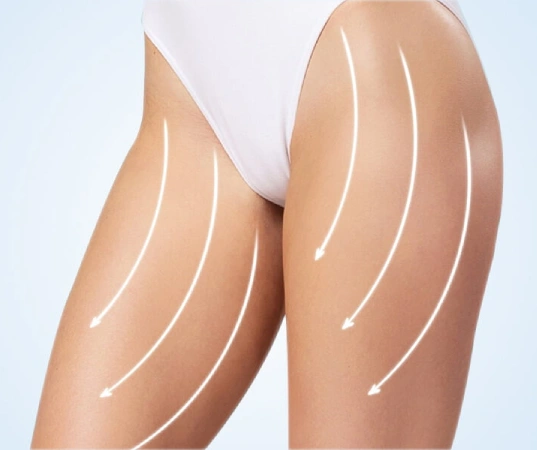
Loose skin around the thighs can affect both appearance and comfort. It may develop after significant weight loss, ageing, pregnancy, or changes in body composition. While exercise can strengthen the underlying muscles, it cannot remove substantial amounts of excess skin. For people experiencing persistent skin laxity, body-contouring surgery can provide a more effective solution.
A thigh lift surgery in mumbai is a body-contouring procedure designed to remove excess skin and improve the shape and firmness of the thighs. Depending on the patient’s needs, the procedure may also be combined with liposuction to address localized fat deposits. At Jewel Aesthetic Centre, Dr. Devayani Barve creates individualized treatment plans based on body proportions, skin quality, excess tissue, and the patient’s aesthetic goals.
What Is a Thigh Lift?
A thigh lift, also known as thighplasty, is a plastic-surgery procedure that removes excess skin and reshapes the thigh area. It is particularly useful for people who have significant skin laxity that does not improve with diet or exercise.
The procedure is not intended as a weight-loss treatment. Instead, it is designed to improve body contours after weight has stabilized.
A thigh lift may address:
- Loose skin on the inner thighs
- Sagging on the outer thighs
- Excess skin after major weight loss
- Skin folds and chafing
- Irregular thigh contours
- Reduced definition between the thighs, hips, and buttocks
The appropriate technique depends on where the excess skin is located and how much correction is required.
Why Does Thigh Skin Become Loose?
Skin elasticity decreases naturally with age. However, several other factors can contribute to loose thigh skin.
Significant Weight Loss
After substantial weight loss, the skin may not contract sufficiently to match the body’s reduced volume. This can leave folds of loose skin around the thighs.
Ageing
As collagen and elastin production decline, skin gradually loses firmness and its ability to retract.
Pregnancy and Body Changes
Major changes in body size can stretch the skin and affect its elasticity.
Genetics
Some people naturally have less elastic skin or are more likely to develop localized skin laxity.
When excess skin becomes significant, exercise alone cannot remove it. Surgical body contouring may therefore be considered after an appropriate medical assessment.
Types of Thigh Lift Procedures
There are different approaches to thighplasty, and the choice depends on the patient’s anatomy and aesthetic objectives.
Inner Thigh Lift
An inner thigh lift focuses on loose skin along the inside of the upper legs. It may be suitable for patients experiencing significant laxity in this region, particularly after weight loss.
Outer Thigh Lift
An outer thigh lift addresses excess skin around the outer thigh and hip region. It can improve the transition between the hips and thighs.
Circumferential Thigh Lift
A circumferential thigh lift addresses a larger portion of the thigh and may be considered for patients with extensive skin excess following major weight loss.
The surgeon determines the incision pattern according to the patient’s skin laxity, body shape, and desired correction.
Who Is a Good Candidate?
A thigh lift may be appropriate for adults who have excess skin or significant laxity around the thighs and are unable to achieve the desired contour through lifestyle measures alone.
A suitable candidate generally:
- Has reached a relatively stable weight
- Has realistic expectations
- Is medically fit for surgery
- Has excess or sagging thigh skin
- Understands the possibility of permanent surgical scars
- Is willing to follow postoperative instructions
Maintaining a stable weight is particularly important because substantial weight fluctuations after surgery can affect the result.
A consultation is necessary to determine whether thighplasty is appropriate for an individual patient.
How Is Thigh Lift Surgery Performed?
Thigh lift surgery is generally performed under general anesthesia. Before the procedure, the surgeon carefully marks the areas requiring correction and determines the appropriate incision pattern.
During surgery, excess skin is removed and the remaining tissues are repositioned to create a smoother, firmer contour. If localized fat is also present, liposuction may be considered as part of the overall body-contouring plan.
According to Dr. Devayani Barve’s treatment information, the procedure generally takes around 2–4 hours, although the exact duration depends on the extent and complexity of the surgery.
The surgical technique is customized rather than standardized because patients can have very different patterns of skin laxity.
Can Liposuction Be Combined With a Thigh Lift?
In selected cases, liposuction can complement thighplasty.
The two procedures address different concerns. A thigh lift removes excess skin, while liposuction reduces localized fat deposits. Combining them may help create a more balanced contour when both excess skin and excess fat are present.
However, liposuction cannot replace surgical skin removal when significant laxity exists. The decision to combine procedures should be made after evaluating skin elasticity, fat distribution, and overall body proportions.
What Is Recovery Like?
Recovery after thighplasty varies according to the extent of surgery and the individual’s healing response.
Patients may experience swelling, bruising, tightness, and discomfort during the initial recovery period. Compression garments may be recommended to support the treated area and help manage swelling.
Dr. Barve’s treatment information indicates that many patients may return to light activities within approximately 1–2 weeks, while strenuous exercise and demanding physical activities may need to be avoided for approximately 4–6 weeks.
Recovery instructions can vary, so patients should follow the specific recommendations provided by their surgeon.
What About Scarring?
Scarring is an expected part of thigh-lift surgery because excess skin must be removed through incisions.
The location and length of scars depend on the surgical technique. Incisions are strategically planned to make scars as discreet as reasonably possible, but they will not disappear completely.
Individual scar formation depends on factors including genetics, skin type, wound healing, surgical technique, and postoperative care.
During consultation, patients should discuss the expected incision pattern and scar placement before making a decision.
Potential Risks and Considerations
Like any surgical procedure, thighplasty has potential risks. These may include:
- Infection
- Bleeding
- Seroma or fluid collection
- Delayed wound healing
- Changes in skin sensation
- Asymmetry
- Visible or unfavorable scarring
- Need for revision surgery
A detailed medical evaluation helps identify individual risk factors. Following preoperative and postoperative instructions is also important for a safe recovery.
How Long Do Results Last?
A thigh lift can provide long-lasting improvement in thigh contour. However, the ageing process continues after surgery, and future weight changes can affect the result.
Patients can help maintain their results by:
- Keeping their weight stable
- Following a healthy lifestyle
- Exercising after receiving medical clearance
- Maintaining appropriate nutrition
- Following postoperative care instructions
The procedure does not prevent future ageing, but stable weight and healthy habits can help preserve the improved contour.
Why Choose Dr. Devayani Barve?
Dr. Devayani Barve is a Plastic, Aesthetic & Reconstructive Surgeon practicing in Mumbai. She completed her MBBS and MS in General Surgery from KEM Hospital, Mumbai, followed by an MCh in Plastic Surgery from PGIMER, Chandigarh. She also holds ECFMG certification from the USA.
Her advanced international training includes an aesthetic and breast surgery fellowship with Dr. Onelio Garcia Jr. in Miami, participation as a VEST program scholar at the University of Miami, and an International Aesthetic Fellowship with the American Society of Aesthetic Plastic Surgery.
Dr. Barve has also served as an Assistant Professor of Plastic Surgery at Christian Medical College, Vellore. Her clinical experience covers aesthetic, plastic, and reconstructive surgery, with expertise extending to body-contouring procedures.
Her areas of practice include thigh lift, tummy tuck, liposuction, mommy makeover, breast procedures, facial aesthetic surgery, and other body-contouring treatments.
For patients looking for the Best Plastic Surgeon in India, Dr. Barve’s formal plastic-surgery training, international aesthetic exposure, and experience in body contouring are important factors to consider.
A Professional and Personalized Clinic Environment
Jewel Aesthetic Centre is located at Jewel Hospital in JVPD Scheme, Juhu, Mumbai. Patients are seen by prior appointment, providing an opportunity for detailed consultation and individualized treatment planning.
Body-contouring surgery requires careful planning because every patient has a different distribution of excess skin and tissue. During consultation, factors such as body proportions, skin quality, previous weight changes, medical history, and expectations can be considered.
This personalized approach helps patients understand the proposed procedure, recovery requirements, expected scarring, and potential risks before deciding to proceed.
Choosing the Right Plastic Surgeon
Selecting a surgeon for body-contouring surgery should involve more than comparing treatment costs. Patients should consider the surgeon’s qualifications, relevant surgical experience, approach to patient safety, facility standards, and ability to provide realistic expectations.
An experienced plastic surgeon should explain what the procedure can and cannot achieve and discuss alternative approaches where appropriate.
Dr. Devayani Barve combines specialist plastic-surgery education with international aesthetic training and experience in body-contouring procedures, allowing treatment plans to be tailored to individual patients.
Book a Consultation With Dr. Devayani Barve
If excess thigh skin is affecting your comfort, clothing choices, mobility, or confidence, professional evaluation can help you understand your options.
Dr. Devayani Barve can assess your concerns and determine whether an inner thigh lift, outer thigh lift, circumferential approach, or combination treatment is appropriate for your body-contouring goals.
📞91673 34189 | 91360 41545 | 90823 98791
📍 Visit: Jewel Aesthetic Centre, Juhu, Mumbai
Frequently Asked Questions
1. How long does thigh lift surgery take?
The procedure generally takes around 2–4 hours, although the duration can vary depending on the type and extent of thigh lift being performed.
2. Will a thigh lift remove all loose skin?
A thigh lift is specifically designed to remove excess skin and improve contour, but the amount of correction depends on individual anatomy and skin laxity. Your surgeon can explain the expected outcome during consultation.
3. How much downtime is required after thighplasty?
Many patients can resume light activities within approximately 1–2 weeks, while strenuous exercise may need to be avoided for around 4–6 weeks. Recovery varies depending on the extent of surgery and individual healing. (drdevayani.com)
4. Can liposuction be performed with a thigh lift?
Yes. In appropriately selected patients, liposuction can be combined with thighplasty to address localized fat while the thigh lift removes excess skin. Your surgeon will determine whether combining the procedures is suitable.