
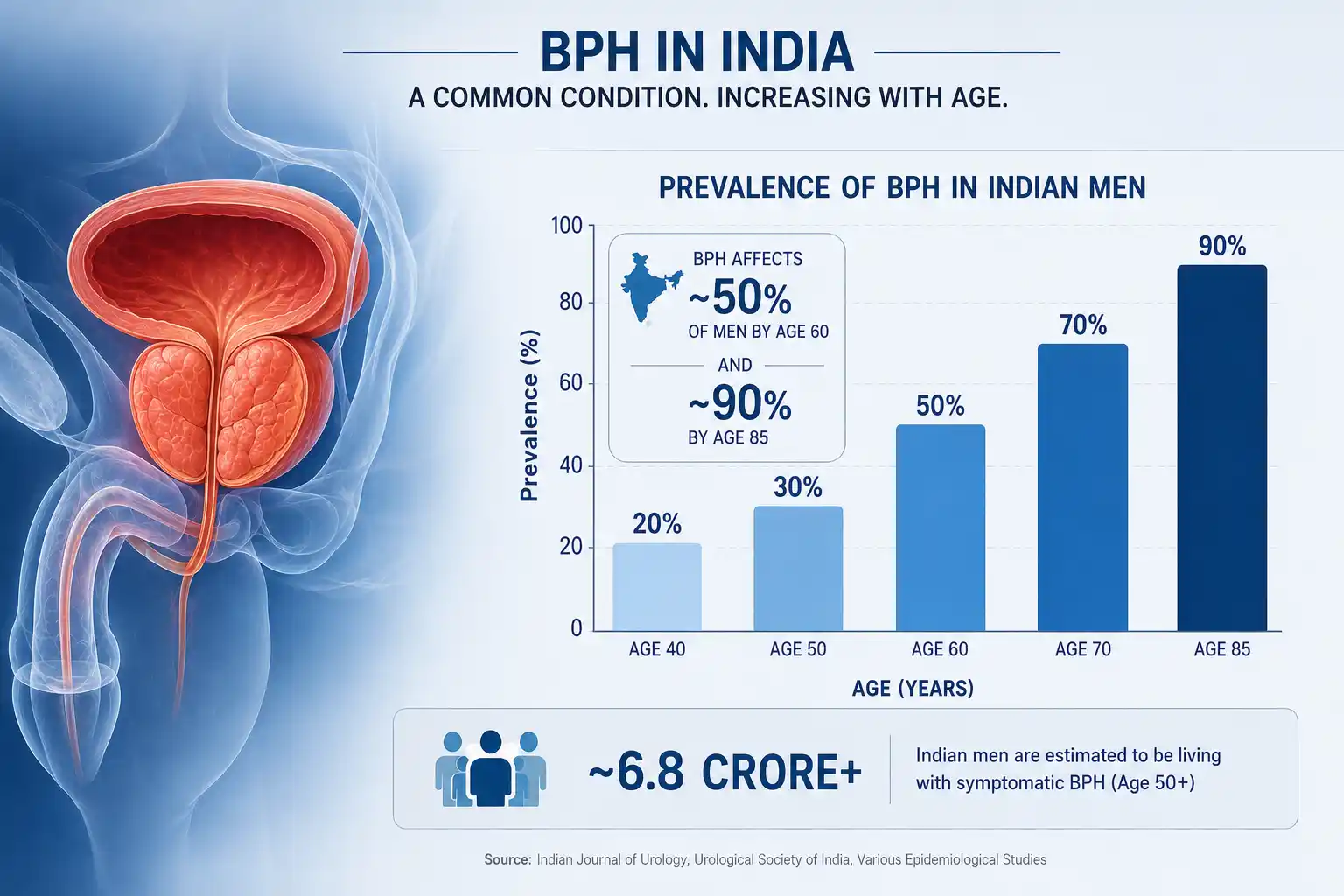
Frequent urination, a weak urine stream, difficulty starting urination, and repeated trips to the bathroom at night can disrupt daily life, particularly as men grow older. These symptoms may be associated with benign prostatic hyperplasia (BPH), a non-cancerous enlargement of the prostate gland. With an appropriate diagnosis, several treatment options are available to improve urinary symptoms and protect bladder health.
At Jewel Urology Center, Dr. Vivek Venkat provides specialist evaluation and individualized treatment planning for men experiencing prostate-related urinary problems. As a consultant uro-oncologist and robotic urologist, he offers expertise in medical management and surgical treatment of urological conditions.
If you are considering Enlarged Prostate Treatment in Mumbai, consulting an experienced urologist can help identify the cause of your symptoms and determine the most suitable approach for your health and lifestyle.
What Is an Enlarged Prostate?
The prostate is a small gland located below the urinary bladder and surrounding the urethra, the tube that carries urine out of the body. As men age, the prostate may gradually increase in size. This condition is known as benign prostatic hyperplasia, or BPH.
When the prostate enlarges, it can narrow the urethra and make it harder for urine to flow freely. The condition is non-cancerous, but its symptoms can affect sleep, work, travel, and overall quality of life.
Common symptoms include:
- Frequent urination during the day.
- Waking up multiple times at night to urinate.
- A weak or interrupted urine stream.
- Difficulty starting urination.
- Dribbling at the end of urination.
- A feeling that the bladder has not emptied completely.
- Sudden urgency to pass urine.
These symptoms can also occur with other urinary conditions, so a medical assessment is important rather than assuming that an enlarged prostate is the cause.
Why Does the Prostate Become Enlarged?
Age-related hormonal changes play an important role in prostate growth. The likelihood of BPH generally increases with age, and family history, obesity, diabetes, and other metabolic health factors may also influence risk.
Not every man with an enlarged prostate experiences troublesome symptoms. Similarly, symptom severity does not always correspond directly to prostate size. A relatively small enlargement can cause significant obstruction in some individuals, while a larger prostate may cause fewer symptoms in others.
A urologist considers the severity of urinary difficulties, bladder function, kidney health, medical history, and the effect on everyday activities before recommending treatment.
Meet Dr. Vivek Venkat: Qualifications and Clinical Experience
Dr. Vivek Venkat is a consultant uro-oncologist and robotic urologist with over 15 years of experience, according to his official website. His training and professional background include advanced urological care and complex minimally invasive procedures.
His qualifications include:
- MBBS: B. J. Medical College, Pune.
- MS in General Surgery: K. E. M. Hospital, Mumbai.
- MCh in Urology: Christian Medical College (CMC), Vellore, where he received a gold medal.
- Advanced fellowship training: Uro-oncology and robotic surgery at the University of Miami Miller School of Medicine, USA.
- ECFMG certification: United States.
Dr. Venkat previously served as a Clinical Instructor in Urologic Oncology and Robotic Surgery at the University of Miami Hospital and as an Assistant Professor of Urology and Renal Transplantation at CMC Vellore.
His areas of expertise include prostate disorders, kidney and bladder conditions, robotic surgery, laser treatments, and complex urological procedures. This specialist background supports a comprehensive approach to prostate assessment, from initial diagnosis to medical or surgical treatment when indicated.
Patients researching the Best Uro Surgeon in Mumbai should consider relevant qualifications, experience with the proposed treatment, clear communication, and the availability of appropriate follow-up care.
How Is an Enlarged Prostate Diagnosed?
Accurate diagnosis helps determine whether symptoms are caused by BPH and how urgently treatment is needed. Depending on the patient’s symptoms and medical history, the assessment may include:
Symptom assessment: A standardized questionnaire, such as the International Prostate Symptom Score (IPSS), can help measure symptom severity and monitor improvement.
Physical examination: A digital rectal examination may help the doctor assess the prostate and identify abnormal findings.
Urine tests: Urinalysis can help detect infection, blood, or other abnormalities.
Blood tests: A prostate-specific antigen (PSA) test may be recommended when clinically appropriate to assess prostate health. PSA results must be interpreted in context and do not diagnose cancer on their own.
Ultrasound and residual urine measurement: These can assess prostate size, bladder condition, urine remaining after urination, and possible effects on the kidneys.
Uroflowmetry: This test measures the speed of urine flow and may help assess urinary obstruction.
Not every patient needs every test. Dr. Venkat can recommend investigations according to individual findings.
What Are the Treatment Options for BPH?
Treatment depends on symptoms, prostate size, bladder function, general health, and the presence of complications.
1. Monitoring and Lifestyle Changes
Men with mild symptoms and no concerning complications may be managed initially with monitoring and practical lifestyle changes. These can include reducing caffeine and alcohol, limiting fluids close to bedtime when appropriate, maintaining a healthy weight, and avoiding prolonged delays in urination.
Lifestyle measures may help control symptoms, but they do not reliably reverse prostate enlargement.
2. Medication
Medication is commonly used for bothersome urinary symptoms.
- Alpha blockers, such as tamsulosin, may relax muscles around the prostate and bladder neck, helping urine flow more easily.
- 5-alpha reductase inhibitors, such as finasteride or dutasteride, may gradually reduce prostate size in suitable patients.
- Other medicines may help selected patients with urgency or frequent urination.
Potential side effects and interactions vary. Medication should be prescribed and monitored by a qualified clinician, and patients should not start or stop treatment without medical advice.
3. Minimally Invasive and Surgical Treatments
When symptoms remain troublesome despite medication, or complications develop, a procedure may be considered. Depending on the prostate’s size and the patient’s condition, options may include transurethral resection of the prostate (TURP), laser procedures such as HoLEP, GreenLight laser treatment, or robotic simple prostatectomy for selected very large prostates.
Each procedure has different benefits, limitations, recovery requirements, and potential complications. Surgery is not necessary for everyone with BPH. The decision should be based on a detailed assessment and discussion with the treating urologist.
Why Choose Jewel Urology Center?
Jewel Urology Center provides consultations for men experiencing prostate and other urinary conditions. Dr. Venkat’s specialist background in urology and minimally invasive surgery supports an approach focused on accurate diagnosis, individualized treatment planning, and explaining available options.
During your consultation, you can discuss symptoms, test results, medications, possible procedures, expected recovery, and follow-up arrangements. The clinic recommends appointments in advance during its scheduled consultation hours.
Early assessment is particularly important if symptoms are worsening or affecting sleep and daily activities. If you cannot pass urine at all, seek emergency medical attention immediately. Fever with urinary symptoms, visible blood in the urine, or severe pain also requires prompt medical assessment.
Book a Consultation With Dr. Vivek Venkat
If urinary symptoms are affecting your comfort or quality of life, arrange a consultation to discuss your prostate health and suitable treatment options. Dr. Vivek Venkat can review your symptoms and investigations and help you understand whether monitoring, medication, or a procedure may be appropriate.
📧appointments@drvivekvenkat.com
Call the center to book an appointment with Dr. Vivek Venkat. Bring your current medication list and any previous urine tests, PSA results, ultrasound reports, or other relevant medical records.
Frequently Asked Questions
1. Can an enlarged prostate be treated without surgery?
Yes. Many men manage BPH with monitoring, lifestyle adjustments, and medication. Surgery may be considered if symptoms remain severe or complications occur.
2. Does an enlarged prostate mean prostate cancer?
No. BPH is a non-cancerous enlargement and is different from prostate cancer. However, similar symptoms can have different causes, so assessment by a urologist is important.
3. When should I see a urologist for prostate symptoms?
Seek an appointment if you have a weak urine stream, difficulty starting urination, frequent nighttime urination, or a persistent feeling of incomplete bladder emptying. An inability to pass urine is an emergency.
4. How do I book an appointment with Dr. Vivek Venkat?
Call Jewel Urology Center at 09136041545 . Consultations are available Monday through Saturday from 4:30 PM to 6:00 PM; the center is closed on Sundays.