
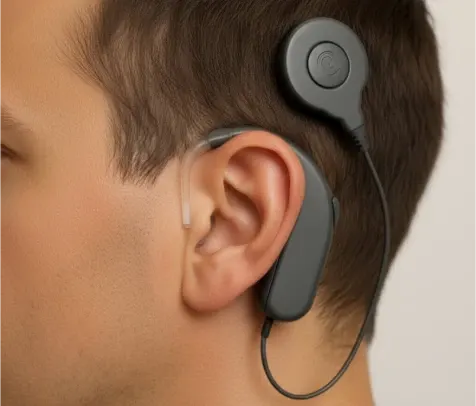
Hearing loss can affect communication, education, work, relationships and everyday independence. For some people with severe-to-profound hearing loss, conventional hearing aids may not provide enough benefit, particularly when speech clarity remains poor. During my review of advanced hearing-restoration services in Mumbai, I found that cochlear implants can be considered for appropriately selected children and adults after detailed hearing and medical evaluation. For families exploring a Cochlear implant in Mumbai, understanding candidacy, assessment, surgery, rehabilitation and long-term follow-up is essential before making a treatment decision.
What Is a Cochlear Implant?
A Cochlear implant in Mumbai is an electronic hearing device designed for people with significant sensorineural hearing loss who receive limited benefit from hearing aids. Unlike a conventional hearing aid, which primarily amplifies sound, a cochlear implant bypasses damaged portions of the inner ear and electrically stimulates the auditory nerve.
The system generally consists of an external sound processor and an internal component that is surgically placed under the skin. Sound picked up by the external processor is converted into electrical signals that are transmitted to the implanted component and then to the cochlea.
The objective is not to create completely normal hearing. Rather, the implant can provide access to useful auditory information, with the eventual experience depending on factors such as the individual’s hearing history, age at implantation, auditory nerve function, rehabilitation and consistent device use.
Who May Benefit From a Cochlear Implant?
Cochlear implants may be considered for children or adults with severe-to-profound hearing loss when appropriately fitted hearing aids do not provide sufficient speech or hearing benefit. The decision is not based solely on an audiogram.
A comprehensive evaluation may include hearing tests, speech perception assessment, imaging and medical examination. For children, developmental history, communication abilities and previous hearing-aid use are also important considerations.
Early identification and intervention are particularly important in children because hearing plays a major role in the development of speech and language. However, adults and older individuals may also be evaluated for implantation depending on their hearing condition and expected benefit.
The reference page describes cochlear-implant services for infants, children, adults and senior patients, with evaluation and rehabilitation forming part of the overall treatment pathway.
Cochlear Implant in Mumbai: Evaluation Before Surgery
Before recommending implantation, an ENT and cochlear-implant team needs to determine whether the patient is an appropriate candidate. This assessment helps distinguish between hearing loss that can be managed with hearing aids and hearing loss where an implant may provide greater benefit.
Evaluation may include:
- Detailed medical and hearing history
- Pure-tone and other audiological tests
- Speech and speech-perception testing
- Hearing-aid trial and benefit assessment
- Imaging of the ear and inner-ear structures when indicated
- Assessment of the auditory nerve and cochlea
- Discussion of expectations and rehabilitation
- Evaluation by an audiology and speech-language team
For children, the assessment may also consider language development, educational environment and family support.
This multidisciplinary process is important because cochlear implantation is not simply a surgical procedure. Programming, auditory training and ongoing follow-up are integral parts of the journey.
How Cochlear Implant Surgery Works
Cochlear implant surgery is performed under anaesthesia. The internal implant is placed beneath the skin, with an electrode positioned within the cochlea. The external processor is fitted after the surgical site has healed sufficiently, according to the treating team’s protocol.
Surgery itself is only one stage of treatment. After activation, the device is programmed or “mapped” so that electrical stimulation is appropriately adjusted for the individual patient. Several programming sessions may be required as the patient becomes accustomed to the sound.
The experience of hearing through a cochlear implant can initially be different from natural hearing. The brain requires time and auditory training to interpret the new signals.
Rehabilitation After Implantation
Rehabilitation is one of the most important aspects of cochlear-implant care, particularly for children who are developing spoken language.
Auditory-verbal therapy and speech-language support can help patients learn to recognise, understand and interpret sounds. Adults may also require auditory rehabilitation to improve speech understanding, particularly in challenging listening environments.
Progress varies considerably. Some people adapt relatively quickly, while others require prolonged training. Consistent use of the device, regular mapping appointments and participation in recommended therapy can support the adaptation process.
The cochlear-implant programme described by Dr. Shama Kovale’s practice includes access to audiology, speech and auditory-verbal therapy, mapping, programming and follow-up support.
Dr. Shama Kovale: Qualifications and Clinical Experience
Dr. Shama Kovale is an ENT surgeon and laryngologist with more than 23 years of clinical and surgical experience. Her qualifications include MBBS, DLO and MS in ENT from B.Y.L. Nair Hospital and Topiwala National Medical College, Mumbai. Her professional profile also lists advanced training in voice and swallowing disorders at UC Davis in the United States and cochlear-implant surgery training at P.D. Hinduja Hospital, Mumbai.
Her clinical experience covers a broad range of ear, nose and throat conditions, with particular expertise in voice, swallowing and airway disorders. Her surgical expertise includes ear microsurgery, cochlear implantation, endoscopic ENT procedures and airway reconstruction.
Dr. Shama Kovale has worked at institutions including Hinduja Hospital, Bhagwati Hospital and A.J.B. ENT Hospital. She currently serves as a Senior Consultant at Kokilaben Dhirubhai Ambani Hospital, Andheri West.
Why Consider an ENT Specialist in Mumbai for Hearing Restoration?
Cochlear implantation requires more than surgical expertise. Patients may need audiological assessment, device programming, speech and language rehabilitation, imaging and long-term follow-up.
An ENT Specialist in Mumbai with specific training in cochlear implantation can evaluate whether the procedure is appropriate and explain the potential benefits, limitations and responsibilities involved.
Dr. Shama Kovale’s professional profile highlights her experience in cochlear implants alongside ear microsurgery, pediatric ENT, airway reconstruction and advanced voice procedures. Her patient-centred approach also emphasises explaining diagnoses and treatment plans clearly.
Clinic Environment at Kokilaben Dhirubhai Ambani Hospital
Dr. Shama Kovale practices at Kokilaben Dhirubhai Ambani Hospital and Medical Research Institute in Four Bungalows, Andheri West, Mumbai. The hospital provides a tertiary-care environment where patients can access specialised ENT and related medical services.
Dr. Shama Kovale also leads the Voice and Swallowing Centre at the hospital, described on her profile as Mumbai’s first dedicated centre for these specialised conditions. The centre offers services including cochlear-implant programmes, swallowing assessments and advanced voice-related procedures.
The cochlear-implant information on her website further describes access to an advanced audiology setup, speech and auditory-verbal therapy, mapping and programming support, and implant technology.
Cochlear Implant in Mumbai: What Patients Should Expect
A realistic understanding of the treatment journey can help patients and families prepare for implantation.
The process generally involves:
1. Initial consultation: The ENT specialist reviews the patient’s hearing history and symptoms.
2. Audiological evaluation: Detailed hearing and speech assessments establish the degree of hearing loss and hearing-aid benefit.
3. Candidacy assessment: The medical and audiology team determines whether implantation is appropriate.
4. Surgery: The internal implant is surgically positioned in the appropriate anatomical location.
5. Activation and mapping: After recovery, the external processor is activated and programmed.
6. Rehabilitation: Auditory and speech therapy helps the brain interpret the new auditory information.
7. Long-term follow-up: Periodic programming, device checks and clinical reviews may be required.
This staged approach means that the outcome cannot be judged immediately after surgery.
Choosing an ENT Doctor in Mumbai for Cochlear Implant Care
For families searching for an ENT Doctor in Mumbai, it is useful to consider the doctor’s specific cochlear-implant training, experience with the relevant age group, access to audiology and rehabilitation services, hospital infrastructure and approach to long-term follow-up.
Dr. Shama Kovale’s profile identifies cochlear-implant surgery as one of her advanced ENT services and lists specialised training at P.D. Hinduja Hospital. Her broader expertise in ear surgery and ENT care provides additional clinical context for patients being evaluated for hearing restoration.
Patients should also discuss realistic expectations, potential complications, rehabilitation requirements, device maintenance and costs before proceeding.
Frequently Asked Questions
1. What is a cochlear implant used for?
A cochlear implant is designed to provide auditory information to people with significant sensorineural hearing loss who obtain insufficient benefit from appropriately fitted hearing aids. Suitability must be determined through specialist evaluation.
2. Can children undergo cochlear implant surgery?
Yes. Children may be considered for cochlear implantation when they meet appropriate medical and audiological criteria. Early evaluation is particularly important because hearing access can influence speech and language development.
3. Does a cochlear implant provide normal hearing?
A cochlear implant does not reproduce natural hearing. It provides electrical stimulation of the auditory system, and the brain requires time and rehabilitation to interpret these signals. Individual results vary.
4. Is rehabilitation necessary after cochlear implant surgery?
Yes. Rehabilitation, device programming and follow-up are important components of cochlear-implant care. Children may require auditory-verbal or speech-language therapy, while adults may also benefit from auditory rehabilitation depending on their needs.
Consultation, Directions and CTA
📞 +91 91528 50769
📧 drshamakovaleent@gmail.com
Get Directions to the Clinic – Kokilaben Dhirubhai Ambani Hospital
If hearing loss is affecting communication or hearing aids are providing limited benefit, contact Dr. Shama Kovale for a comprehensive hearing assessment and discussion of appropriate cochlear-implant options.