
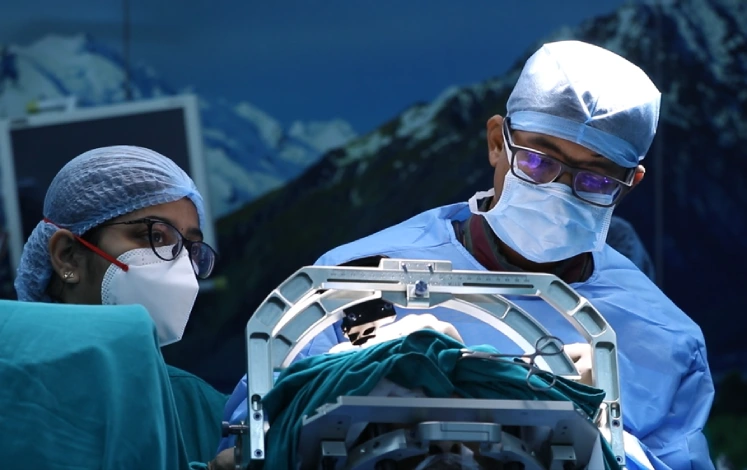
When patients with Parkinson’s disease, essential tremor or dystonia begin considering Deep Brain Stimulation (DBS), one of the first practical questions is often about affordability. Deep brain stimulation Cost India can vary substantially depending on the neurological condition, implant selected, hospital charges, surgical complexity and postoperative programming requirements. At Dr. Manish Baldia’s practice in Mumbai, patients can discuss both the medical suitability of DBS and the financial aspects of treatment before making a decision. DBS is an advanced neurosurgical procedure in which electrodes are implanted in specific brain regions and connected to a neurostimulator placed beneath the skin of the chest.
Deep brain stimulation Cost India: What Does It Include?
The published information from Dr. Manish Baldia’s practice places the cost of DBS surgery in Mumbai at approximately ₹10 lakh to ₹20 lakh, while another DBS-specific page gives a broader range of approximately ₹14 lakh to ₹25 lakh. The variation reflects differences in the patient’s condition, surgical complexity, neurostimulator and hospital-related expenses. Therefore, patients should treat these figures as indicative rather than as a fixed quotation.
A personalized estimate can generally be provided only after evaluating the patient’s diagnosis, treatment requirements and preferred implant.
Major Components of DBS Expenses
The overall expense may include several components:
- Preoperative neurological and neurosurgical consultations
- Brain imaging and other diagnostic investigations
- Surgical and operating-room charges
- Anesthesia and hospital expenses
- Cost of the neurostimulator and electrodes
- Postoperative monitoring
- DBS programming and follow-up consultations
- Rehabilitation, when clinically recommended
The type of neurostimulator is particularly important because different devices have different features and costs.
Why Does DBS Cost Vary Between Patients?
There is no single price for DBS because every treatment plan is individualized. One patient may require a relatively straightforward procedure, while another may have a more complex movement disorder or additional medical concerns.
The condition being treated is one consideration. DBS can be used for selected patients with Parkinson’s disease, essential tremor, dystonia and certain other neurological conditions. The complexity of the procedure, duration of surgery and patient’s overall medical condition can influence hospital costs.
The implant itself is another significant factor. DBS systems can differ in battery type, programming capabilities, MRI compatibility and longevity. Rechargeable systems may have a higher initial cost but can offer longer battery life, while non-rechargeable devices may eventually require battery replacement.
What Is Deep Brain Stimulation?
Deep Brain Stimulation is a neuromodulation procedure used to manage specific symptoms of neurological disorders. During the procedure, thin electrodes are placed in carefully selected areas of the brain. These electrodes are connected to an implantable pulse generator positioned beneath the skin of the chest.
The device delivers controlled electrical stimulation to the targeted brain region. Depending on the condition and stimulation target, DBS can help reduce symptoms such as tremor, rigidity, slowness of movement or abnormal involuntary movements.
Importantly, DBS is generally considered a symptom-management treatment rather than a cure. Careful patient selection and postoperative programming are essential for achieving the intended therapeutic effect.
Who May Be Considered for DBS?
Not everyone with Parkinson’s disease or another movement disorder is automatically a candidate for DBS. A comprehensive assessment is required before surgery.
Potential candidates may include patients whose symptoms are no longer adequately controlled by medication or who experience significant medication-related fluctuations or dyskinesias. The patient’s general health, cognitive status, diagnosis, symptom pattern and expectations also need to be evaluated.
Dr. Manish Baldia’s clinical information emphasizes multidisciplinary assessment before proceeding. Patients should understand that DBS involves a long-term commitment to follow-up and device programming.
Is DBS Worth the Investment?
For families researching Deep brain stimulation Cost India, it is important to consider more than the initial surgical bill. DBS can represent a substantial upfront healthcare expense, but the overall financial picture may also involve long-term medication requirements, follow-up consultations and device management.
Some patients may experience reduced medication requirements after successful DBS, although the extent varies considerably and should not be assumed. The cost of future programming, rehabilitation and eventual battery replacement should also be discussed when comparing different implant options.
Rather than choosing a treatment solely because it has a lower quoted price, patients should evaluate the experience of the surgical team, quality of hospital care, implant technology and availability of long-term programming support.
Insurance and Financing for DBS
Insurance coverage for DBS depends on the patient’s policy, insurer and specific terms. Some policies may cover portions of hospitalization or the procedure, while coverage for the implanted device or other components may vary.
Patients should contact their insurance provider before scheduling surgery and ask for a written clarification of:
- Whether DBS is covered
- Whether the neurostimulator is covered
- Preauthorization requirements
- Hospitalization limits
- Room-rent restrictions
- Coverage for follow-up treatment and programming
- Any exclusions or waiting periods
Where insurance coverage is limited, hospitals may also have financing arrangements or installment options. These should be discussed directly with the hospital rather than assumed.
Additional Costs After DBS Surgery
The financial planning should continue beyond the operation. DBS programming is an important component of treatment because stimulation parameters may need to be adjusted according to symptom response.
The initial programming period can require multiple appointments. Over time, patients may also require periodic device checks and adjustments. Rechargeable and non-rechargeable systems have different battery-management requirements.
Travel and accommodation expenses can also become relevant for patients who live outside Mumbai and need repeated follow-up visits.
Dr. Manish Baldia: Qualifications and Clinical Experience
Dr. Manish Baldia is a functional neurosurgeon specializing in Deep Brain Stimulation, Parkinson’s disease, dystonia, epilepsy and other complex movement disorders. His qualifications include MBBS, MCh in Neurosurgery from Christian Medical College (CMC), Vellore, EEPIN from London and Fellowship training in Functional Neurosurgery.
His professional profile states that he trained and worked at CMC Vellore for 12 years and subsequently developed specialized expertise in functional neurosurgery under Dr. Paresh Doshi. He also received international exposure to functional neurosurgery and neuromodulation in London.
His reported experience includes more than 3,000 brain, spine and DBS surgeries, with more than 250 DBS procedures and more than 3,000 advanced DBS programming sessions listed on his current professional website.
His expertise includes DBS surgery and programming, stereotactic procedures, thalamotomy, radiofrequency procedures, motor-cortex stimulation and spinal-cord stimulation. His professional profile also describes experience in neurocritical care, clinical research and teaching.
Clinic Environment and Neurological Care
Patients searching for a Neuro Doctor in Mumbai can consult Dr. Manish Baldia at Baldia’s Advance Neuro Parkinson’s and Spine Centre in Byculla East. The clinic is located at Shop No. 5, Salsette 27, The New Great Eastern Mills, Dr. Babasaheb Ambedkar Road, Mumbai – 400027.
The centre focuses on neurological and neurosurgical care, including DBS, Parkinson’s disease, epilepsy, brain and spine conditions and other advanced neurosurgical procedures. Dr. Manish Baldia’s practice combines functional neurosurgical expertise with postoperative DBS programming and ongoing patient follow-up.
For patients comparing Deep brain stimulation Cost India, this continued care is an important consideration because DBS does not end with the surgical procedure. Programming and monitoring can have a significant influence on the long-term treatment experience.
How to Plan Financially for DBS
Before proceeding, patients and families can request a detailed estimate rather than relying on a single headline figure. Ask whether the quotation includes the implant, surgeon’s fees, anesthesia, hospital stay, investigations and initial programming.
It is also useful to ask about possible additional expenses, including extended hospitalization, complications, rehabilitation, future programming and battery replacement.
Most importantly, cost should be considered alongside clinical suitability and the experience of the DBS team. The appropriate treatment is the one that balances medical requirements, safety, expected benefits and long-term affordability.
Book a Consultation With Dr. Manish Baldia
If you or a family member is considering DBS for Parkinson’s disease, essential tremor, dystonia or another movement disorder, a specialist consultation can help determine whether the procedure is appropriate and provide a more individualized understanding of the expected expenses.
Dr. Manish Baldia – Baldia’s Advance Neuro Parkinson’s and Spine Centre
📞 96767 67507
📧 drmanishbaldia@gmail.com
Get Directions to the Clinic – Lalbaug Diagnostics
Frequently Asked Questions
1. What is the approximate Deep Brain Stimulation cost in India?
The cost varies considerably depending on the hospital, implant, medical condition and surgical complexity. Dr. Manish Baldia’s published information gives approximate ranges of ₹10 lakh–₹20 lakh and ₹14 lakh–₹25 lakh for DBS surgery in Mumbai. Patients should obtain an individualized quotation after evaluation.
2. What factors affect the cost of DBS surgery?
Important factors include the neurological condition being treated, surgical complexity, hospital charges, type of neurostimulator, duration of hospitalization and postoperative programming or follow-up.
3. Does insurance cover DBS surgery?
Coverage depends on the individual insurance policy. Some insurers may cover part or all of hospitalization and treatment, while coverage for the implanted device and other expenses may vary. Patients should confirm benefits and preauthorization requirements with their insurer.
4. Are there expenses after DBS surgery?
Yes. Patients may require follow-up consultations, device programming, rehabilitation and eventual battery replacement depending on the type of neurostimulator implanted. These long-term expenses should be considered when planning the overall treatment budget.