
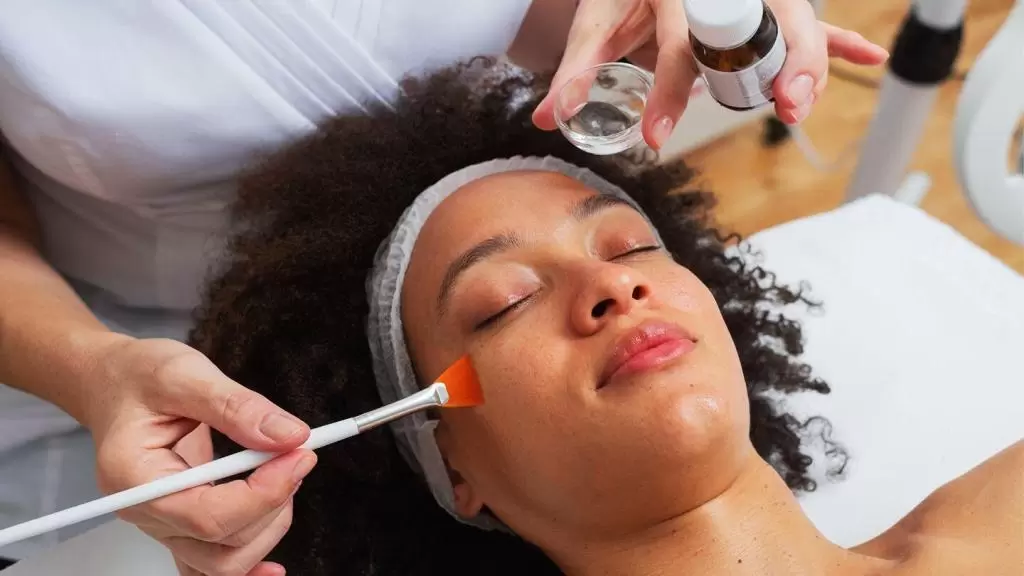
During my review of non-invasive dermatological procedures, Peel treatment stood out as a versatile option for addressing several common skin concerns, including pigmentation, acne scars, uneven skin tone, dullness, fine lines and rough texture. Chemical peels work by applying a carefully selected chemical solution to the skin to exfoliate damaged or dead surface cells and encourage the appearance of fresher skin. The depth and formulation of a peel are selected according to the patient’s skin type, concern and treatment goals. At Ambrosia Aesthetics, Dr. Niketa Sonavane offers different peeling approaches as part of personalised cosmetic dermatology care.
What Is a Chemical Peel?
A chemical peel is a dermatological procedure in which a chemical solution is applied to the skin for controlled exfoliation. Depending on the formulation and concentration, the treatment can act on the superficial, medium or deeper layers of the skin.
The purpose is not simply to remove dead cells. Controlled exfoliation can help improve skin texture, pigmentation and the appearance of certain scars and fine lines while supporting the skin-renewal process.
The type of acid or combination used is important. Commonly used peeling agents include glycolic acid, lactic acid, salicylic acid and trichloroacetic acid (TCA). More intensive formulations, such as phenol-based peels, require greater medical supervision and longer recovery.
Peel Treatment: Which Type Is Suitable for Your Skin?
The appropriate Peel treatment depends on the depth of the skin concern and the patient’s individual skin characteristics. Chemical peels can broadly be classified as superficial, medium-depth and deep peels.
Superficial Peels
Superficial peels act mainly on the outermost layers of the skin and generally involve less downtime. Glycolic and lactic acid peels may be considered for dullness, mild pigmentation, uneven texture and overall skin rejuvenation.
Lactic acid is considered a relatively gentle peeling option, while glycolic acid can provide more intensive exfoliation.
Salicylic acid peels may be useful for acne-prone or oily skin because salicylic acid is oil-soluble and can help exfoliate within pores.
Medium-Depth Peels
Medium-depth peels penetrate further and may be selected for concerns such as more pronounced pigmentation, acne scars and fine lines.
TCA peels are among the commonly used medium-depth options. Cosmelan is another approach used for stubborn pigmentation and melasma, with post-treatment home care forming part of the treatment protocol in appropriate cases.
Deep Peels
Deep peels penetrate substantially further into the skin and are used for selected severe concerns, such as significant sun damage, deep wrinkles and certain scars.
Phenol peels are examples of deep chemical peels and require strict medical supervision because they can involve more significant recovery and potential complications.
What Skin Concerns Can Chemical Peels Address?
One reason chemical peeling remains popular in cosmetic dermatology is its versatility. Depending on the formulation, a peel may be used to address:
- Acne and acne-prone skin
- Post-acne pigmentation
- Hyperpigmentation and dark spots
- Uneven skin tone
- Dull or rough-looking skin
- Fine lines
- Mild sun damage
- Certain superficial acne scars
- Melasma
- Uneven skin texture
The treatment should be selected according to the underlying skin condition rather than simply choosing the strongest available peel. Pigmentation disorders, for example, may require careful treatment because overly aggressive exfoliation can sometimes trigger additional pigmentation in susceptible skin.
How Does the Procedure Work?
Before the procedure, the dermatologist assesses the patient’s skin, pigmentation, acne history, sensitivity and previous treatments. This assessment helps determine the appropriate formulation and strength.
During a typical session, the skin is cleansed and prepared before the selected chemical solution is applied. Patients may experience mild tingling, warmth or stinging while the solution is working. The duration depends on the type of peel. Light peels may take only a few minutes, whereas deeper procedures can take substantially longer.
The chemical solution is then neutralised or removed according to the formulation being used. The dermatologist provides specific post-treatment instructions.
What Are the Benefits of Peel Treatment?
The potential benefits of Peel treatment depend on the formulation and the patient’s skin condition. Superficial peels can provide a refreshed appearance with relatively little downtime, while medium-depth treatments may target more persistent pigmentation, acne scars and texture irregularities.
Potential benefits include:
- Smoother skin texture
- More even-looking skin tone
- Reduction in superficial pigmentation
- Improvement in dullness
- Reduced appearance of certain acne scars
- Softening of fine lines
- Improved overall skin radiance
- Support for a more consistent skincare routine
Results are not necessarily permanent. Skin continues to age and can develop new pigmentation or sun damage. Maintenance treatments and daily sun protection may therefore be recommended according to individual needs.
What Happens After a Peel?
Post-treatment changes depend largely on the depth of the peel. A light peel may cause mild redness, dryness or superficial peeling for a few days. Medium and deeper peels can cause more noticeable redness, swelling and peeling and may require a longer recovery period.
After treatment, patients are generally advised to:
- Avoid unnecessary sun exposure.
- Apply sunscreen as directed.
- Use gentle skincare products.
- Keep the skin adequately moisturised.
- Avoid picking or manually removing peeling skin.
- Follow the dermatologist’s instructions about active ingredients.
- Avoid procedures that may irritate the skin until the dermatologist permits them.
Sun protection is particularly important because recently treated skin can be more vulnerable to irritation and pigmentation changes.
Is a Chemical Peel Safe for Everyone?
Chemical peels are medical or dermatological procedures and should not be selected solely on the basis of online descriptions. People with active skin infections, certain inflammatory skin conditions, recent excessive sun exposure or particular medication histories may not be suitable candidates for some types of peels.
Patients with darker skin tones also require careful treatment selection because aggressive peeling can increase the risk of post-inflammatory hyperpigmentation. A dermatologist can determine the appropriate strength and formulation after examining the skin.
It is also important to distinguish professionally performed medical peels from unsupervised home applications of high-strength acids. Incorrect concentration, application time or aftercare can result in burns, prolonged pigmentation and scarring.
How to Choose the Right Peel
Choosing a peel should begin with the diagnosis rather than the product name. A dermatologist may consider whether the primary concern is acne, pigmentation, melasma, scarring, ageing or general skin dullness.
For example, glycolic and lactic acid peels may be used for superficial rejuvenation, while TCA can be considered for selected pigmentation, texture and scar concerns. Cosmelan is specifically used in protocols for pigmentation and melasma. Deep phenol peels are reserved for selected indications under strict medical supervision.
A personalised approach is especially important when patients have sensitive or pigmentation-prone skin.
Dr. Niketa Sonavane: Qualifications and Clinical Experience
Dr. Niketa Sonavane is a dermatologist, skin specialist and hair specialist practising in Mumbai, with more than 17 years of experience according to her current profile. She completed her MBBS with distinction and subsequently obtained a Diploma in Dermatology and Venereology from Topiwala National Medical College and B.Y.L. Nair Hospital, Mumbai.
Her profile describes extensive international training with dermatologists and plastic surgeons. Between 2011 and 2014, she travelled internationally for fellowships and advanced training in cosmetic dermatology and aesthetic medicine. Her listed training includes work with specialists in Australia, Singapore, Brazil, the UK, France, Spain, Germany and Canada.
Her clinical areas include acne and acne scars, pigmentation, skin brightening, anti-ageing treatments, hair concerns and cosmetic dermatology. Chemical peeling is one of the treatment modalities listed in her practice.
Clinic Environment and Dermatology Expertise
Ambrosia Aesthetics in Andheri West, Mumbai, provides a dedicated setting for skin, hair and cosmetic dermatology treatments. The clinic describes its approach as personalised, with treatment plans selected according to individual skin and hair requirements. Its facilities include dedicated treatment areas and advanced aesthetic technology.
For patients searching for a Top Dermatologist in Mumbai, the important consideration is not simply the availability of a particular peel but whether the dermatologist can identify the underlying skin concern and select an appropriate treatment intensity.
Dr. NIketa Sonavane‘s practice covers multiple dermatological and aesthetic concerns, allowing chemical peeling to be considered as part of a broader treatment plan when clinically appropriate.
When Should You Consider a Peel?
Peel treatment may be worth discussing with a dermatologist if pigmentation, acne, uneven texture, mild scarring or dullness persists despite an appropriate skincare routine.
However, not every pigmentation or scar requires chemical peeling. A dermatologist should first establish the cause and determine whether a peel, topical medication, laser procedure, microneedling or another approach would be more suitable.
Book a Consultation with Dr. Niketa Sonavane
If you are considering a chemical peel for pigmentation, acne scars, uneven skin tone, dullness or skin rejuvenation, a dermatologist consultation can help determine the appropriate treatment and strength for your skin.
📞 9930993600 | 9930992400
📧 dr.niketa@live.com
Get Directions to the Clinic – Ambrosia Aesthetics, Mumbai
FAQs
1. What is a chemical peel used for?
Chemical peels can be used for concerns such as acne, pigmentation, uneven skin tone, dullness, fine lines, acne scars and uneven skin texture. The appropriate peel depends on the condition being treated.
2. How long does peeling last after treatment?
Recovery depends on the depth of the peel. Superficial peels may cause mild redness or peeling for a few days, while medium and deep peels can require longer recovery.
3. Can chemical peels treat pigmentation?
Yes, selected chemical peels can be used to manage hyperpigmentation, dark spots and melasma. The formulation and strength must be chosen carefully, particularly for pigmentation-prone skin.
4. How many peel sessions are needed?
The number of sessions depends on the skin condition, peel type and treatment objective. Some superficial peels may be performed as a series at intervals determined by the dermatologist.