
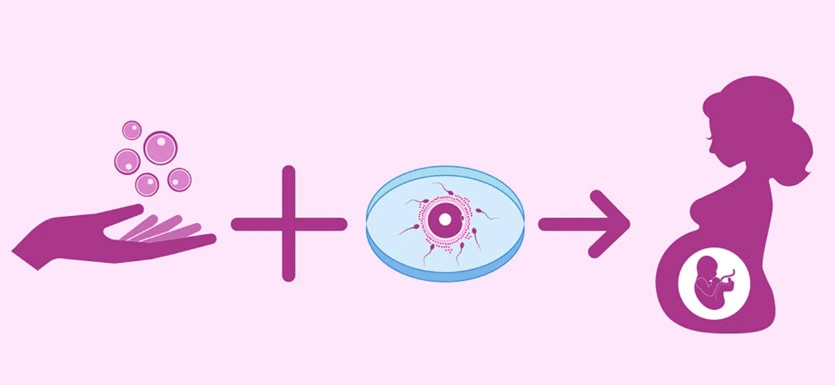
Infertility can be emotionally and physically challenging for individuals and couples hoping to conceive. Factors such as diminished ovarian reserve, premature ovarian insufficiency, advanced reproductive age and repeated unsuccessful IVF cycles may reduce the chances of pregnancy using one’s own eggs. In such situations, Donor egg treatment in Mumbai provides an assisted reproductive option that involves fertilising eggs obtained from a screened donor and transferring the resulting embryo into the recipient’s uterus.
At Chembur Fertility Clinic, Dr. Manjushri Kothekar provides fertility consultations and guidance on assisted reproductive treatments, including donor egg IVF. Understanding the procedure, eligibility, benefits, risks and approximate expenses can help patients make informed decisions about their reproductive health.
Understanding Donor Egg Treatment and How It Works
Donor egg treatment is a form of in vitro fertilisation (IVF) in which eggs from a donor are fertilised using sperm in a laboratory. The resulting embryo is then transferred into the recipient’s uterus.
The procedure may involve conventional IVF or intracytoplasmic sperm injection (ICSI), depending on clinical requirements.
Unlike IVF using the recipient’s own eggs, donor egg IVF relies on the donor’s egg quality and reproductive characteristics. The recipient carries the pregnancy but does not share a direct genetic connection with the child through the donated egg.
The treatment is considered when pregnancy using the patient’s own eggs is unlikely or medically inadvisable.
Who May Need Donor Egg Treatment in Mumbai?
A fertility specialist may recommend donor egg IVF after reviewing ovarian function, reproductive history, previous treatments and overall health.
Common indications include:
- Diminished ovarian reserve: A significantly reduced number of available eggs, sometimes indicated by low anti-Müllerian hormone (AMH) levels.
- Premature ovarian insufficiency: Loss of normal ovarian function before the expected age of menopause.
- Advanced reproductive age: Age-related decline in egg quantity and quality.
- Repeated IVF failure: Unsuccessful IVF attempts where poor egg quality may be a contributing factor.
- Genetic conditions: Certain inherited disorders that patients wish to avoid transmitting through their own eggs.
- Previous cancer treatment: Chemotherapy or radiotherapy may affect ovarian function.
A low AMH result alone does not automatically mean donor eggs are necessary. The decision requires comprehensive fertility assessment and counselling.
Step-by-Step Donor Egg IVF Procedure
The process involves several carefully coordinated stages.
1. Initial Fertility Consultation
The fertility specialist reviews medical history, menstrual patterns, previous pregnancy attempts and earlier fertility treatments.
Investigations may include hormone testing, pelvic ultrasound, uterine assessment and semen analysis.
2. Donor Selection and Screening
Egg donors are selected through legally compliant ART banks and undergo medical, infectious disease and genetic screening as required.
In India, donor eligibility and screening must comply with applicable assisted reproductive technology regulations.
3. Endometrial Preparation
The recipient may receive oestrogen and progesterone medications to prepare the uterine lining for embryo implantation.
Ultrasound examinations help assess endometrial development.
4. Egg Retrieval and Fertilisation
The donor undergoes ovarian stimulation and egg retrieval at an authorised ART facility.
Retrieved eggs are fertilised using conventional IVF or ICSI, depending on the treatment plan.
5. Embryo Transfer
A selected embryo is transferred into the recipient’s uterus using a thin catheter.
Additional suitable embryos may be cryopreserved where permitted and clinically appropriate.
6. Pregnancy Testing
A blood pregnancy test is generally performed approximately 10–14 days after embryo transfer.
Further ultrasound monitoring helps confirm the pregnancy and assess its early development.
Success Rates of Donor Egg Treatment
Donor egg treatment in Mumbai may provide higher pregnancy rates than IVF using a patient’s own eggs when diminished egg quality is the main fertility concern.
The reference information published by Dr. Manjushri Kothekar discusses success estimates of approximately 60% per attempt. However, this should not be interpreted as a guaranteed outcome or a verified current clinic-specific live-birth rate.
Success depends on donor age, embryo quality, sperm factors, uterine health, laboratory conditions and previous reproductive history.
Patients should distinguish between positive pregnancy tests, clinical pregnancies and live-birth rates when comparing outcomes.
Benefits and Risks of Donor Egg IVF
Potential Benefits
Donor egg IVF can provide an opportunity for pregnancy when conventional fertility treatment using one’s own eggs has a low likelihood of success.
Other potential benefits include:
- Improved chances of conception in selected patients with poor egg quality.
- An option for individuals with premature ovarian insufficiency.
- The possibility of carrying and giving birth to a child.
- Reduced risk of transmitting certain egg-related inherited genetic conditions.
- The possibility of preserving additional suitable embryos for future treatment, subject to applicable regulations.
Possible Risks
Potential complications include:
- Failure of fertilisation or embryo implantation.
- Miscarriage or ectopic pregnancy.
- Multiple pregnancy if more than one embryo is transferred.
- Medication-related side effects.
- Pregnancy complications, including hypertensive disorders.
- Emotional stress and financial uncertainty.
Donor egg pregnancies may require additional obstetric monitoring because of associated pregnancy risks.
Academic Qualifications and Clinical Experience of Dr. Manjushri Kothekar
Dr. Manjushri Kothekar is an obstetrician, gynaecologist and fertility specialist practising in Chembur, Mumbai.
Her academic qualifications include:
- MBBS: Bachelor of Medicine and Bachelor of Surgery.
- MS in Obstetrics and Gynaecology: Completed at Lokmanya Tilak Municipal General Hospital (LTMGH), Sion, Mumbai.
- Fellowship in IVF and Reproductive Medicine: Completed through a one-year fellowship at NOVA IVF Fertility.
Her published professional profile reports more than 12 years of experience in obstetrics and gynaecology, including nine years focused on IVF and infertility. These are the figures stated on her website and may not reflect additional experience accumulated since publication.
Her clinical expertise includes IVF, ICSI, IUI, donor egg treatment, donor sperm treatment, fertility evaluation and management of complex infertility cases.
She also has experience in managing high-risk pregnancies and providing reproductive counselling.
Patients searching for the Best IVF specialist in Mumbai may consider her specialised training, fertility experience and approach to individualised treatment planning.
Clinic Environment and Expertise at Chembur Fertility Clinic
Chembur Fertility Clinic is located near Basant Park in Chembur, Mumbai.
The clinic provides fertility consultations, ultrasound examinations, diagnostic guidance and treatment planning for patients experiencing reproductive difficulties.
Its services cover fertility assessment and counselling for IVF, ICSI, IUI, donor egg treatment and other assisted reproductive options.
Importantly, the clinic’s official website clarifies that the Chembur location is for consultations and sonography, while assisted reproductive procedures are conducted at affiliated ART centres.
This distinction helps patients understand where consultations, laboratory procedures, egg retrieval and embryo transfers take place.
Individuals looking for a Top IVF Doctor in Mumbai should consider the doctor’s qualifications, treatment transparency, ART-centre registration, laboratory standards and follow-up arrangements.
Approximate Cost of Donor Egg Treatment in Mumbai
The cost of Donor egg treatment in Mumbai depends on donor sourcing, fertility investigations, laboratory procedures, medications and the number of treatment cycles required.
Approximate private-sector planning estimates include:
- Initial fertility consultation: ₹800–₹2,000.
- Fertility investigations: ₹5,000–₹20,000.
- Donor egg IVF cycle: ₹2,00,000–₹4,50,000 or more.
- Additional medications and monitoring: ₹15,000–₹50,000.
- Embryo freezing and storage: Additional charges depending on the facility.
These are illustrative estimates, not verified prices at Chembur Fertility Clinic or its affiliated ART centres.
Patients should request a written quotation covering donor-related expenses, fertilisation, embryo transfer, medications and potential additional procedures.
Precautions and Aftercare During Donor Egg IVF
Donor egg treatment in Mumbai requires careful preparation, medical supervision and regular follow-up.
Important precautions include:
- Taking prescribed hormonal medications according to the recommended schedule.
- Attending ultrasound examinations and monitoring appointments.
- Avoiding smoking, alcohol and non-prescribed medications.
- Maintaining balanced nutrition and adequate hydration.
- Taking recommended prenatal supplements, including folic acid.
- Following instructions regarding physical activity after embryo transfer.
- Avoiding unnecessary bed rest unless specifically advised.
- Reporting severe abdominal pain, heavy bleeding or other concerning symptoms promptly.
Emotional counselling may also help patients manage uncertainty during fertility treatment.
Frequently Asked Questions (FAQs)
1. Who is eligible for donor egg IVF?
Donor egg IVF may be considered for patients with premature ovarian insufficiency, poor egg quality, certain genetic conditions or repeated unsuccessful IVF cycles. Eligibility also depends on medical assessment and applicable Indian ART regulations.
2. What is the success rate of donor egg treatment?
Success rates vary according to donor characteristics, embryo quality, uterine health and laboratory practices. Patients should request current clinic-specific pregnancy and live-birth statistics rather than relying on general success estimates.
3. How long does donor egg IVF take?
The process may take approximately four to eight weeks after donor availability and preliminary investigations are completed. Additional time may be necessary for donor matching, screening and medical preparation.
4. Is donor egg treatment safe?
Donor egg IVF is an established assisted reproductive treatment. However, it involves potential medical, emotional and pregnancy-related risks. Appropriate donor screening, informed consent and specialist monitoring are essential.
Book a Fertility Consultation With Dr. Manjushri Kothekar
Patients exploring donor egg IVF can schedule a consultation with Dr. Manjushri Kothekar to discuss fertility investigations, treatment suitability, available options and estimated expenses.
+91 9769387593
manjuamolkothekar@gmail.com
Get directions to the clinic – Chembur Fertility Clinic