
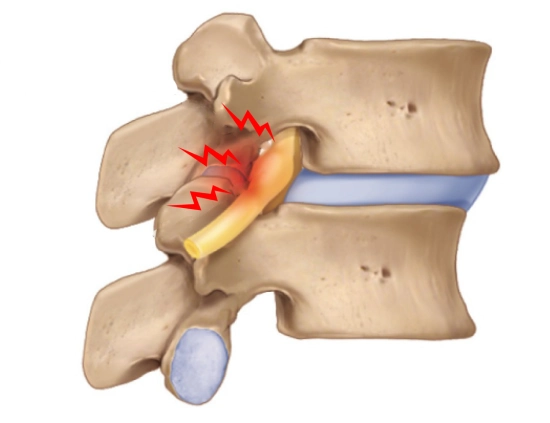
Spinal conditions can significantly affect mobility, posture and everyday comfort, particularly when they involve the lower back. Spondylolisthesis is one such condition in which a vertebra slips forward over the vertebra beneath it, potentially causing back pain, nerve compression and difficulty performing routine activities. Individuals experiencing persistent symptoms may benefit from Spondylolisthesis treatment in Navi Mumbai, which involves identifying the severity of vertebral displacement and selecting an appropriate treatment approach.
Synapse Spine provides specialist evaluation and management of spinal disorders, including degenerative conditions, spinal instability and nerve compression. Understanding the causes, symptoms, available treatments and recovery expectations can help patients make informed decisions about their spinal health.
Understanding Spondylolisthesis and Its Causes
Spondylolisthesis occurs when one vertebra moves out of its normal alignment relative to the adjacent vertebra. The condition most commonly affects the lumbar spine, particularly the L4–L5 and L5–S1 levels.
Several factors may contribute to its development:
- Degenerative changes: Age-related deterioration of spinal discs and facet joints can contribute to vertebral instability.
- Stress fractures: Repetitive strain may cause a defect in the pars interarticularis, potentially leading to vertebral slippage.
- Congenital abnormalities: Certain individuals have structural spinal differences that increase their susceptibility.
- Traumatic injuries: Accidents or fractures may affect spinal stability.
- Pathological conditions: Rarely, infections, tumours or other diseases may weaken spinal structures.
The severity of vertebral slippage is commonly classified using a grading system, ranging from Grade I to Grade V. However, the degree of displacement does not always correspond directly with symptom severity.
Common Symptoms of Spondylolisthesis
Symptoms vary depending on the location of the affected vertebra, the extent of slippage and whether nearby nerves are compressed.
Common signs include lower back pain, stiffness, muscle tightness and discomfort during prolonged standing or walking.
Some patients experience radiating pain into the buttocks or legs, numbness, tingling or weakness. Symptoms may worsen with activities involving spinal extension.
In advanced cases, nerve compression can significantly affect mobility. New bladder or bowel dysfunction, saddle numbness or rapidly worsening leg weakness requires emergency medical assessment.
Early evaluation can help identify the underlying cause and guide appropriate management.
When Should You Seek Spondylolisthesis Treatment in Navi Mumbai?
Medical evaluation is recommended when back pain persists despite rest and conservative measures, particularly when symptoms interfere with work, sleep or daily movement.
A specialist may recommend further investigation when patients experience recurrent leg pain, reduced walking tolerance, neurological symptoms or worsening spinal instability.
Diagnosis generally involves a physical examination and standing lumbar spine X-rays. Flexion-extension radiographs may be used in selected cases to assess instability.
MRI scans help evaluate nerve compression, spinal canal narrowing and associated disc abnormalities. CT imaging may be recommended when detailed assessment of bony structures is necessary.
Treatment depends on symptoms, neurological findings, imaging results and the patient’s overall health rather than vertebral slippage alone.
Non-Surgical Treatment Options for Spondylolisthesis
Many patients with mild or moderate symptoms can improve without undergoing surgery.
Physiotherapy and Rehabilitation
Structured physiotherapy focuses on strengthening abdominal and back muscles, improving spinal stability and supporting functional movement.
Exercises may include core stabilisation, flexibility training and posture correction under professional supervision.
Medications
Doctors may prescribe suitable pain-relieving or anti-inflammatory medications for short-term symptom control, considering the patient’s medical history and potential side effects.
Activity Modification
Avoiding activities that repeatedly aggravate symptoms, modifying lifting techniques and maintaining appropriate physical activity can reduce discomfort.
Spinal Injections
For selected patients experiencing nerve-related pain, epidural steroid injections may provide temporary symptom relief. They do not correct vertebral slippage.
Non-surgical management aims to improve function and reduce symptoms while avoiding unnecessary procedures.
Surgical Options for Spondylolisthesis
When conservative treatment fails to provide sufficient relief, surgery may be considered.
Spondylolisthesis treatment in Navi Mumbai may involve surgical intervention for patients with persistent disabling pain, progressive neurological deficits or clinically significant spinal instability.
Spinal Decompression
Decompression surgery removes structures compressing spinal nerves. The suitability of decompression alone depends on spinal stability and the type of spondylolisthesis.
Spinal Fusion
Spinal fusion stabilises affected vertebrae using bone grafts and, when necessary, screws, rods or cages.
Minimally Invasive Spine Surgery
Selected patients may be suitable for minimally invasive approaches involving smaller incisions and reduced soft-tissue disruption.
The surgical technique is determined by the patient’s anatomy, neurological symptoms, spinal alignment and treatment goals.
Benefits and Risks of Spondylolisthesis Treatment
Treatment aims to relieve pain, improve mobility and protect neurological function.
Potential Benefits
- Reduction in lower back and radiating leg pain.
- Improved walking tolerance and daily functioning.
- Better spinal stability in appropriately selected surgical patients.
- Relief from nerve compression.
- Improved ability to participate in rehabilitation and routine activities.
Possible Risks
Conservative treatments may cause temporary discomfort or medication-related side effects.
Surgical risks include infection, bleeding, nerve injury, blood clots, implant complications, failure of fusion and persistent or recurrent symptoms.
Patients should discuss expected outcomes and potential complications before selecting a treatment.
Academic Qualifications and Clinical Experience of Synapse Spine Surgeons
Synapse Spine has a multidisciplinary team of orthopaedic spine surgeons, neurosurgeons and pain management specialists who evaluate and manage spinal conditions.
Dr. Nandan Marathe – Orthopaedic Spine Surgeon
Dr. Nandan Marathe completed his MBBS and MS Orthopaedics at KEM Hospital, Mumbai, receiving a gold medal for his postgraduate performance.
He pursued advanced training through a clinical fellowship in complex spine surgery and spinal deformities at the University of Toronto, Canada.
His additional training includes spinal tumour surgery in Italy and minimally invasive spine surgery in South Korea.
His clinical experience covers degenerative spinal disorders, spinal deformities and complex reconstructive procedures. He has also contributed to spine-related clinical research and publications.
Dr. Aditya Raj – Orthopaedic Spine Surgeon
Dr. Aditya Raj completed his orthopaedic surgery training at Seth G.S. Medical College and KEM Hospital, Mumbai, graduating as a gold medallist.
He subsequently completed an AO Spine North America fellowship in complex spine surgery at the University of Toronto.
His additional training includes spinal deformity management at Samsung Medical Centre, South Korea, and minimally invasive and endoscopic spine surgery.
His clinical interests include spinal deformities, spinal tumours, infections and complex spinal disorders.
Multidisciplinary Expertise
Synapse Spine’s team also includes Dr. Anuj Bhide, Dr. Ajit Mishra, Dr. Medha Vyas and other specialists with expertise in neurological and spinal conditions.
Patients seeking a Spine specialist Doctor in Mumbai can discuss conservative and surgical treatment options based on their diagnosis.
Clinic Environment and Facilities at Synapse Spine
Synapse Spine provides specialist consultations and coordinated care for spinal disorders.
The clinical approach involves reviewing symptoms, examining spinal function, interpreting diagnostic imaging and developing individualised treatment plans.
The practice offers non-operative therapies and surgical options, including minimally invasive spine procedures and lumbar fusion for selected patients.
Its published clinic locations include Chembur, Bandra, Andheri, Vile Parle and other areas of Mumbai and the surrounding region.
Patients searching for a Top Spine Specialist in Mumbai, India should consider relevant qualifications, clinical experience, diagnostic facilities and the availability of postoperative care.
The clinic’s published location list does not clearly identify a Navi Mumbai branch. Patients travelling from Navi Mumbai should confirm the most convenient consultation location before visiting.
Approximate Cost of Spondylolisthesis Treatment
The cost of Spondylolisthesis treatment in Navi Mumbai depends on the severity of vertebral slippage, diagnostic investigations and the treatment required.
Approximate private healthcare planning ranges in the Mumbai metropolitan region may include:
- Specialist consultation: ₹800–₹2,500.
- Physiotherapy: ₹500–₹2,000 per session.
- Spinal injections: ₹10,000–₹50,000 or more.
- Spinal decompression surgery: ₹1,50,000–₹4,00,000 or more.
- Spinal fusion surgery: ₹3,00,000–₹7,00,000 or more.
These are illustrative estimates, not verified Synapse Spine prices. Actual charges depend on the hospital, surgical complexity, implants, admission duration and insurance arrangements.
Patients should request a personalised estimate before proceeding.
Recovery, Precautions and Aftercare
Recovery depends on whether treatment involves physiotherapy, injections or surgery.
For non-surgical treatment, gradual improvement may occur over several weeks with appropriate rehabilitation.
Following spinal fusion, patients generally require a longer recovery period.
Important precautions include:
- Avoiding heavy lifting and sudden twisting movements.
- Following prescribed medication instructions.
- Maintaining appropriate posture during sitting and standing.
- Performing recommended strengthening exercises.
- Attending follow-up appointments.
- Avoiding smoking, particularly during spinal fusion recovery.
Patients undergoing surgery may gradually resume routine activities over several weeks or months. Bone fusion can take several months or longer.
Why Consider Synapse Spine for Spondylolisthesis Management?
Spondylolisthesis treatment in Navi Mumbai should begin with an accurate diagnosis and a clear understanding of the available options.
Synapse Spine’s specialists have training in degenerative spinal disorders, minimally invasive procedures and complex spine surgery.
Its approach includes assessing whether symptoms can be managed through rehabilitation and medication or whether surgery may provide meaningful benefit.
Treatment decisions should reflect individual clinical findings, neurological status and personal recovery goals.
Frequently Asked Questions (FAQs)
1. Can spondylolisthesis be treated without surgery?
Yes. Many patients improve through physiotherapy, medications, activity modification and other conservative treatments. Surgery is usually considered when symptoms remain disabling or neurological problems progress.
2. How long does recovery take after spondylolisthesis surgery?
Recovery varies according to the procedure and individual health. Patients may gradually resume daily activities within several weeks, while recovery after spinal fusion may take several months.
3. Is walking beneficial for spondylolisthesis?
Gentle walking is often beneficial because it supports mobility and general fitness. However, patients should modify activities that worsen pain and follow their treating specialist’s recommendations.
4. Can spondylolisthesis cause permanent nerve damage?
Severe or prolonged nerve compression can occasionally result in lasting neurological problems. Progressive weakness, numbness or bladder and bowel symptoms require prompt medical assessment.
Book a Spine Consultation at Synapse Spine
If persistent lower back pain, leg discomfort or mobility difficulties are affecting your daily life, consider scheduling a specialist assessment at Synapse Spine.
+91 81698 45056 | +91 93726 71858 | +91 93211 24611
synapsespine@gmail.com
Get Directions to the Clinic – Synapse Spine, Mumbai