
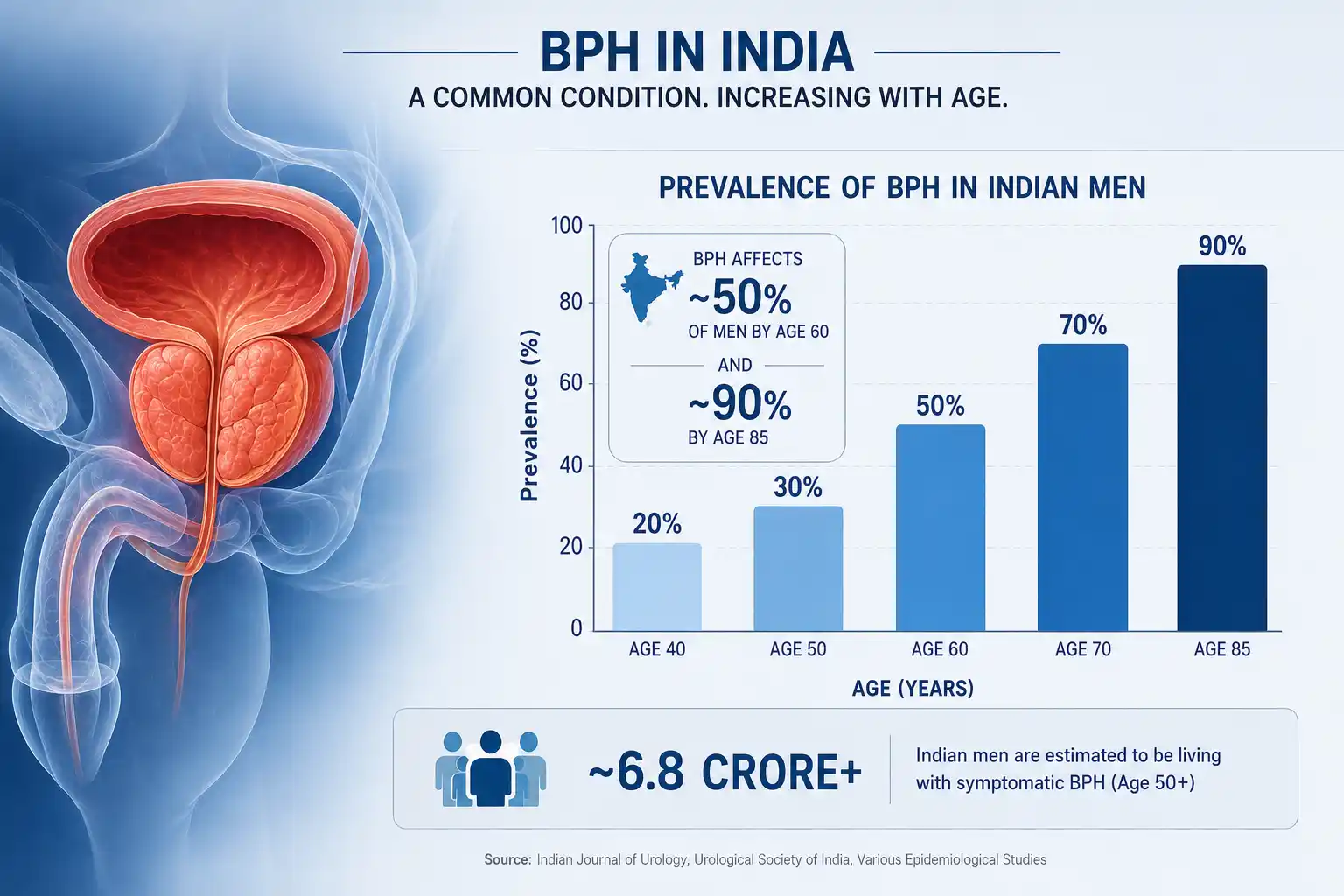
Frequent urination, a weak urine stream, difficulty starting urination, and repeated trips to the bathroom at night are common concerns among ageing men. These symptoms may be associated with Benign Prostatic Hyperplasia (BPH), commonly known as an enlarged prostate. Although this condition is non-cancerous, it can gradually affect bladder function, sleep, and quality of life if left untreated.
With advances in urology, several treatment options are available, ranging from medication and lifestyle changes to minimally invasive procedures and surgery. At Jewel Urology Center, Dr. Vivek Venkat offers evaluation and personalised treatment planning for men experiencing prostate-related urinary symptoms.
If you are considering Enlarged Prostate Treatment in Mumbai, understanding the condition, its symptoms, diagnostic tests, and available treatments can help you make informed decisions about your health.
What Is an Enlarged Prostate?
The prostate is a small gland located below the urinary bladder and surrounding the urethra, the tube through which urine leaves the body. Its size can increase with age. This non-cancerous growth is known as Benign Prostatic Hyperplasia (BPH).
As the prostate enlarges, it may press against the urethra and obstruct the flow of urine. The bladder then needs to work harder to empty itself. Over time, this can lead to bothersome urinary symptoms and, in some cases, complications.
BPH is different from prostate cancer. Having an enlarged prostate does not mean a person has cancer, although both conditions can occur in the same individual. A proper medical evaluation helps distinguish between possible causes of urinary symptoms.
Common Symptoms of Benign Prostatic Hyperplasia
Symptoms vary depending on the degree of urinary obstruction and bladder function. Common signs include:
- Frequent urination, particularly during the night.
- Difficulty starting the urine stream.
- Weak or interrupted urine flow.
- Dribbling at the end of urination.
- A feeling that the bladder has not emptied completely.
- Sudden urges to urinate.
- Straining while passing urine.
Some men may initially consider these changes a normal part of ageing. However, persistent or worsening symptoms should be assessed by a urologist.
Seek urgent medical attention if you suddenly become unable to pass urine, particularly if you experience lower abdominal pain or discomfort. Acute urinary retention can require immediate treatment.
What Causes Prostate Enlargement?
Age-related hormonal changes play an important role in prostate growth. The likelihood of developing BPH increases as men grow older. Other factors associated with the condition include:
- Family history of prostate enlargement.
- Obesity and metabolic syndrome.
- Diabetes mellitus.
- Physical inactivity.
- Increasing age.
Not every man with these risk factors develops troublesome symptoms. The severity of urinary problems also does not always correspond directly to prostate size.
How Is an Enlarged Prostate Diagnosed?
A detailed evaluation helps identify the cause of urinary symptoms and determine the most suitable treatment.
1. Medical History and Symptom Assessment
The urologist discusses the patient’s symptoms, medical history, medications, and their effect on daily activities. The International Prostate Symptom Score (IPSS) questionnaire may be used to assess symptom severity.
2. Prostate Examination
A digital rectal examination may be recommended to assess the prostate’s size and consistency and identify any unusual findings.
3. Urine Testing
Urine analysis helps identify infections, blood, and other abnormalities that may contribute to urinary symptoms.
4. PSA Blood Test
A Prostate-Specific Antigen (PSA) test may be advised as part of prostate evaluation. PSA levels need to be interpreted alongside age, examination findings, and other clinical information.
5. Ultrasound and Uroflowmetry
Ultrasound can assess prostate size, bladder condition, kidney health, and the amount of urine remaining after urination. Uroflowmetry measures the speed and pattern of urine flow, helping evaluate possible obstruction.
The doctor may recommend additional investigations depending on the patient’s symptoms and initial findings.
Treatment Options for an Enlarged Prostate
Treatment depends on symptom severity, prostate size, bladder function, overall health, and the presence of complications. Not every patient requires surgery.
1. Lifestyle Changes and Monitoring
Men with mild symptoms may benefit from lifestyle adjustments and regular medical monitoring. Recommendations may include:
- Reducing fluid intake close to bedtime.
- Limiting caffeine and alcohol if they worsen urinary symptoms.
- Maintaining a healthy weight.
- Staying physically active.
- Managing constipation.
- Avoiding prolonged delays in urination.
These measures may help manage symptoms but do not replace medical evaluation.
2. Medication for BPH
Medication is commonly used when urinary symptoms interfere with daily life.
Alpha blockers: Medicines such as tamsulosin, alfuzosin, and silodosin relax muscles around the prostate and bladder neck, helping urine flow more easily.
5-alpha reductase inhibitors: Finasteride and dutasteride may gradually reduce prostate size in selected patients. Their effects generally take several months to become noticeable.
In some cases, doctors may recommend combination therapy or medicines that address bladder storage symptoms. The choice depends on the patient’s condition, potential side effects, and other medications. Patients should not start or stop prostate medication without medical advice.
3. TURP Surgery
Transurethral Resection of the Prostate (TURP) is an established surgical treatment for BPH. A specialised instrument is passed through the urethra to remove the obstructing prostate tissue. No external incision is generally required.
TURP may be recommended when symptoms remain troublesome despite medication or when complications develop.
4. Laser Prostate Surgery
Laser procedures such as Holmium Laser Enucleation of the Prostate (HoLEP) and Thulium Laser Enucleation of the Prostate (ThuLEP) remove obstructing prostate tissue using laser energy.
These techniques may be suitable for selected patients, including those with larger prostates. Treatment suitability depends on prostate anatomy, medical history, available technology, and the surgeon’s assessment.
5. Robotic Simple Prostatectomy
For selected patients with very large prostates, robotic simple prostatectomy may be considered. The procedure removes the enlarged inner portion of the prostate responsible for obstruction while leaving the outer portion in place.
The appropriate procedure is selected after considering prostate size, symptoms, bladder function, medical conditions, and patient preferences.
Why Choose Dr. Vivek Venkat at Jewel Urology Center?
Choosing an experienced urologist is an important part of managing prostate enlargement. Patients should look for relevant specialist qualifications, experience with different treatment techniques, clear communication, and appropriate follow-up care.
Dr. Vivek Venkat is a Consultant Uro-Oncologist and Robotic Urologist with over 15 years of experience in urology and advanced surgical care, according to his official profile.
His qualifications include:
- MBBS from B.J. Medical College, Pune.
- MS in General Surgery from K.E.M. Hospital and Seth G.S. Medical College, Mumbai.
- M.Ch. in Urology from Christian Medical College (CMC), Vellore, where he was a Gold Medalist.
- Fellowship in Urologic Oncology and Robotic Surgery at the University of Miami Miller School of Medicine, USA.
- ECFMG certification in the United States.
He has also served as an Assistant Professor of Urology and Renal Transplantation at CMC Vellore and as a Clinical Instructor in Urologic Oncology and Robotic Surgery at the University of Miami Hospital. His profile reports experience with more than 800 robotic procedures.
His areas of expertise include benign prostate enlargement, prostate cancer, robotic urology, laser procedures, and complex urological conditions.
At Jewel Urology Center, patients can consult Dr. Venkat for prostate evaluation and discuss suitable medical or surgical options. The consultation process focuses on understanding symptoms, reviewing investigations, explaining treatment alternatives, and planning follow-up.
Patients researching Robotic Adrenalectomy Surgery in Mumbai may also find Dr. Venkat’s broader robotic urology expertise relevant when exploring his surgical practice. Those looking for the Best Uro Surgeon in Mumbai should consider his specialist training, clinical experience, and the treatment approach recommended for their individual condition.
Book an Appointment for Enlarged Prostate Evaluation
Urinary symptoms should not be ignored or accepted as an unavoidable part of ageing. Early assessment can help identify prostate enlargement, evaluate bladder health, and determine whether monitoring, medication, or a procedure is appropriate.
For consultation and personalised guidance, contact Dr. Vivek Venkat at Jewel Urology Center.
📧appointments@drvivekvenkat.com
Call to schedule your appointment with Dr. Vivek Venkat and take an informed step towards better prostate and urinary health.
Frequently Asked Questions
1. Is an enlarged prostate a form of prostate cancer?
No. Benign Prostatic Hyperplasia is a non-cancerous enlargement of the prostate. However, BPH and prostate cancer can sometimes occur together. A urological evaluation helps assess prostate health and determine whether further testing is required.
2. Can an enlarged prostate be treated without surgery?
Yes. Many men with mild to moderate symptoms can be managed with lifestyle changes, monitoring, and prescribed medication. Surgery may be considered when symptoms persist despite treatment or complications develop.
3. Does every enlarged prostate require treatment?
No. Men with an enlarged prostate but minimal symptoms may only need periodic monitoring. Treatment is generally considered when symptoms affect quality of life, urinary obstruction becomes significant, or complications arise.
4. When should I consult a urologist for prostate symptoms?
Consult a urologist if you experience frequent nighttime urination, weak urine flow, difficulty starting urination, or incomplete bladder emptying. Sudden inability to pass urine requires urgent medical attention.