
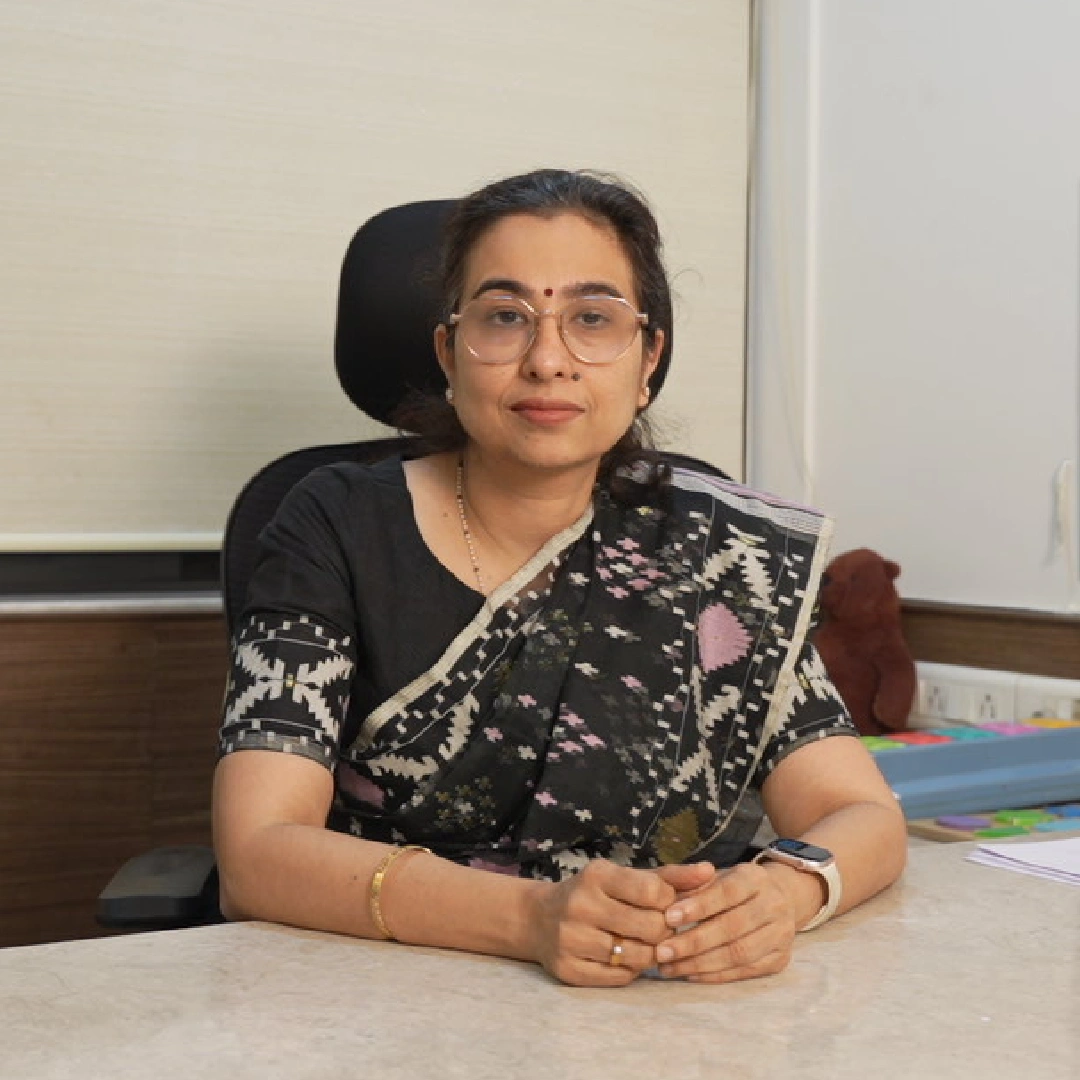
Every child grows and develops at their own pace. However, when parents notice delays in speech, movement, learning, social interaction, or behaviour, seeking professional guidance can help identify whether additional support is needed. Early developmental assessment allows concerns to be understood and appropriate interventions to be planned according to a child’s individual needs.
A developmental paediatrician evaluates children’s growth, learning, communication, behaviour, and developmental milestones. At Pinnacle Child Development Clinic in Bandra West, Mumbai, Dr. Rajeshwari Ganesh provides developmental and behavioural paediatric care, helping families understand their child’s strengths and areas where support may be beneficial.
Parents looking for a Developmental Pediatrician in Mumbai can benefit from learning about the importance of developmental assessments, available evaluation methods, and the role of early intervention.
Who Is Dr. Rajeshwari Ganesh?
Dr. Rajeshwari Ganesh is a Developmental and Behavioural Paediatrician with more than a decade of experience in Mumbai. Her clinical work involves detailed developmental assessments, extended medical evaluations, identification of developmental and behavioural conditions, parent counselling, therapy referrals, and monitoring a child’s progress.
According to her official profile, her qualifications include:
- MBBS from Mumbai University, India
- DCH (Diploma in Child Health) from Mumbai University
- MD in Pediatrics (USAIM)
- MRCPCH (Membership of the Royal College of Paediatrics and Child Health, UK)
- Fellowship in Developmental and Behavioural Pediatrics from National University Hospital, Singapore (2009)
Her specialised fellowship training and clinical experience have supported her work in developmental evaluation and behavioural paediatrics. She is also certified to administer internationally recognised assessment tools, including the Autism Diagnostic Observation Schedule (ADOS) and Bayley Scales.
These qualifications and assessment skills help her evaluate children with different developmental needs and guide families towards appropriate care and intervention.
When Should a Child Visit a Developmental Paediatrician?
Parents often wonder whether a child’s developmental differences are temporary or require professional evaluation. While children achieve milestones at different ages, persistent delays or concerns across developmental areas should be discussed with a qualified specialist.
A developmental assessment may be helpful when a child experiences:
- Delayed speech or difficulty communicating
- Limited eye contact or reduced social interaction
- Difficulty responding to their name
- Challenges with play and interaction with other children
- Delayed sitting, crawling, standing, or walking
- Difficulty with attention, learning, or following instructions
- Repetitive behaviours or restricted interests
- Frequent behavioural or emotional difficulties
- Developmental concerns following premature birth or a high-risk neonatal period
A single behaviour does not necessarily indicate a developmental disorder. A comprehensive evaluation considers the child’s age, medical history, developmental progress, environment, and individual abilities.
Developmental Assessment and Diagnostic Expertise
A developmental assessment is more detailed than a routine paediatric check-up. It examines how a child communicates, learns, moves, interacts socially, and responds to everyday situations.
Dr. Rajeshwari Ganesh uses internationally recognised developmental assessment tools as part of her clinical evaluations. These include:
ADOS (Autism Diagnostic Observation Schedule): A structured assessment used to evaluate social communication, interaction, and behaviours associated with Autism Spectrum Disorder. It is one component of a comprehensive diagnostic evaluation.
Bayley Scales: Standardised developmental assessments used to evaluate areas such as cognitive, language, and motor development in infants and young children.
Capute Scales: Tools used to assess early cognitive and language development.
Amiel-Tison Scales: Assessments that help evaluate neurological and motor development, particularly in young and high-risk infants.
Childhood Autism Rating Scale (CARS): A structured rating scale that helps assess behaviours associated with autism.
PEP and Early Start Denver Model Curriculum: Assessment and intervention-related approaches used in understanding developmental abilities and planning support for children with autism.
She also uses neurodevelopmental assessment tools such as PEER, PEERAMID, and PEEX2. The choice of assessment depends on the child’s age, developmental profile, and clinical requirements.
These evaluations help the doctor understand a child’s needs and guide recommendations for suitable therapies, educational support, and follow-up.
Conditions and Developmental Concerns Addressed
Developmental and behavioural paediatric care covers several areas of childhood growth and development.
1. Autism Spectrum Disorder
Autism can affect social communication, interaction, behaviour, and sensory responses. Early assessment helps families understand a child’s developmental profile and explore suitable interventions. Dr. Ganesh has specialised experience in autism assessment, parent guidance, and individualised intervention planning.
2. Attention Deficit Hyperactivity Disorder (ADHD)
Children with ADHD may experience difficulties with attention, impulse control, or hyperactivity. A detailed evaluation helps distinguish ADHD-related concerns from other possible developmental, learning, or environmental factors.
3. Speech and Language Delays
Children may experience delays in understanding language, expressing themselves, or developing communication skills. Assessment helps identify areas of difficulty and determine whether speech and language therapy or additional evaluation is required.
4. Learning Difficulties
Some children may find reading, writing, memory, comprehension, or classroom activities challenging. A developmental assessment can help identify specific learning needs and guide recommendations for appropriate educational support.
5. Developmental Monitoring of Preterm and High-Risk Infants
Babies born prematurely or those who have required neonatal intensive care may benefit from structured developmental follow-up. Dr. Ganesh conducts a High-Risk Neonatal Surveillance and Monitoring Programme at Surya Hospital, involving developmental assessments, timely therapy referrals where required, and parent counselling.
Why Choose Dr. Rajeshwari Ganesh at Pinnacle Child Development Clinic?
Choosing a developmental paediatrician is an important decision for families. The specialist should have relevant training, experience with developmental assessments, and the ability to guide parents through the next steps.
Dr. Rajeshwari Ganesh has over a decade of experience in developmental and behavioural paediatrics. Her approach includes detailed assessments, medical evaluation, parent counselling, referral to appropriate therapists, and ongoing monitoring of a child’s progress.
Pinnacle Child Development Clinic is designed around children’s developmental needs and family involvement. Its approach brings together medical assessment, standardised developmental evaluation, and long-term guidance in a child-friendly and family-focused setting. The emphasis is on helping parents understand their child’s abilities and challenges rather than relying on a diagnosis alone.
The clinic also highlights parent education, continuity of care, and online support for families living outside Mumbai or abroad. Workshops and educational sessions conducted by Dr. Ganesh for parents, teachers, and healthcare professionals further support awareness about child development and early intervention.
Families searching for the Best Developmental Pediatrician in Mumbai may consider Dr. Ganesh’s specialist fellowship, experience with recognised assessment tools, and focus on parent empowerment when choosing a developmental care provider.
Importance of Early Intervention and Parent Involvement
Early intervention can help children build skills in communication, learning, movement, social interaction, and everyday activities. The type of support required depends on the child’s assessment and may involve speech therapy, occupational therapy, behavioural intervention, parent training, or educational support.
Parents play an essential role in this process. They can support progress by practising recommended activities at home, maintaining consistent routines, communicating with therapists, and attending follow-up appointments.
Developmental progress is individual. Regular monitoring allows the care team to review a child’s response to interventions and adjust recommendations when needed.
For parents seeking a Best Developmental Pediatrics Doctor in Mumbai, a consultation with Dr. Rajeshwari Ganesh can provide a structured understanding of developmental concerns and guidance on suitable next steps.
Book a Consultation with Dr. Rajeshwari Ganesh
If you have concerns about your child’s speech, behaviour, learning, social interaction, or developmental milestones, consider arranging a professional assessment. Early guidance can help families understand their child’s needs and plan appropriate support.
Contact Pinnacle Child Development Clinic to schedule an appointment with Dr. Rajeshwari Ganesh.
📞 Call: (+91) 7700058024
📧 Email: ganesh.ramaa@gmail.com
Take the first step towards understanding your child’s developmental needs with an expert evaluation and personalised guidance from Dr. Rajeshwari Ganesh.
Frequently Asked Questions
1. What does a developmental paediatrician do?
A developmental paediatrician evaluates children’s physical, cognitive, language, social, emotional, and behavioural development. The specialist identifies possible developmental concerns, recommends assessments, and guides families towards suitable interventions and follow-up care.
2. When should parents seek a developmental assessment?
Parents should consider an assessment if they notice persistent speech delays, limited social interaction, difficulty with movement, learning challenges, behavioural concerns, or delays in achieving developmental milestones. Early consultation can help clarify whether additional support is needed.
3. Does every child with speech delay have autism?
No. Speech delay can occur for several reasons, including language disorders, hearing difficulties, developmental differences, or other medical factors. A comprehensive evaluation is necessary to understand the cause. Speech delay alone does not confirm autism.
4. How can parents support a child’s development after an assessment?
Parents can follow the specialist’s recommendations, participate in parent-training sessions, practise suggested activities at home, coordinate with therapists, and attend regular follow-ups. Consistent support across home, therapy, and educational environments can help reinforce developmental skills.