
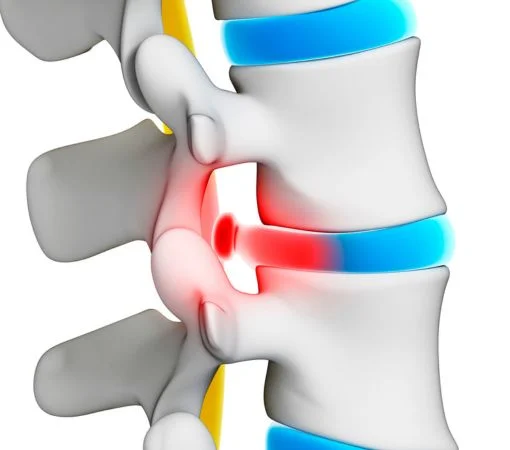
A slipped disc, medically known as a herniated or prolapsed disc, is a common spinal condition that can cause persistent back pain, neck discomfort, and nerve-related symptoms. It occurs when the soft inner material of a spinal disc pushes through its outer layer, potentially irritating or compressing nearby nerves. This condition can affect mobility, work productivity, sleep, and overall quality of life. Consulting the Best Doctor for Slip Disc in Mumbai can help patients receive an accurate diagnosis and explore appropriate treatment options. At Synapse Spine, experienced spine specialists focus on personalised care, advanced diagnostic evaluation, and effective management of spinal disc disorders.
Understanding Slip Disc and Its Causes
The spine consists of vertebrae separated by intervertebral discs that act as cushions and allow flexibility. Each disc contains a soft, gel-like centre surrounded by a tougher outer layer. When the outer layer weakens or tears, the inner material may protrude, causing a herniated disc.
A slipped disc commonly affects the lumbar spine (lower back) or cervical spine (neck).
Common Causes of Slip Disc
Several factors may contribute to disc herniation, including:
- Age-related degeneration: Spinal discs gradually lose water content and flexibility with age.
- Improper lifting techniques: Lifting heavy objects while bending or twisting may increase spinal stress.
- Poor posture: Prolonged sitting and improper body mechanics can contribute to back discomfort.
- Excess body weight: Additional weight may increase the mechanical load on the lower spine.
- Repetitive physical activities: Frequent bending, twisting, or heavy lifting can increase strain.
- Genetic factors: Some individuals may have an inherited tendency towards disc degeneration.
- Traumatic injuries: Accidents or sudden physical impacts can occasionally cause disc damage.
Understanding these risk factors helps patients adopt preventive measures and maintain better spinal health.
Symptoms That May Indicate a Slipped Disc
Symptoms depend on the location of the affected disc and whether it compresses nearby nerves. Some individuals have disc herniations without experiencing significant discomfort.
Common symptoms include:
Lower back pain: Persistent or recurring discomfort in the lumbar region, sometimes aggravated by bending, sitting, or lifting.
Sciatica: Sharp, burning, or shooting pain radiating from the lower back into the buttocks and legs.
Neck pain: Cervical disc herniation may cause stiffness, neck discomfort, or pain radiating towards the shoulders and arms.
Numbness and tingling: Nerve irritation may produce abnormal sensations in the hands, arms, feet, or legs.
Muscle weakness: Severe nerve compression may affect strength, grip, walking, or other movements.
Reduced mobility: Pain and stiffness can make everyday activities uncomfortable.
Sudden bladder or bowel dysfunction, numbness around the groin, or rapidly worsening weakness requires emergency medical assessment.
When Should You Consult the Best Doctor for Slip Disc in Mumbai?
Mild disc-related symptoms may improve with conservative treatment. However, medical evaluation is important when pain persists, becomes severe, or interferes with everyday activities.
Consider consulting a spine specialist if you experience pain radiating into the arms or legs, recurring episodes of severe back pain, persistent numbness, or difficulty performing normal movements.
Early specialist evaluation can help identify nerve compression, distinguish disc problems from other spinal conditions, and determine whether further investigations are required.
How Is a Slipped Disc Diagnosed?
Accurate diagnosis is essential for selecting an appropriate treatment plan. At Synapse Spine, the evaluation process focuses on understanding the patient’s symptoms, medical history, and neurological function.
1. Clinical Examination
The specialist evaluates spinal movement, posture, muscle strength, reflexes, and sensation. Specific tests may help identify nerve irritation.
2. Magnetic Resonance Imaging (MRI)
MRI provides detailed images of spinal discs, nerves, and surrounding soft tissues. It is particularly useful when significant nerve compression is suspected.
3. X-rays
X-rays help assess spinal alignment and certain bony abnormalities, although they cannot directly show a herniated disc.
4. CT Scan
A CT scan may be recommended in selected situations when detailed information about spinal bones is required.
5. Nerve Conduction Studies
Electrodiagnostic investigations may help distinguish spinal nerve problems from peripheral nerve disorders when the diagnosis is uncertain.
Not every patient requires advanced imaging. Investigations are recommended based on clinical findings and symptom severity.
Slip Disc Treatment Options at Synapse Spine
The Best Doctor for Slip Disc in Mumbai should evaluate the severity of the condition before recommending treatment. Many patients recover without surgery through appropriate conservative management.
Non-Surgical Treatments
Physiotherapy: Structured rehabilitation exercises can improve spinal flexibility, strengthen supporting muscles, and restore movement.
Medications: Pain-relieving and anti-inflammatory medicines may help control symptoms when prescribed appropriately.
Activity modification: Avoiding movements that aggravate symptoms while maintaining suitable physical activity can support recovery.
Posture correction: Ergonomic improvements and proper lifting techniques may reduce mechanical stress on the spine.
Epidural steroid injections: Selected patients with persistent nerve-related pain may benefit from injections that help reduce inflammation.
Treatment is individualised according to symptoms, neurological findings, and the patient’s response to previous therapies.
Minimally Invasive Spine Surgery
Surgery may be considered when severe nerve compression, progressive neurological weakness, or persistent disabling symptoms do not respond to appropriate conservative care.
Potential surgical procedures include:
- Microdiscectomy: Removal of the disc fragment compressing a nerve through a relatively small incision.
- Endoscopic discectomy: A minimally invasive technique using specialised instruments and a camera in suitable cases.
- Cervical discectomy: Removal of a problematic cervical disc when clinically indicated.
- Spinal decompression: Surgery to relieve pressure on compressed neural structures.
The surgical approach depends on the affected spinal level, anatomy, symptoms, and individual health considerations. Not every slipped disc requires surgery.
Why Choose Synapse Spine for Slip Disc Treatment?
Choosing the right specialist is essential for managing spinal disc problems. Synapse Spine brings together orthopaedic spine surgeons and neurosurgeons with experience in diagnosing and treating spinal disorders.
Experienced and Qualified Spine Surgeons
The Synapse Spine team includes specialists with advanced surgical qualifications and international fellowship training.
Dr. Nandan Marathe – Orthopaedic Spine Surgeon
Dr. Nandan Marathe completed his MBBS and MS in Orthopaedics at KEM Hospital, Mumbai, graduating as a gold medallist. He subsequently completed a clinical fellowship in complex spine surgery and spinal deformities at the University of Toronto, Canada. His additional training includes minimally invasive and endoscopic spine surgery in South Korea.
Dr. Anuj Bhide – Brain and Spine Surgeon
Dr. Anuj Bhide holds MBBS, MS in General Surgery, and MCh in Neurosurgery qualifications. A gold medallist from Grant Medical College and JJ Hospitals, Mumbai, he has over nine years of consultant experience in brain and spine surgery, including minimally invasive procedures.
Dr. Aditya Raj – Orthopaedic Spine Surgeon
Dr. Aditya Raj completed his orthopaedic training at KEM Hospital, Mumbai, where he received a gold medal. He has completed international fellowship training at the University of Toronto and additional training in endoscopic spine surgery in South Korea.
Patient-Focused Clinic Environment
Synapse Spine emphasises personalised consultations, comprehensive diagnostic evaluation, and patient education. The team combines specialist expertise with modern spine treatment techniques, helping patients understand their condition and make informed treatment decisions.
For patients seeking a Top Spine Specialist in Mumbai, India, Synapse Spine offers access to specialists experienced in both conservative and surgical management.
Consulting a Spine specialist Doctor in Mumbai can help patients understand whether physiotherapy, injections, or surgery is appropriate for their condition.
How to Prevent Slip Disc Problems
Although every disc problem cannot be prevented, healthy habits may reduce the risk of spinal strain.
- Maintain appropriate posture while sitting and standing.
- Exercise regularly to strengthen the back and abdominal muscles.
- Avoid lifting heavy objects with improper techniques.
- Maintain a healthy body weight.
- Take regular breaks during prolonged sitting.
- Use ergonomic furniture and appropriate workplace arrangements.
- Seek medical advice when persistent back pain or neurological symptoms develop.
Frequently Asked Questions (FAQs)
1. Who should I consult for a slipped disc?
Patients experiencing persistent back pain, sciatica, or nerve-related symptoms can consult the Best Doctor for Slip Disc in Mumbai for a detailed evaluation and individualised treatment recommendations.
2. Can a slipped disc heal without surgery?
Yes. Many slipped discs improve with conservative treatments such as physiotherapy, appropriate medication, activity modification, and time. Surgery is generally reserved for selected cases.
3. Is slipped disc surgery safe?
Modern surgical techniques can be effective for appropriately selected patients. However, all spinal surgeries carry risks, including infection, bleeding, nerve injury, and recurrent symptoms. A specialist can explain the expected benefits and potential complications.
4. How long does slipped disc recovery take?
Recovery varies depending on symptom severity and treatment. Some patients improve within several weeks, while others require longer rehabilitation or additional treatment.
Book Your Consultation at Synapse Spine
Experiencing persistent back pain, sciatica, or numbness? Contact Synapse Spine to discuss your symptoms and explore suitable treatment options with its specialist team.
+91 81698 45056 | +91 93726 71858 | +91 93211 24611
synapsespine@gmail.com
Get Directions to the Clinic – Synapse Spine, Mumbai