
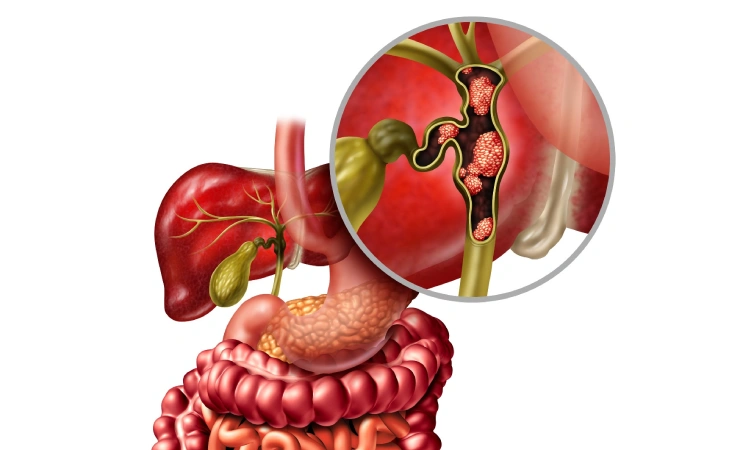
Gallbladder cancer is a relatively uncommon but serious cancer that develops in the gallbladder, a small organ located beneath the liver. Because early gallbladder cancer may cause few or nonspecific symptoms, it can sometimes be discovered incidentally after gallbladder surgery or diagnosed at a more advanced stage.
Early evaluation, accurate staging and appropriate treatment planning are important when gallbladder cancer is suspected. The treatment plan depends on the stage of the disease, whether the cancer can be completely removed surgically, the patient’s overall health and whether the cancer has spread to nearby tissues or distant organs.
For patients seeking gall bladder cancer treatment, specialist assessment by an experienced hepatobiliary and surgical oncology team can help determine the appropriate sequence of surgery, chemotherapy, radiation therapy and supportive care.
What Is Gallbladder Cancer?
Gallbladder cancer occurs when abnormal cells develop in the gallbladder and grow uncontrollably. Gallbladder cancers may remain unnoticed during the early stages because their symptoms can resemble common digestive problems or gallstone-related complaints.
The cancer is seen more frequently in women and is associated with factors such as gallstones, gallbladder polyps, chronic inflammation and certain abnormalities of the pancreaticobiliary junction. Some carcinogen exposures may also contribute to risk.
The disease commonly presents around the sixth decade of life, although individual risk varies.
Symptoms of Gallbladder Cancer
Symptoms can vary depending on the stage and location of the tumour. Common signs and symptoms may include:
- Pain in the upper-right part of the abdomen
- Abdominal bloating or discomfort
- Nausea
- Unexplained weight loss
- Yellowing of the skin or eyes, known as jaundice
- A lump in the upper-right abdomen in some cases
These symptoms can occur with conditions other than cancer, including gallstones. Therefore, persistent or worsening symptoms should be evaluated by a medical professional rather than self-diagnosed.
Risk Factors for Gallbladder Cancer
Several factors have been associated with an increased risk of gallbladder cancer. These include:
Gallstones
Long-standing gallstones and chronic irritation of the gallbladder may be associated with an increased risk. Most people with gallstones do not develop cancer, but recurrent symptoms should be evaluated appropriately.
Gallbladder Polyps
Certain gallbladder polyps can carry a higher risk of malignancy, particularly when they are large or demonstrate concerning changes. Imaging and clinical assessment help determine whether further management is required.
Chronic Inflammation
Persistent inflammation of the gallbladder can contribute to long-term tissue changes and is considered an important risk factor.
Abnormal Pancreaticobiliary Junction
An abnormal connection between the pancreatic and biliary ducts can cause reflux and chronic irritation, potentially increasing the risk of biliary disease.
How Is Gallbladder Cancer Diagnosed?
Diagnosis generally begins with a clinical examination and appropriate investigations. A doctor may evaluate the abdomen for tenderness or a lump and check for signs of jaundice.
Blood investigations may include liver function tests, complete blood count, coagulation testing, kidney function tests and tumour markers such as CA 19-9 and CEA.
Imaging plays an important role in identifying the tumour and assessing its extent. Depending on the clinical situation, investigations may include:
- Ultrasound of the abdomen
- Triple-phase CT scan
- MRCP
- PET-CT
A biopsy may be advised in selected patients, particularly when chemotherapy or radiation is planned. When a tumour appears resectable, biopsy may not always be required before surgery. Patients presenting with obstructive jaundice may require procedures such as ERCP or PTBD to relieve the obstruction and prepare them for safer treatment.
Gall Bladder Cancer Treatment Options
Treatment is individualized according to the stage, tumour extent, operability and general health of the patient. A multidisciplinary approach may combine surgery, chemotherapy and radiation therapy.
Surgery
Surgery is the principal potentially curative treatment when gallbladder cancer is localized and can be completely removed.
For disease confined to the gallbladder, surgery may involve a radical cholecystectomy, which removes the gallbladder along with a portion of the adjacent liver. Portal lymphadenectomy is performed to remove lymph nodes draining the region.
Some patients are diagnosed with gallbladder cancer only after undergoing laparoscopic surgery for presumed gallstones. This is known as incidental gallbladder cancer. For appropriate patients with T2 or more advanced disease, revision radical cholecystectomy may be considered, involving liver wedge resection and portal lymphadenectomy. Selected cases may require a more extensive liver resection.
Chemotherapy
Chemotherapy may be considered when the disease is unresectable or has spread extensively. It can also be recommended following surgery in selected patients to reduce the risk of recurrence.
The exact chemotherapy plan depends on the cancer’s stage, pathology, general health and other clinical factors.
Radiation Therapy
Radiation therapy may be used in selected circumstances, including when surgical margins are positive or as part of a treatment strategy intended to downstage locally advanced disease.
The decision to use radiation is made after evaluating the tumour’s location, stage and response to other treatments.
What Happens When Gallbladder Cancer Involves the Bile Duct?
Gallbladder cancer can sometimes involve the bile ducts. Biliary cancers also include hilar cholangiocarcinoma, which develops around the area where the right and left hepatic ducts meet.
Complex bile duct cancers may require major surgery involving bile duct removal, liver resection and reconstruction. In appropriate cases, a hepaticojejunostomy may be performed to connect the remaining bile ducts to the small intestine.
For hilar cholangiocarcinoma, treatment can include major hepatectomy with extrahepatic bile duct resection. In selected cases involving the portal vein, vascular reconstruction may also be required.
Why Choose Dr. Ganesh Nagarajan for Gallbladder Cancer Care?
Dr. Ganesh Nagarajan is a senior surgical oncologist specializing in gastrointestinal and hepatobiliary pancreatic surgical oncology. He holds an MBBS from Bombay University and an MS in General Surgery. He completed a four-year residency in Surgical Oncology at Tata Memorial Hospital, Mumbai, and subsequently undertook a fellowship in Hepatobiliary Pancreatic Surgery and Liver Transplantation at Hospital Beaujon, Paris.
He is Vice Chairman of Hepatobiliary Pancreatic and Gastrointestinal Oncology at Nanavati Max Institute of Cancer Care and has extensive experience in complex GI and HPB cancer surgery.
His areas of expertise include hepatobiliary and pancreatic surgery, gastrointestinal oncologic surgery, robotic and laparoscopic GI and HPB onco-surgery, vascular resections and reconstructions, HIPEC surgery, and surgery for bile duct strictures or injuries.
According to his professional profile, Dr. Nagarajan has performed more than 2,000 complex GI cancer surgeries and consulted more than 15,000 patients with GI and HPB cancers. He previously served as a Senior Consultant at PD Hinduja National Hospital for nearly a decade.
A Multidisciplinary and Patient-Centred Cancer Care Environment
Cancer Surgery Clinic provides access to specialist care for hepatobiliary, pancreatic and gastrointestinal cancers. Treatment planning emphasizes assessment of cancer stage, operability, nutrition, recovery and follow-up.
Dr. Nagarajan’s consultation practice includes a Bandra West location on Linking Road, providing convenient road and rail connectivity for patients from Mumbai as well as those travelling from outside the city. He also consults at Nanavati Max Institute of Cancer Care in Vile Parle West.
For patients looking for an onco surgeon in Mumbai, a specialist consultation can help clarify the diagnosis, understand whether surgery is appropriate and determine whether additional treatments may be required.
Dr. Nagarajan’s experience with minimally invasive and robotic procedures also makes him a Robotic Cancer Surgeon for selected gastrointestinal and hepatobiliary cancer surgeries. Robotic or laparoscopic surgery is not appropriate for every patient; the technique is selected according to tumour characteristics, anatomy and the overall treatment plan.
Why Early Specialist Evaluation Matters
Gallbladder cancer may initially resemble gallstones or other digestive conditions. When symptoms persist, imaging abnormalities are detected or cancer is found unexpectedly after gallbladder surgery, timely specialist evaluation is important.
The possibility of complete surgical removal, the need for additional therapy and the appropriate sequence of treatments depend on detailed staging and multidisciplinary assessment.
Book a Consultation With Dr. Ganesh Nagarajan
If you or a family member has been diagnosed with gallbladder cancer, a specialist consultation can help you understand the diagnosis, staging, surgical options and available treatment pathways.
Dr. Ganesh Nagarajan – Cancer Surgery Clinic
📧 hello@cancersurgeryclinic.com
📍 Get directions to the clinic Visit Dr. Ganesh Nagarajan’s Cancer Surgery Clinic in Bandra West or Nanavati Max, Vile Parle West, for a detailed consultation and individualized cancer treatment plan.
Frequently Asked Questions
1. Can gallbladder cancer be cured?
Gallbladder cancer may be potentially curable when it is detected at an operable stage and can be completely removed. Treatment depends on tumour stage, spread, surgical resectability and the patient’s overall health. Advanced disease may require systemic treatment and supportive procedures.
2. Is surgery always required for gallbladder cancer?
No. Surgery is considered when the cancer can be safely and completely removed. Patients with unresectable or widely metastatic disease may instead require systemic therapy and symptom-directed treatment. The appropriate approach is determined after detailed staging.
3. What surgery is performed for gallbladder cancer?
Depending on the stage, surgery may include radical cholecystectomy with liver wedge resection and portal lymphadenectomy. Some patients may require revision surgery after an incidental cancer diagnosis, while selected advanced cases may need major liver resection.
4. Can gallstones increase the risk of gallbladder cancer?
Long-standing gallstones and chronic gallbladder inflammation are associated with an increased risk of gallbladder cancer. However, having gallstones does not mean that a person will develop cancer. Persistent or recurrent symptoms should be evaluated by a doctor.