
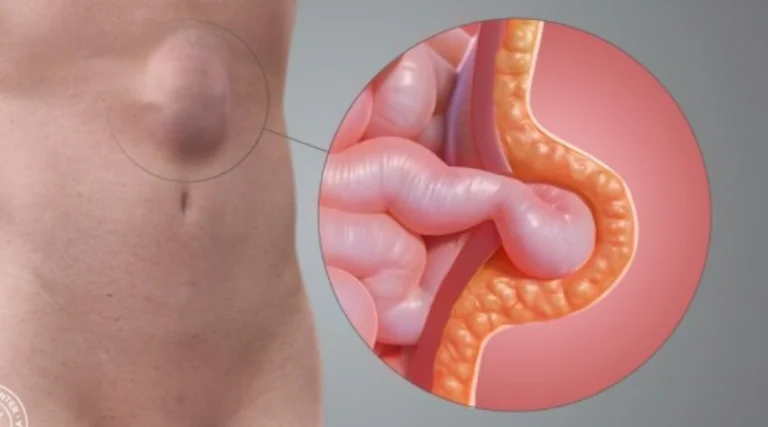
During my research into hernia treatment in Mumbai, I found that many patients and parents have questions about minimally invasive surgery, recovery time and the right surgical approach. Laparoscopic hernia surgery in Mumbai is one option used to repair certain types of abdominal and groin hernias through small incisions rather than one larger open incision. Dr. Bhavesh Doshi at Dhanvantari Hospital specialises in pediatric and neonatal surgery and treats a range of surgical conditions affecting infants, children and adolescents. His approach involves evaluating the child’s age, hernia type, symptoms and overall health before recommending the appropriate treatment.
What Is a Hernia?
A hernia occurs when an internal organ or tissue pushes through a weakened area in the surrounding muscle or connective tissue. In children, hernias are often related to developmental openings or weaknesses that have not closed properly.
Common pediatric hernias include inguinal hernias, umbilical hernias and some less common abdominal wall hernias. An inguinal hernia occurs in the groin and may appear as a swelling that becomes more noticeable when a child cries, coughs or strains.
An umbilical hernia appears around the belly button and is particularly common in infants. Some childhood umbilical hernias close naturally as the child grows, while others may require surgical evaluation.
Parents should not attempt to push a painful or firm swelling repeatedly without medical advice. A sudden painful swelling accompanied by vomiting, abdominal distension, irritability or inability to push the swelling back may indicate an emergency and requires prompt medical assessment.
Laparoscopic hernia surgery in Mumbai: How Does It Work?
Laparoscopic hernia repair is a minimally invasive surgical technique in which the surgeon uses a small camera and specialised instruments inserted through small abdominal incisions. The camera provides a magnified view of the internal structures, allowing the surgeon to identify and repair the hernia.
In pediatric patients, the surgical technique is selected according to the child’s age, hernia type, anatomy and clinical requirements. The procedure is performed under anaesthesia, and the surgical team monitors the child throughout the operation.
Compared with traditional open surgery, laparoscopic techniques use smaller access points. However, minimally invasive surgery is not automatically the best choice for every patient. The surgeon should determine the most appropriate method after evaluating the individual case.
When Is Surgery Recommended?
The need for hernia surgery depends on the type of hernia and the child’s age and symptoms.
Inguinal hernias in children are generally treated surgically because of the risk of incarceration, in which the herniated tissue becomes trapped. If blood supply to the trapped tissue is compromised, the condition can become an emergency.
Umbilical hernias are managed differently. Many close spontaneously during early childhood, so observation may be recommended in selected cases. Persistent, large or symptomatic umbilical hernias may require surgical repair.
The decision should therefore be based on clinical assessment rather than the size of the swelling alone.
Benefits of Laparoscopic Hernia Repair
For appropriately selected patients, Laparoscopic hernia surgery in Mumbai may offer several advantages associated with minimally invasive surgery.
Potential benefits include:
- Smaller surgical incisions
- Reduced visible scarring
- Less disruption to surrounding tissues
- Potentially shorter recovery in selected cases
- Better visualisation of internal structures
- Ability to assess the opposite groin in certain pediatric cases
The exact benefits depend on the child’s condition and the surgical technique used. Parents should discuss the advantages and limitations of laparoscopic and open repair with the surgeon before making a decision.
Possible Risks and Complications
Like every surgical procedure, laparoscopic hernia repair has potential risks. These can include bleeding, infection, injury to surrounding structures, recurrence and complications related to anaesthesia.
In children, additional considerations include age, weight, associated medical conditions and previous abdominal surgery. The risk profile can vary considerably between newborns, infants, older children and adolescents.
Parents should receive clear information about the expected recovery, warning signs and follow-up schedule before the procedure.
Recovery After Pediatric Hernia Surgery
Recovery varies according to the child’s age, overall health and surgical approach. Many children can gradually return to normal activities after a relatively short recovery period, but activity restrictions should be followed according to the surgeon’s instructions.
Parents may notice mild discomfort, swelling or bruising around the surgical area during the early recovery period. Prescribed pain medication can be used as directed.
The surgical wounds should be kept clean and monitored for increasing redness, discharge, swelling or other signs of infection. Fever, worsening pain, persistent vomiting or a new painful swelling should be reported promptly.
Children should return to school, sports and strenuous physical activity only when the treating surgeon considers it appropriate.
Dr. Bhavesh Doshi: Qualifications and Clinical Experience
For families searching for a Pediatric Surgeon in Mumbai, Dr. Bhavesh Doshi is a pediatric and neonatal surgeon whose practice focuses on surgical care for newborns, infants, children and adolescents.
His published professional profile describes specialised training in pediatric surgery and neonatal surgery, with clinical experience covering a broad range of pediatric surgical conditions. His areas of interest include minimally invasive pediatric surgery, neonatal surgery, pediatric urology, gastrointestinal surgery and congenital surgical conditions.
Dr. Bhavesh Doshi’s professional background includes experience in managing children requiring both routine and complex surgical care. His practice involves evaluating the child’s condition and selecting an appropriate surgical or non-surgical approach according to individual needs.
For families researching a Pediatric Surgeon in India, specialist pediatric surgical training is an important consideration because children are not simply smaller versions of adults. Their anatomy, physiology, anaesthesia requirements and recovery can differ significantly according to age.
Expertise in Pediatric and Neonatal Surgery
Dr. Bhavesh Doshi’s published profile highlights expertise in minimally invasive pediatric surgery and the management of surgical conditions affecting newborns and children. His practice covers common pediatric surgical problems as well as congenital conditions requiring specialised assessment.
Hernia repair is among the procedures evaluated and treated within pediatric surgical practice. Depending on the child’s age and condition, treatment may involve laparoscopic or open surgery.
A key aspect of pediatric surgical care is communication with parents. Understanding the diagnosis, reason for surgery, expected outcome, possible complications and recovery instructions can help families make informed decisions.
Dhanvantari Hospital and the Clinical Environment
Dhanvantari Hospital in Mumbai provides a clinical setting where pediatric patients can receive evaluation and surgical care. Pediatric procedures require an environment equipped to address the specific needs of children, including appropriate anaesthesia, monitoring and post-operative support.
Dr. Bhavesh Doshi’s practice is focused on pediatric and neonatal patients, allowing consultations to address not only the surgical condition but also the child’s age, development and overall health.
For parents considering Laparoscopic hernia surgery in Mumbai, evaluating the surgeon’s pediatric expertise and the hospital’s ability to provide age-appropriate surgical and anaesthesia care is as important as understanding the procedure itself.
Laparoscopic Versus Open Hernia Surgery
Both laparoscopic and open techniques can be used to repair hernias. In open surgery, the surgeon accesses the hernia through a larger incision directly over the affected area. Laparoscopic surgery uses small incisions and a camera to access the abdominal cavity.
The choice depends on the type of hernia, the child’s age, previous surgery, anatomy, surgeon’s assessment and available facilities.
There is no single approach that is ideal for every child. Parents should ask why a particular technique is being recommended and what its expected benefits and limitations are in their child’s specific situation.
Cost of Hernia Surgery
The cost of pediatric hernia surgery varies depending on the type of hernia, surgical technique, hospital charges, anaesthesia, investigations, duration of admission and post-operative requirements.
Laparoscopic procedures may have different costs from open repairs because of equipment and operating-room requirements. Families should request a complete estimate covering the surgical procedure, hospitalisation, anaesthesia, investigations and follow-up.
Rather than selecting a surgeon based only on price, parents should consider pediatric surgical qualifications, experience, hospital infrastructure and emergency support.
Consult Dr. Bhavesh Doshi at Dhanvantari Hospital
If your child has a suspected or diagnosed hernia, consultation with a pediatric surgeon can help determine whether observation or surgery is appropriate. Dr. Bhavesh Doshi can assess the child’s condition and discuss suitable surgical options, including minimally invasive approaches when indicated.
📞 9820565205 ☎️ 022 28338378
📧 info@drbhaveshdoshi.com
Get directions to the clinic – Dhanvantari Hospital
To discuss your child’s hernia and understand the available treatment options, contact Dr. Bhavesh Doshi and schedule a pediatric surgical consultation.
Frequently Asked Questions
1. Is laparoscopic hernia surgery safe for children?
Laparoscopic hernia repair can be performed in appropriately selected pediatric patients by a trained pediatric surgical team. Safety depends on the child’s age, health, hernia type, anaesthesia and surgical expertise.
2. How long does pediatric hernia surgery take?
The duration varies depending on the type of hernia, surgical approach and individual circumstances. The surgeon can provide a more accurate estimate after examining the child.
3. Do all childhood hernias require surgery?
No. Management depends on the type of hernia. Inguinal hernias generally require surgical repair, while some umbilical hernias may close naturally and can be observed for a period of time.
4. How quickly can a child return to normal activities?
Recovery differs between children. Many resume light daily activities relatively quickly, but strenuous exercise and sports should be avoided until the pediatric surgeon confirms that the child has healed adequately.