
Spinal problems such as slipped discs, sciatica, spinal stenosis, and degenerative disc disease can significantly affect mobility, comfort, and quality of life. Persistent back pain, neck stiffness, and nerve compression may interfere with everyday activities, making timely diagnosis and appropriate treatment essential. While many spinal conditions respond to medications and physiotherapy, certain cases may require surgical intervention. Minimally invasive spine surgery in Mumbai offers an advanced treatment approach that uses smaller incisions, reduces tissue disruption, and may support faster recovery for patients with suitable spinal conditions.
Minimally invasive spine surgery in Mumbai offers a modern surgical approach that uses smaller incisions and specialised instruments to treat selected spinal disorders. At Synapse Spine, experienced spine surgeons provide personalised treatment plans, advanced surgical techniques, and comprehensive care to help patients manage spinal conditions and improve mobility.
What Is Minimally Invasive Spine Surgery in Mumbai?
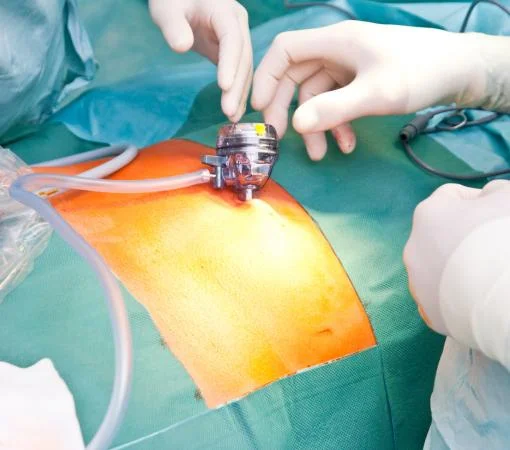
Minimally invasive spine surgery (MISS), also called keyhole spine surgery, is an advanced surgical technique designed to treat spinal conditions through smaller incisions compared with traditional open surgery.
The procedure uses specialised instruments, tubular retractors, microscopic visualisation, and imaging guidance to access affected spinal structures while minimising disruption to surrounding muscles and tissues.
Depending on the condition, surgeons may perform nerve decompression, remove damaged disc material, or stabilise the spine.
Compared with conventional open procedures, minimally invasive techniques may offer reduced postoperative discomfort, less blood loss, shorter hospital stays, and faster recovery for appropriately selected patients. However, suitability depends on the spinal condition and individual health factors.
Conditions Treated with Minimally Invasive Spine Surgery
Several spinal disorders may be treated using minimally invasive surgical techniques.
1. Herniated or Slipped Disc
A herniated disc occurs when the soft inner material of a spinal disc protrudes through its outer covering, potentially compressing nearby nerves. Minimally invasive discectomy may remove the affected disc material and relieve nerve pressure.
2. Spinal Stenosis
Spinal stenosis involves narrowing of the spinal canal, which may compress spinal nerves. Minimally invasive decompression procedures can create additional space for affected nerves and reduce associated symptoms.
3. Degenerative Disc Disease
Age-related disc degeneration can contribute to chronic back pain, stiffness, and nerve irritation. Selected patients may benefit from minimally invasive decompression or spinal stabilisation procedures.
4. Sciatica
Sciatica commonly causes radiating pain, tingling, or numbness extending from the lower back into the leg. Surgery may be considered when significant nerve compression persists despite appropriate conservative treatment.
5. Spinal Fractures
Certain spinal fractures may require minimally invasive stabilisation techniques to restore structural support and prevent further complications.
6. Spinal Tumours and Deformities
Selected spinal tumours and deformities may be treated using minimally invasive approaches. However, complex conditions sometimes require traditional open surgery for adequate access and safe treatment.
How Is Minimally Invasive Spine Surgery Performed?
The surgical process involves careful planning, specialised equipment, and postoperative monitoring.
Step 1: Preoperative Evaluation
The surgeon reviews medical history, symptoms, neurological findings, and diagnostic imaging such as MRI, CT scans, or X-rays. These investigations help determine whether surgery is necessary and which approach is appropriate.
Step 2: Anaesthesia
Depending on the procedure, general or another appropriate form of anaesthesia is administered to maintain patient comfort and safety.
Step 3: Small Incision
The surgeon creates one or more small incisions near the affected spinal region.
Step 4: Specialised Instruments
Tubular retractors and specialised surgical instruments provide access to the spine while limiting disruption to surrounding tissues. Microscopes, endoscopes, or imaging systems may assist surgical visualisation.
Step 5: Surgical Treatment
The surgeon removes compressive disc material, decompresses affected nerves, or stabilises spinal structures according to the diagnosis.
Step 6: Recovery and Rehabilitation
Following surgery, patients receive monitoring, pain management, wound care instructions, and rehabilitation guidance. Recovery time depends on the procedure and individual health status.
Benefits of Minimally Invasive Spine Surgery
Patients considering Minimally invasive spine surgery in Mumbai may experience several potential advantages compared with traditional open surgery.
- Smaller incisions: Smaller surgical openings may reduce visible scarring and tissue disruption.
- Reduced blood loss: Muscle-sparing techniques can decrease blood loss during selected procedures.
- Less postoperative discomfort: Reduced muscle disruption may result in lower postoperative pain.
- Shorter hospital stay: Some patients can leave the hospital earlier, depending on the procedure.
- Faster mobilisation: Certain minimally invasive procedures allow patients to begin walking sooner.
- Potentially quicker recovery: Patients may resume appropriate daily activities earlier with medical guidance.
These advantages are not guaranteed. Complications such as infection, bleeding, nerve injury, persistent symptoms, or the need for further surgery remain possible.
Meet the Experienced Spine Surgeons at Synapse Spine
Synapse Spine brings together orthopaedic spine surgeons and neurosurgical specialists trained in diagnosing and treating spinal disorders.
Dr. Nandan Marathe – Orthopaedic Spine Surgeon
Dr. Nandan Marathe completed his MBBS and MS Orthopaedics at KEM Hospital, Mumbai, earning a gold medal during his postgraduate training.
He pursued advanced fellowship training in complex spine surgery and spinal deformities at the University of Toronto, Canada. His additional international training includes spinal tumours in Italy and minimally invasive and endoscopic spine surgery in South Korea.
His clinical expertise includes complex spinal disorders, spinal deformities, spinal infections, and advanced surgical procedures.
Dr. Aditya Raj – Orthopaedic Spine Surgeon
Dr. Aditya Raj completed his orthopaedic surgery training at KEM Hospital, Mumbai, where he graduated as a gold medallist.
He subsequently completed a complex spine surgery fellowship at the University of Toronto and specialised training in minimally invasive and endoscopic spine surgery in South Korea.
His areas of expertise include spinal deformities, spinal tumours, spinal infections, and complex spine surgery.
Multidisciplinary Spine Specialists
The Synapse Spine team also includes Dr. Anuj Bhide, Dr. Ajit Mishra, Dr. Abhishek Kulkarni, Dr. Medha Vyas, and other experienced spine specialists.
Their combined orthopaedic and neurosurgical expertise supports comprehensive evaluation, personalised treatment planning, and coordinated spinal healthcare.
Why Choose Synapse Spine for Advanced Spine Treatment?
Patients searching for a Top Spine Specialist in Mumbai, India can explore Synapse Spine’s approach to spinal healthcare.
The clinic network emphasises patient-centred consultations, accurate diagnosis, evidence-based treatment recommendations, and individualised recovery guidance.
Its specialists evaluate both surgical and non-surgical treatment options, helping patients understand the potential benefits, limitations, and risks of each approach.
Synapse Spine offers consultations across several Mumbai locations, including Andheri, Bandra, Borivali, and Vile Parle, with additional locations in the wider Mumbai region.
The consultation environment is focused on specialist assessment, clear patient communication, and coordinated treatment planning. Surgical facilities and available procedures depend on the treating location.
Patients looking for a Spine specialist Doctor in Mumbai can consult Synapse Spine to understand their condition and discuss appropriate treatment options.
Recovery After Minimally Invasive Spine Surgery
Recovery varies depending on the spinal condition, surgical procedure, age, and overall health.
Some patients can begin walking within hours or a day after surgery, while others require longer observation and rehabilitation.
Doctors may recommend:
- Avoiding heavy lifting during the initial recovery period.
- Following prescribed medications and wound care instructions.
- Attending physiotherapy sessions when advised.
- Maintaining proper posture during sitting and standing.
- Gradually increasing physical activity.
- Attending scheduled follow-up appointments.
Following medical advice helps support healing and reduces the likelihood of avoidable complications.
Who Is a Suitable Candidate for Minimally Invasive Spine Surgery?
Minimally invasive spine surgery in Mumbai may be considered for patients experiencing persistent nerve compression, certain herniated discs, spinal stenosis, or selected spinal instability conditions.
However, surgery is not necessary for every spinal problem. Many patients improve with physiotherapy, medications, activity modification, and other conservative treatments.
A specialist determines suitability based on symptoms, imaging findings, neurological function, previous treatments, and overall health.
Frequently Asked Questions (FAQs)
1. Is minimally invasive spine surgery safe?
Minimally invasive spine surgery can be safe and effective for appropriately selected patients. However, every surgical procedure carries risks, including infection, bleeding, nerve injury, and anaesthesia-related complications.
2. How long does minimally invasive spine surgery take?
Surgical duration varies depending on the procedure and complexity of the spinal condition. Some operations take approximately one to two hours, while complex procedures may require considerably longer.
3. Is minimally invasive spine surgery painful?
Anaesthesia prevents pain during surgery. Patients may experience postoperative discomfort, but certain minimally invasive techniques can reduce muscle-related pain compared with traditional open surgery.
4. How much does minimally invasive spine surgery cost in Mumbai?
The cost depends on the spinal condition, procedure, hospital facilities, implants, surgical complexity, and length of hospitalisation. A consultation and clinical assessment are necessary for an individualised cost estimate.
Book Your Consultation at Synapse Spine
Are you experiencing persistent back pain, sciatica, slipped disc symptoms, or spinal nerve compression? Consult the experienced spine specialists at Synapse Spine to explore suitable treatment options.
Contact Synapse Spine
+91 81698 45056 | +91 93726 71858 | +91 93211 24611
synapsespine@gmail.com
Get Directions to the Clinic – Synapse Spine, Mumbai