
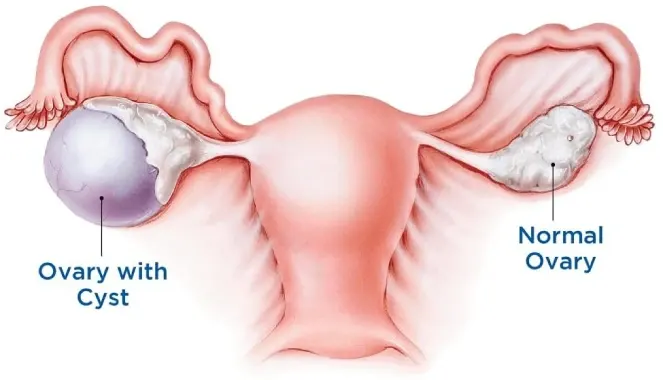
Finding out that you have an ovarian cyst can be worrying, especially when you experience pelvic pain, bloating, irregular periods, or concerns about fertility. While many ovarian cysts are harmless and may resolve naturally, some require careful monitoring or surgical treatment. Understanding the type of cyst and receiving expert medical guidance can help you make informed decisions about your health.
For women seeking specialised Ovarian Cyst Surgery in Mumbai, Dr. Maitreyee Parulekar provides advanced evaluation and minimally invasive treatment options based on each patient’s individual condition. Her approach focuses on accurate diagnosis, personalised treatment planning, and preserving ovarian function whenever medically appropriate.
What Is an Ovarian Cyst?
An ovarian cyst is a fluid-filled sac that develops on or inside an ovary. Ovarian cysts are relatively common and can occur at different stages of a woman’s life. Many cysts are functional, meaning they develop as part of the normal menstrual cycle and may disappear without treatment.
However, some cysts may persist, increase in size, cause symptoms, or require further investigation. In such cases, regular monitoring and specialist consultation are important.
Ovarian cysts can vary in size and type. Some common types include:
- Functional cysts
- Follicular cysts
- Corpus luteum cysts
- Dermoid cysts
- Endometriomas
- Cystadenomas
- Complex ovarian cysts
The treatment approach depends on the type, size, appearance, symptoms, and overall health of the patient.
What Are the Symptoms of an Ovarian Cyst?
Many ovarian cysts do not cause noticeable symptoms. They may be discovered during a routine pelvic examination or ultrasound.
When symptoms occur, they may include:
- Pelvic pain or discomfort
- Lower abdominal pain
- Bloating or abdominal fullness
- Pain during intercourse
- Irregular menstrual cycles
- Frequent urination due to pressure
- Difficulty during bowel movements
- Sudden or severe abdominal pain in certain complications
Severe pain, vomiting, dizziness, or sudden worsening symptoms may require urgent medical attention, particularly when complications such as ovarian torsion or cyst rupture are suspected.
When Is Ovarian Cyst Surgery Recommended?
Not every ovarian cyst requires surgery. Small and simple cysts may sometimes be monitored with regular follow-up and imaging.
Surgery may be considered when:
- The cyst is large
- The cyst persists over time
- There is significant pelvic pain
- The cyst has suspicious features
- The cyst affects fertility
- There is a risk of torsion
- The cyst ruptures or causes complications
- Further evaluation is required to rule out malignancy
The decision to operate should always be based on a thorough clinical assessment and diagnostic evaluation.
Understanding Ovarian Cystectomy
An ovarian cystectomy is a surgical procedure performed to remove the cyst while preserving the healthy ovarian tissue whenever possible. This approach can be particularly important for women who wish to preserve ovarian function or fertility.
Depending on the nature and complexity of the cyst, surgery may be performed through minimally invasive techniques such as laparoscopy or robotic surgery.
The advantages of minimally invasive surgery may include:
- Smaller incisions
- Reduced post-operative discomfort
- Less visible scarring
- Shorter hospital stay
- Faster recovery
- Earlier return to daily activities
However, the most suitable surgical technique depends on the size and type of the cyst, previous medical history, surgical complexity, and the patient’s overall condition.
Advanced Laparoscopic and Robotic Techniques
Modern gynaecological surgery has significantly advanced over the years. Laparoscopic and robotic procedures can allow surgeons to operate with enhanced precision and visualisation in selected cases.
Dr. Maitreyee Parulekar specialises in minimally invasive gynaecological surgery, including advanced laparoscopic and robotic techniques for benign and oncological conditions. Her approach focuses on treating the underlying condition while preserving healthy tissue and reproductive function whenever medically appropriate.
Robotic surgery may offer enhanced visualisation and surgical precision in selected complex cases. Laparoscopic procedures can also provide effective minimally invasive treatment for many ovarian conditions.
A detailed consultation helps determine which approach is most appropriate.
About Dr. Maitreyee Parulekar
Dr. Maitreyee Parulekar is a distinguished gynaecological surgeon specialising in Gynaecological Oncosurgery and Minimally Invasive Surgery.
Her qualifications include:
- MBBS
- MS in Obstetrics and Gynaecology from KEM Hospital, Mumbai
- MRCOG, United Kingdom
- FMAS, MUHS
- Fellowship in Gynaecological Oncosurgery and Robotic Surgery, Seoul, South Korea
- Visiting Scholar in Minimally Invasive Gynaecology at Mount Sinai Hospital, Toronto
Dr. Maitreyee Parulekar completed her Master’s degree in Obstetrics and Gynaecology from the prestigious KEM Hospital, Mumbai, and received recognition for academic excellence, including a University Gold Medal.
Her advanced training includes specialised experience in minimally invasive surgery, gynaecological oncology, laparoscopic procedures, and robotic surgery. She has also received international exposure through advanced training and fellowships.
As a Top Gynae Oncologist In Mumbai, Dr. Maitreyee Parulekar manages both benign and complex gynaecological conditions with a focus on precision, patient safety, and individualised treatment planning.
Expertise in Women’s Health and Minimally Invasive Surgery
Dr. Maitreyee Parulekar provides specialised care for a wide range of gynaecological concerns, including:
- Ovarian cysts
- Endometriosis
- Fibroids
- Menstrual disorders
- PCOS
- Fertility-preserving surgery
- Gynaecological cancers
- Laparoscopic hysterectomy
- Robotic surgery
- Hysteroscopic procedures
- Cyst torsion surgery
Her experience in minimally invasive surgery helps provide patients with advanced treatment options where clinically appropriate.
The goal of treatment is not simply to perform surgery but to understand the patient’s medical condition, symptoms, future reproductive goals, and overall well-being before creating a personalised care plan.
Why Choose a Robotic Gynecologist in Vile Parle, Mumbai?
Women facing complex gynaecological conditions may benefit from consulting a specialist with experience in advanced surgical techniques.
As a Robotic Gynecologist In Vile Parle, Mumbai, Dr. Maitreyee Parulekar offers advanced expertise in robotic and laparoscopic surgery for selected gynaecological conditions.
Robotic-assisted surgery may provide benefits such as enhanced visualisation, improved precision, and better access to complex surgical areas. In appropriate cases, minimally invasive surgery may also support reduced blood loss, smaller incisions, and faster recovery.
The final treatment decision should always be made after a detailed medical evaluation.
Patient-Centred Care at Kirit Nursing Home
A comfortable and supportive healthcare environment can make a significant difference for women undergoing gynaecological treatment.
Dr. Maitreyee Parulekar provides consultation and treatment at Kirit Nursing Home in Vile Parle East. The clinical approach focuses on detailed discussions, clear communication, and helping patients understand their diagnosis and treatment options.
Patients are encouraged to discuss:
- Their symptoms
- Concerns regarding surgery
- Fertility goals
- Treatment alternatives
- Recovery expectations
- Follow-up requirements
A well-informed patient is better equipped to participate in decisions regarding her healthcare.
Recovery After Ovarian Cyst Surgery
Recovery after ovarian cyst surgery depends on several factors, including the type of procedure performed, the size and complexity of the cyst, and the patient’s overall health.
Patients undergoing minimally invasive surgery may generally experience a shorter recovery period compared with traditional open surgery. However, recovery varies from person to person.
Following surgery, patients may receive guidance regarding:
- Pain management
- Physical activity
- Wound care
- Diet and hydration
- Follow-up appointments
- Warning signs requiring medical attention
It is important to follow the surgeon’s instructions carefully for a safe recovery.
When Should You Consult a Specialist?
Do not ignore persistent pelvic discomfort or changes in your menstrual health. A timely consultation can help identify whether an ovarian cyst requires observation, medical management, or surgical treatment.
You should consider specialist consultation if you experience:
- Persistent pelvic pain
- Recurrent abdominal bloating
- Painful periods
- Sudden severe abdominal pain
- Known ovarian cyst with increasing size
- Fertility concerns
- Irregular menstrual cycles
Early diagnosis can help guide appropriate treatment and reduce unnecessary anxiety.
Expert Care for Ovarian Cysts in Mumbai
An ovarian cyst diagnosis does not always mean surgery. Many cysts can be safely monitored, while others require medical or surgical management. The key is receiving an accurate diagnosis and understanding the treatment options available.
For women considering Ovarian Cyst Surgery in Mumbai, consulting an experienced specialist can help determine whether surgery is necessary and which approach may be suitable.
Dr. Maitreyee Parulekar combines specialised training in gynaecological oncology with expertise in laparoscopic and robotic surgery. Her patient-focused approach aims to provide clear guidance and personalised treatment for women with ovarian cysts and other complex gynaecological conditions.
Book a Consultation with Dr. Maitreyee Parulekar
If you have been diagnosed with an ovarian cyst or are experiencing persistent pelvic symptoms, do not delay seeking professional advice. A detailed consultation can help you understand your condition and explore the most appropriate treatment options.
📞 Call: +91 72087 27500
📧 Email: info@drmaitreyeegynec.in
📍 Get directions to Kirit Nursing Home
Take the Next Step Towards Better Women’s Health
Persistent pelvic pain or an ovarian cyst should not be ignored. Book a consultation with Dr. Maitreyee Parulekar for a detailed evaluation and personalised treatment guidance. With expertise in advanced laparoscopic and robotic gynaecological surgery, she can help you understand your condition and discuss suitable treatment options based on your individual needs.
Frequently Asked Questions
1. Does every ovarian cyst require surgery?
No. Many ovarian cysts are harmless and may disappear naturally. Surgery may be considered if a cyst is large, persistent, painful, suspicious, or causing complications. A specialist evaluation can help determine the appropriate treatment.
2. What is ovarian cystectomy?
Ovarian cystectomy is a surgical procedure in which the cyst is removed while preserving the ovary whenever possible. This can help maintain ovarian function and may be important for women concerned about fertility.
3. Can ovarian cyst surgery be performed laparoscopically?
Yes, many ovarian cysts can be treated using minimally invasive laparoscopic techniques. In selected complex cases, robotic surgery may also be considered. The most appropriate technique depends on the type and complexity of the cyst.
4. How long does recovery take after ovarian cyst surgery?
Recovery depends on the type of surgery performed and individual health factors. Patients undergoing minimally invasive procedures may generally recover faster than those undergoing open surgery. Your surgeon can provide personalised recovery guidance based on your procedure.