
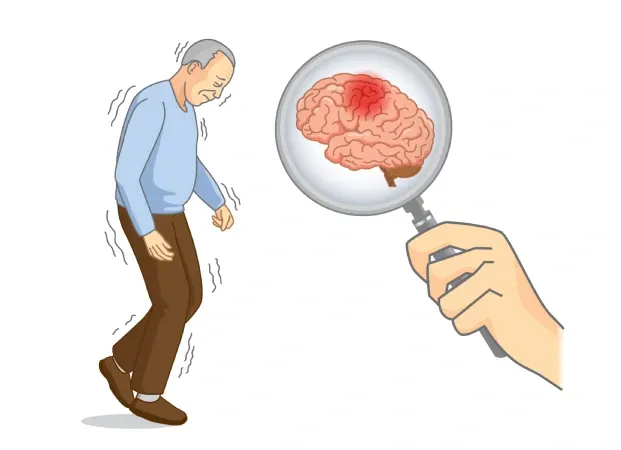
Parkinson’s disease is a progressive neurological condition that can gradually affect movement, balance and everyday independence. While tremors are one of its best-known symptoms, Parkinson’s can also cause stiffness, slowed movements, changes in posture and difficulties with walking. During my review of neurological care in Mumbai, I found that effective management requires more than treating an individual symptom. Parkinson treatment in Mumbai may involve detailed neurological assessment, medication, rehabilitation and, in selected patients with advanced disease, surgical options such as Deep Brain Stimulation (DBS). Dr. Manish Baldia is a functional neurosurgeon with specialized training in movement disorders and DBS.
What Is Parkinson’s Disease?
Parkinson’s disease is a progressive disorder affecting areas of the brain involved in movement control. In Parkinson treatment in Mumbai, understanding the gradual reduction in dopamine-producing nerve cells is important because this change can lead to characteristic motor symptoms such as tremors, stiffness and slowed movements.
Common symptoms include:
- Tremors, particularly tremors occurring at rest
- Muscle stiffness or rigidity
- Slowness of movement, known as bradykinesia
- Difficulty initiating movement
- Changes in walking and posture
- Balance problems
As the disease progresses, some individuals may also experience fluctuations in their response to medication or involuntary movements called dyskinesias.
The symptoms and rate of progression can vary significantly between patients. Consequently, treatment needs to be individualized according to symptoms, disease stage, medication response, age, overall health and functional requirements.
How Is Parkinson’s Disease Diagnosed?
There is no single blood test that confirms Parkinson’s disease. Diagnosis generally begins with a detailed medical history and neurological examination. The doctor evaluates movement patterns, tremor, muscle tone, gait, balance and the progression of symptoms.
The reference information for Dr. Manish Baldia’s practice describes clinical assessment using tools such as the Unified Parkinson’s Disease Rating Scale (UPDRS). MRI and other investigations may also be used when necessary to rule out other neurological conditions. In selected situations, specialized imaging such as a DaTscan may assist the diagnostic evaluation.
Keeping a record of symptoms can also help during consultation. Patients or family members can note when tremors occur, how symptoms change during the day and whether medication improves or worsens particular symptoms.
Parkinson Treatment in Mumbai: What Are the Options?
The treatment plan depends on the individual patient’s symptoms and stage of disease. There is currently no treatment that permanently eliminates Parkinson’s disease, but several approaches can help control symptoms and maintain quality of life.
Medication
Medication is commonly an important component of Parkinson’s management. Drugs that improve dopamine-related activity in the brain may help reduce symptoms such as slowness and rigidity. Medication schedules can require adjustment as the disease progresses.
Some patients may eventually experience motor fluctuations or dyskinesias despite optimized medication. This is one reason continued neurological follow-up is important.
Physiotherapy and Rehabilitation
Exercise and rehabilitation can complement medical treatment. Physiotherapy may focus on gait, balance, posture, flexibility and muscle strength. Speech therapy may be helpful for selected patients experiencing speech or swallowing difficulties.
Maintaining physical activity, as advised by the treating medical team, can also support mobility and independence.
Deep Brain Stimulation
For carefully selected patients with advanced Parkinson’s disease whose symptoms are no longer adequately controlled with medication, Deep Brain Stimulation may be considered.
DBS involves implanting thin electrodes in specific areas of the brain. These electrodes are connected to a pulse generator, similar to a pacemaker, implanted under the skin of the chest. Electrical stimulation can help regulate abnormal neural activity and may reduce certain motor symptoms.
DBS does not cure Parkinson’s disease and is not appropriate for every patient. Careful preoperative assessment is required to determine whether the expected benefits outweigh the risks.
Who May Benefit From DBS?
DBS is generally considered only after a comprehensive evaluation. Factors that may influence suitability include the patient’s diagnosis, response to Parkinson’s medication, motor fluctuations, dyskinesias, cognitive status and general health.
The surgical process described in Dr. Manish Baldia’s clinical information involves detailed pre-surgical Parkinson’s assessment, imaging and patient counselling. Electrode placement and subsequent device implantation are followed by programming and rehabilitation.
Because DBS is a long-term treatment rather than simply a one-time operation, programming and follow-up are important parts of care.
Dr. Manish Baldia: Qualifications and Clinical Experience
Dr. Manish Baldia is a functional neurosurgeon specializing in Parkinson’s disease, Deep Brain Stimulation, dystonia, epilepsy and other complex movement disorders. His qualifications include MBBS, MCh in Neurosurgery from Christian Medical College (CMC), Vellore, EEPIN from London and a Fellowship in Functional Neurosurgery.
According to his professional profile, Dr. Manish Baldia trained and practiced at CMC Vellore for 12 years and subsequently developed advanced expertise in functional neurosurgery under Dr. Paresh Doshi, a pioneer in DBS surgery in India. He also gained international exposure to functional and stereotactic neurosurgical techniques at Queen Mary University of London.
His reported clinical experience includes more than 3,000 brain, spine and DBS surgeries, with more than 250 DBS procedures and over 3,000 advanced DBS programming sessions. His practice also includes management of complex and failed DBS cases.
Expertise in Functional Neurosurgery
Dr. Manish Baldia’s expertise extends beyond Parkinson’s disease. His clinical areas include dystonia, epilepsy and other movement disorders, as well as complex brain and spine conditions.
His professional profile lists experience in DBS, stereotactic procedures, minimally invasive neurosurgery, spinal cord tumour surgery, brain tumour procedures, CyberKnife and other advanced neurosurgical interventions.
His academic work has also received recognition. His published professional information lists research awards from CMC Vellore and awards for papers and posters relating to DBS and Parkinson’s disease.
Clinic Environment and Patient-Centred Care
Patients seeking a Neuro Doctor in Mumbai can consult Dr. Manish Baldia at his Advance Neuro Parkinson’s and Spine Centre in Byculla East. The centre is located at Shop No. 5, Salsette 27, The New Great Eastern Mills, Dr. Babasaheb Ambedkar Road, Byculla East, Mumbai – 400027.
The practice focuses on neurological and neurosurgical conditions, with services including Parkinson’s disease management, DBS, epilepsy and other advanced brain and spine treatments. The professional information emphasizes patient-focused care alongside advanced neurosurgical technology.
For patients being evaluated for DBS, the care pathway may involve assessment before surgery, the procedure itself, device programming and rehabilitation. This integrated approach is particularly relevant because DBS outcomes depend not only on electrode placement but also on appropriate postoperative programming and follow-up.
When Should You Consult a Parkinson’s Specialist?
A neurological consultation may be appropriate when a person develops persistent tremors, stiffness, slowed movements, changes in walking or difficulty maintaining balance. Early assessment can help distinguish Parkinson’s disease from other conditions that may produce similar symptoms.
Patients already diagnosed with Parkinson’s should also seek specialist review if medication becomes less effective, symptoms fluctuate substantially, dyskinesias develop or daily activities become increasingly difficult.
For advanced disease, a movement-disorder or functional-neurosurgery evaluation can help determine whether treatments such as DBS should be considered.
A Specialist Approach to Advanced Parkinson’s Care
Managing Parkinson’s disease is a continuing process. Medication, exercise, physiotherapy, lifestyle measures and regular neurological assessment can all play a role. When symptoms become difficult to control despite optimized medical therapy, advanced interventions may provide another treatment pathway for appropriately selected patients.
Dr. Manish Baldia’s specialization in functional neurosurgery and DBS, along with his experience in movement disorders and DBS programming, allows patients to discuss both non-surgical and advanced surgical options as part of an individualized treatment plan.
Book a Consultation With Dr. Manish Baldia
If you or a family member is experiencing persistent tremors, stiffness, slowed movement, balance difficulties or complications related to Parkinson’s medication, a specialist neurological assessment can help clarify the diagnosis and available treatment options.
Dr. Manish Baldia – Baldia’s Advance Neuro Parkinson’s and Spine Centre
📞 96767 67507
📧 drmanishbaldia@gmail.com
Get Directions to the Clinic – Lalbaug Diagnostics.
Frequently Asked Questions
1. What are the common symptoms of Parkinson’s disease?
Common symptoms include resting tremors, muscle rigidity, bradykinesia or slowed movement, difficulty initiating movement, changes in walking and balance problems. Symptoms can vary from one person to another.
2. Can Parkinson’s disease be cured?
Currently, there is no definitive cure for Parkinson’s disease. Treatment focuses on controlling symptoms, maintaining mobility and independence, and improving quality of life through medication, rehabilitation and, for selected patients, advanced treatments such as DBS.
3. When is Deep Brain Stimulation considered?
DBS may be considered for selected patients with Parkinson’s disease whose motor symptoms, fluctuations or dyskinesias are inadequately controlled with medication. A detailed assessment is necessary to determine suitability.
4. Does DBS eliminate the need for Parkinson’s medication?
Not necessarily. DBS can reduce certain motor symptoms and may allow medication adjustments in suitable patients, but it does not cure Parkinson’s disease. Medication and device programming requirements vary between individuals.