
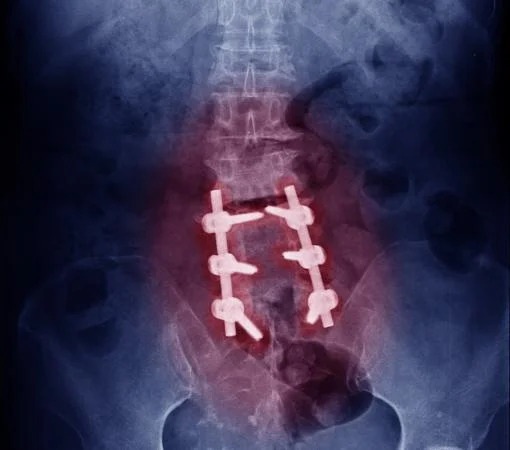
Spinal problems such as degenerative disc disease, spinal instability, spondylolisthesis and spinal deformities can cause persistent back pain, nerve compression and difficulty performing everyday activities. When conservative treatments fail to provide adequate relief, Spinal fusion surgery Mumbai may be recommended to stabilize the affected portion of the spine, reduce painful movement and improve spinal function. Consulting experienced spine surgeons at Synapse Spine can help patients understand suitable surgical options based on their individual condition.
Spinal fusion is a specialised surgical procedure that involves joining two or more vertebrae using bone grafts and medical implants. The procedure helps prevent abnormal movement between affected vertebrae, providing stability and reducing pain associated with certain spinal conditions.
Choosing an experienced spine surgeon is important for achieving appropriate treatment outcomes. Patients considering Spinal fusion surgery Mumbai can consult the specialists at Synapse Spine for a detailed evaluation, advanced surgical techniques and personalised treatment planning.
What Is Spinal Fusion Surgery?
Spinal fusion surgery is a procedure designed to permanently connect two or more vertebrae in the spine. It is performed to stabilise the affected spinal segment, correct deformities and reduce painful movement between vertebrae.
During the procedure, the surgeon places bone graft material between the affected vertebrae. Over time, the graft encourages new bone growth, allowing the vertebrae to join together. Specialised implants such as screws, rods, plates or interbody cages may also be used to maintain stability while the fusion develops.
Spinal fusion can be performed in different regions of the spine, including the cervical spine (neck), thoracic spine (middle back) and lumbar spine (lower back).
When Is Spinal Fusion Surgery Recommended?
Spinal fusion may be recommended when spinal instability, deformity or painful movement cannot be adequately managed through non-surgical treatments.
Common conditions that may require spinal fusion include:
1. Degenerative Disc Disease: Age-related changes can cause spinal discs to lose their cushioning ability, resulting in pain and reduced spinal stability.
2. Spondylolisthesis: This condition occurs when one vertebra slips forward over another, potentially causing back pain and nerve compression.
3. Spinal Stenosis: Narrowing of the spinal canal can compress the nerves. Fusion may be considered when stenosis is associated with spinal instability or when stabilisation is necessary after decompression.
4. Spinal Fractures: Certain fractures can compromise spinal stability and may require surgical stabilisation.
5. Spinal Deformities: Conditions such as scoliosis and other spinal alignment abnormalities may require fusion to correct or maintain spinal alignment.
6. Recurrent Disc Problems: Selected patients with recurrent disc-related problems and associated instability may benefit from fusion surgery.
The decision depends on the patient’s diagnosis, symptoms, imaging findings and overall health.
Types of Spinal Fusion Surgery
Different surgical approaches are available depending on the affected spinal region, the underlying condition and the surgeon’s treatment objectives.
1. Posterior Lumbar Interbody Fusion (PLIF)
PLIF involves accessing the lumbar spine through an incision in the back. The surgeon removes the damaged disc material and places bone graft material or an interbody cage between the vertebrae. Screws and rods may be used to provide additional stability.
2. Transforaminal Lumbar Interbody Fusion (TLIF)
TLIF is performed through a posterior approach, accessing the disc space from one side of the spinal canal. This technique can reduce the amount of muscle dissection and nerve manipulation compared with some traditional approaches.
The damaged disc is removed and replaced with an interbody cage containing bone graft material. Screws and rods may also be placed to stabilise the spine.
3. Anterior Lumbar Interbody Fusion (ALIF)
ALIF involves accessing the lumbar spine through the front of the body, usually through the lower abdominal region. The damaged disc is removed and replaced with a cage and bone graft to encourage fusion.
This approach can provide access to the disc space while avoiding direct dissection of the back muscles.
4. Oblique Lumbar Interbody Fusion (OLIF)
OLIF uses an oblique approach from the side of the abdomen to access the lumbar disc space. The damaged disc is removed and replaced with an interbody cage containing bone graft material.
It may help restore disc height and improve spinal alignment in appropriately selected patients.
5. Extreme Lateral Interbody Fusion (XLIF)
XLIF accesses the lumbar spine through the side of the body. Specialised instruments and imaging guidance help the surgeon reach the affected disc space, remove damaged disc material and insert an interbody cage.
This technique may reduce disruption to the back muscles but is suitable only for selected spinal levels and conditions.
How Is Spinal Fusion Surgery Performed?
The surgical procedure depends on the patient’s condition and the selected fusion technique. Generally, the process involves the following steps:
- Preoperative evaluation: The surgeon reviews the patient’s medical history, physical examination findings, X-rays, MRI scans and CT scans where required.
- Anaesthesia: The procedure is generally performed under general anaesthesia.
- Surgical access: The surgeon reaches the affected vertebrae through the selected surgical approach.
- Disc removal: Damaged disc material or other structures contributing to the problem may be removed.
- Bone graft placement: Bone graft material or an interbody cage is placed between the vertebrae to encourage bone growth.
- Instrumentation: Screws, rods or plates may be used to maintain spinal stability.
- Closure: The incision is closed, and the patient is monitored during postoperative recovery.
The surgeon selects the appropriate technique according to the patient’s anatomy, spinal condition and treatment goals.
Benefits of Spinal Fusion Surgery
When appropriately recommended, spinal fusion may provide several benefits:
- Improved spinal stability: Joins affected vertebrae to reduce abnormal movement.
- Pain reduction: May relieve pain caused by instability or painful movement.
- Deformity correction: Can help correct certain spinal alignment problems.
- Nerve decompression support: May be combined with decompression surgery when nerve compression is present.
- Improved daily functioning: Successful treatment may help patients return to selected everyday activities.
- Long-term structural support: Promotes permanent bone fusion between the treated vertebrae.
The benefits vary depending on the underlying condition, surgical technique and individual recovery.
Risks and Possible Complications
Like other major surgical procedures, spinal fusion carries certain risks. These may include:
- Infection at the surgical site.
- Bleeding or blood clots.
- Nerve injury.
- Persistent pain or discomfort.
- Failure of the bones to fuse, known as pseudarthrosis.
- Implant-related complications.
- Adjacent segment degeneration over time.
- Anaesthesia-related complications.
A detailed consultation helps patients understand these risks and the expected benefits before making a treatment decision.
Recovery After Spinal Fusion Surgery
Recovery varies depending on the number of vertebrae involved, the surgical approach, the patient’s age and general health.
During the initial recovery period, patients may receive pain management, wound care and guidance on safe movement. Depending on the procedure and clinical condition, early mobilisation may be encouraged under medical supervision.
Important recovery recommendations include:
- Follow the surgeon’s postoperative instructions.
- Avoid heavy lifting and excessive bending or twisting.
- Attend scheduled follow-up appointments.
- Participate in prescribed physiotherapy.
- Maintain a balanced diet to support bone healing.
- Avoid smoking, as it can interfere with bone fusion.
- Gradually return to daily activities according to medical advice.
Bone fusion may take several months, and complete recovery can vary considerably between patients.
Why Choose Synapse Spine for Spinal Fusion Surgery Mumbai?
Synapse Spine provides specialised evaluation and treatment for patients experiencing different spinal disorders. Its team includes experienced orthopaedic spine surgeons, neurosurgeons and neurospine specialists who manage routine and complex spinal conditions.
Qualified and Experienced Spine Surgeons
The centre’s doctors have received specialised medical education and training from recognised institutions in India and abroad.
- Dr. Nandan Marathe – Orthopaedic Spine Surgeon: Holds MBBS, MS Orthopaedics and MRCS (Edinburgh) qualifications. He completed his orthopaedic training at Seth GS Medical College and KEM Hospital, Mumbai, and received advanced fellowship training in complex spine surgery and spinal deformities at the University of Toronto, Canada. His expertise includes spinal tumours, minimally invasive spine surgery and endoscopic procedures.
- Dr. Aditya Raj – Orthopaedic Spine Surgeon: Holds MBBS and MS Orthopaedics qualifications and graduated with a gold medal from Seth GS Medical College and KEM Hospital, Mumbai. He completed the AO Spine North America complex spine surgery fellowship at the University of Toronto and received specialised training in spinal deformities in South Korea. His clinical interests include complex spinal disorders, spinal tumours, infections and minimally invasive spine procedures.
- Dr. Anuj Bhide – Brain and Spine Surgeon: Holds MBBS, MS General Surgery and MCh Neurosurgery qualifications. He is a Gold Medallist from Grant Medical College and JJ Hospitals, Mumbai, and completed fellowship training in Skull Base and Vascular Surgery at Fujita Health University, Japan. His expertise includes complex brain and spine surgeries, endoscopic procedures and minimally invasive techniques.
Clinical Experience and Surgical Expertise
The Synapse Spine team has experience managing degenerative disc disease, spinal stenosis, slipped discs, spinal deformities, spinal injuries and other complex conditions. Its surgical expertise includes lumbar fusion, minimally invasive spine surgery, endoscopic procedures, spinal decompression and deformity correction.
Modern Clinic Environment and Patient-Centred Care
Synapse Spine provides consultations through multiple clinic locations across Mumbai and surrounding areas. Its approach focuses on detailed clinical assessments, appropriate imaging investigations, individualised treatment planning and postoperative guidance.
Patients can discuss their symptoms, understand available treatment options and receive recommendations based on their specific spinal condition.
For patients seeking Spinal fusion surgery Mumbai, the centre offers access to specialised spine surgeons and treatment approaches tailored to individual requirements.
Contact Synapse Spine:
+91 81698 45056 | +91 93726 71858 | +91 93211 24611
synapsespine@gmail.com
Get Directions to the Clinic – Synapse Spine, Mumbai