
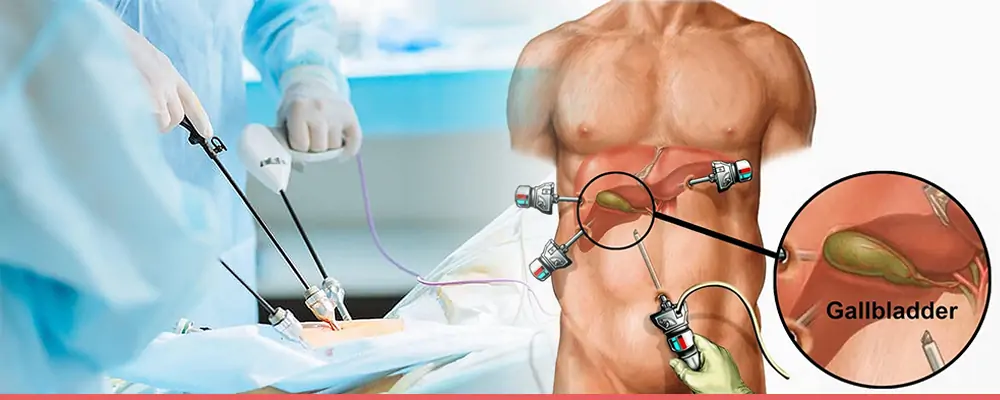
Gallbladder stones, also called gallstones, are hardened deposits that can develop inside the gallbladder. While some gallstones may not cause symptoms, others can lead to abdominal pain, nausea, vomiting, inflammation, or complications involving the bile ducts and pancreas. When gallstones cause recurrent symptoms or complications, surgical removal of the gallbladder may be recommended after appropriate evaluation.
Patients looking for gall bladder stone surgery mumbai can consult a qualified gastrointestinal surgeon to understand whether surgery is appropriate for their condition. Dr. Chintamani Godbole is a gastrointestinal surgeon with expertise in minimally invasive surgery and advanced surgical care. His practice includes consultation at Gadre Hospital in Dadar East, Mumbai.
What Are Gallstones?
Gallstones are solid particles that form inside the gallbladder. They can vary in size and number and may remain asymptomatic for a long time. Problems generally arise when a stone blocks the normal flow of bile.
Gallstones may consist primarily of cholesterol or other substances found in bile. Factors associated with gallstone formation can include obesity, rapid weight loss, certain dietary patterns, age, hormonal factors, and family history.
Not everyone with gallstones requires surgery. If stones are discovered incidentally and are not causing symptoms, a doctor may recommend observation in selected cases. Symptomatic or complicated gallstone disease may require further treatment.
What Symptoms Can Gallstones Cause?
Gallstones can produce symptoms that range from mild discomfort to significant abdominal pain. Common symptoms may include:
- Pain in the upper right or upper middle abdomen
- Pain after eating, particularly after a fatty meal
- Pain that may radiate toward the back or right shoulder
- Nausea or vomiting
- Indigestion or abdominal discomfort
- Bloating
- Recurrent episodes of abdominal pain
Severe or persistent pain, fever, jaundice, repeated vomiting, or other concerning symptoms require prompt medical assessment because they may indicate a complication.
When Is Gallbladder Surgery Recommended?
The decision to remove the gallbladder depends on symptoms, investigations, the presence of complications, and the patient’s overall health.
Surgery may be considered when gallstones cause recurrent symptoms or complications such as:
- Acute or recurrent gallbladder inflammation
- Bile duct obstruction
- Gallstone-related pancreatitis
- Recurrent biliary colic
- Other complications associated with gallstone disease
Dr. Chintamani Godbole’s gallbladder-removal information specifically discusses gallbladder stones and complications including pancreatitis caused by gallstones.
A consultation allows the surgeon to review symptoms and investigations and determine whether surgery, additional evaluation, or another management approach is appropriate.
What Is Gallbladder Removal Surgery?
Gallbladder removal is called cholecystectomy. The objective is to remove the gallbladder containing the stones rather than simply removing individual stones.
The gallbladder stores bile produced by the liver. After the gallbladder is removed, bile continues to be produced by the liver and flows directly into the digestive tract.
Gallbladder removal can commonly be performed using minimally invasive laparoscopic surgery when the patient is an appropriate candidate. The exact surgical technique depends on the patient’s condition, previous abdominal surgeries, anatomy, inflammation, and other clinical factors.
Laparoscopic Gallbladder Surgery
Laparoscopic surgery uses several small incisions rather than one large abdominal incision. A camera and specialized surgical instruments are introduced through these openings to allow the surgeon to perform the operation.
Potential advantages of minimally invasive surgery can include smaller incisions and, in appropriate cases, a shorter recovery compared with conventional open surgery. However, the technique and expected recovery vary from patient to patient.
In some situations, severe inflammation, scarring, anatomical difficulties, or other findings may require the surgical approach to be modified. The surgeon will discuss the appropriate procedure after evaluating the individual case.
Diagnosis Before Gallbladder Surgery
A detailed assessment is important before deciding on gallbladder surgery. The doctor may ask about the nature and duration of abdominal pain, relationship with meals, previous episodes, associated symptoms, and medical history.
An abdominal ultrasound is commonly used to detect gallstones and assess the gallbladder. Depending on the symptoms and clinical findings, additional blood tests or imaging may be recommended.
The purpose of the evaluation is not simply to identify stones but also to determine whether the patient’s symptoms are actually related to gallbladder disease and whether complications are present.
Why Choose Dr. Chintamani Godbole?
Dr. Chintamani Godbole is a gastrointestinal and colorectal surgeon with qualifications including MBBS, MS in General Surgery, DNB in Surgical Gastroenterology, and FRCS from Edinburgh. He completed his undergraduate and general surgical training at Seth G. S. Medical College and KEM Hospital, Mumbai, followed by super-specialty training in gastrointestinal surgery at Jaslok Hospital and Research Centre.
He subsequently spent five years in the United Kingdom undertaking advanced training in colorectal surgery. His fellowships included minimally invasive colorectal surgery, laparoscopic and robotic surgery, colorectal cancer surgery, peritoneal cytoreductive surgery, and HIPEC. He also trained at the Basingstoke Peritoneal Malignancy Institute and worked as a General/Colorectal Surgical Consultant at University Hospitals Coventry in the UK.
His published profile describes expertise in minimally invasive surgery, colorectal surgery, robotic and laparoscopic procedures, colorectal cancer surgery, inflammatory bowel disease, and peritoneal surface oncology. His experience includes more than 200 minimally invasive colorectal surgeries and more than 50 cytoreductive surgeries with HIPEC, according to the profile currently published on his website.
Patients searching for a Colorectal Surgeon in Mumbai can therefore consider Dr. Godbole for appropriate gastrointestinal and colorectal surgical consultations.
A Patient-Focused Clinical Environment
Dr. Godbole’s profile emphasizes personalized communication with patients and their relatives, alongside treatment through hospitals in Mumbai. His hospital affiliations listed on his website include Jaslok Hospital, Sir H. N. Reliance Foundation Hospital, Breach Candy Hospital, and Wockhardt Hospitals.
For patients requiring evaluation of gallbladder-related symptoms, a consultation provides an opportunity to review diagnostic reports, understand the cause of symptoms, discuss whether surgery is indicated, and learn about the expected treatment pathway.
Those searching for the Best Doctor for Gastroenterology in Mumbai should focus on the surgeon’s qualifications, relevant surgical experience, treatment approach, and whether the proposed care is appropriate for their individual condition rather than relying only on online rankings.
What to Expect After Gallbladder Removal?
Recovery after gallbladder surgery varies according to the surgical technique, overall health, presence of inflammation or complications, and individual response to treatment.
After surgery, patients are generally monitored for pain, nausea, wound-related concerns, and their ability to resume eating and normal activity. The treating team provides instructions regarding wound care, medication, diet, physical activity, and follow-up.
Many patients gradually return to their normal routine after recovery, although the exact timeline should be discussed with the surgeon. Patients should follow their individualized post-operative instructions rather than comparing their recovery with someone else’s experience.
Why Timely Evaluation Matters
Gallstones do not always require immediate surgery, but recurring abdominal pain or other symptoms should not be ignored. Untreated symptomatic gallstone disease can sometimes result in complications involving the gallbladder, bile ducts, or pancreas.
Early medical assessment can help determine whether symptoms are caused by gallstones and whether surgical treatment is appropriate. It can also help identify situations requiring more urgent care.
Book a Consultation at Gadre Hospital
If you have recurrent abdominal pain, have been diagnosed with gallstones, or have been advised to consider gallbladder removal, a consultation with a gastrointestinal surgeon can help you understand your treatment options.
📞 Call: 81087 91470
📧 Email: drchintamanigodbole@gmail.com
Get Directions to Gadre Hospital
Consult Dr. Chintamani Godbole at Gadre Hospital for a detailed evaluation of gallbladder stones and other gastrointestinal conditions. Bring your previous ultrasound reports, blood-test results, prescriptions, and relevant medical records to your appointment so that the doctor can review your history and discuss the appropriate next steps.
Frequently Asked Questions
1. What is gallbladder stone surgery?
Gallbladder stone surgery generally refers to cholecystectomy, an operation in which the gallbladder is removed. It may be recommended when gallstones cause recurring symptoms or complications. Laparoscopic surgery is commonly used when clinically appropriate.
2. Do all gallstones require surgery?
No. Gallstones that do not cause symptoms may not always require surgery. Treatment depends on symptoms, complications, gallbladder findings, overall health, and the surgeon’s assessment.
3. Can gallstones cause pancreatitis?
Yes. A gallstone can obstruct the normal drainage of digestive fluids and contribute to gallstone pancreatitis. Dr. Godbole’s published gallbladder-removal information specifically lists pancreatitis caused by gallbladder stones as a potential complication.
4. How can I consult Dr. Chintamani Godbole in Mumbai?
Dr. Chintamani Godbole consults at Gadre Hospital near Hindmata Cinema in Dadar East, Mumbai. Appointments can be arranged by calling 81087 91470 or contacting drchintamanigodbole@gmail.com.