
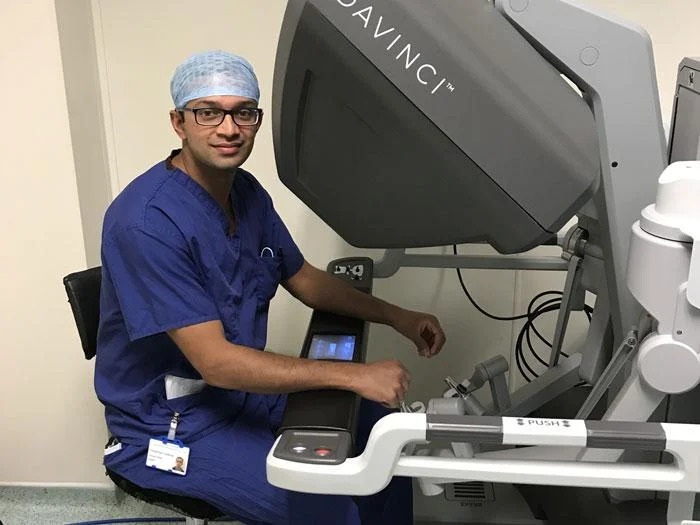
Colorectal cancer affects the colon or rectum and may require a combination of surgery, chemotherapy, radiation therapy, and other cancer treatments depending on its stage, location, and individual patient factors. Advances in minimally invasive and robotic surgery have expanded the options available for selected patients, while specialized treatments such as cytoreductive surgery and HIPEC may be considered for certain cancers involving the peritoneum.
For patients seeking advanced colorectal cancer treatment mumbai, Dr. Chintamani Godbole offers specialized expertise in colorectal surgery, robotic and laparoscopic procedures, colorectal cancer surgery, and peritoneal surface oncology. His training includes advanced colorectal and peritoneal oncology fellowships in the UK.
Understanding Colorectal Cancer
Colorectal cancer develops in the large intestine, which consists of the colon and rectum. The disease can progress through different stages. In early stages, cancer may remain within the intestinal wall, while more advanced disease can involve nearby lymph nodes or spread to distant organs.
Accurate staging is essential because treatment recommendations depend on how far the cancer has progressed. Dr. Godbole’s colorectal cancer treatment information explains that staging can involve colonoscopy with tumour biopsy, CT or PET-CT imaging, and examination of the tissue removed during surgery.
A multidisciplinary approach may be necessary, involving colorectal surgeons, medical oncologists, radiation oncologists, radiologists, and pathologists to develop an individualized treatment plan.
Treatment Options for Colorectal Cancer
The appropriate treatment depends on factors such as the cancer’s location, stage, overall health, and response to previous treatment.
Surgery
Surgery is an important part of treatment for many colon and rectal cancers. During colorectal cancer surgery, the affected section of the bowel is removed along with an appropriate margin of surrounding healthy tissue and nearby lymph nodes. The remaining bowel may then be joined together when clinically appropriate.
Dr. Chintamani Godbole specializes in colorectal cancer surgery and has expertise in robotic and laparoscopic approaches. His profile also highlights sphincter-preserving surgery for selected rectal cancers.
Laparoscopic Colorectal Surgery
Laparoscopic surgery uses small incisions rather than the larger incision associated with conventional open surgery. According to Dr. Godbole’s published information, laparoscopic colorectal surgery can provide benefits such as reduced postoperative pain, faster recovery, and earlier discharge in appropriate patients.
The suitability of a minimally invasive approach depends on the patient’s cancer, anatomy, previous surgical history, and other clinical factors.
Robotic Colorectal Surgery
Robotic surgery can be particularly useful for procedures that require precise surgical movements in confined anatomical spaces. This can be relevant in rectal cancer because the rectum is located deep within the pelvis and is surrounded by important structures.
Dr. Godbole has specialized training in robotic colorectal surgery and lists robotic surgery as one of his areas of expertise. His profile also highlights robotic treatment for colon and rectal cancers and sphincter-preserving procedures.
Treatment for Advanced Colorectal Cancer
Advanced colorectal cancer may require more than one treatment modality. Depending on the stage and location of the disease, treatment can involve surgery combined with chemotherapy and, particularly for rectal cancer, radiation therapy.
For stage 3 colorectal cancer, Dr. Godbole’s published information describes a multimodality approach. Colon cancer may generally be treated with surgery followed by chemotherapy, while rectal cancer may receive radiation or chemoradiation before surgery in selected cases.
Stage 4 disease is more complex because the cancer has spread to distant organs or areas such as the peritoneum. Treatment decisions need to be individualized according to the location and extent of metastatic disease, the patient’s general health, and response to systemic treatment.
Cytoreductive Surgery and HIPEC
Peritoneal surface cancer requires specialized assessment. Cytoreductive surgery aims to remove visible cancer deposits within the abdominal cavity in selected patients. HIPEC, or Hyperthermic Intraperitoneal Chemotherapy, involves delivering heated chemotherapy directly into the abdominal cavity during surgery.
Dr. Chintamani Godbole has specialized training in peritoneal cytoreductive surgery and HIPEC. His official profile states that he has performed more than 50 cytoreductive surgeries and HIPEC procedures for advanced peritoneal cancers. His colorectal cancer treatment page also highlights his experience with advanced colorectal cancer treatment and peritoneal malignancy.
Whether cytoreductive surgery and HIPEC are suitable depends on the type and extent of cancer and requires specialist evaluation.
Dr. Chintamani Godbole – Qualifications
Dr. Chintamani Godbole completed his MBBS and MS in General Surgery from Seth G. S. Medical College and KEM Hospital, Mumbai. He subsequently completed DNB training in Surgical Gastroenterology at Jaslok Hospital and Research Centre, Mumbai.
His professional qualifications include:
- MBBS
- MS in General Surgery
- DNB in Surgical Gastroenterology
- MRCS, Royal College of Surgeons of Edinburgh
- FRCS, Royal College of Surgeons of Edinburgh
- Fellowship in Robotic Colorectal Surgery, Coventry, UK
- Fellowship in Colorectal and Peritoneal Oncology, Basingstoke, UK
His international training has provided focused exposure to minimally invasive colorectal surgery, robotic surgery, colorectal cancer surgery, peritoneal cytoreductive surgery, and HIPEC.
Clinical Experience and Expertise
Dr. Godbole worked in the UK for five years, including fellowships in minimally invasive colorectal surgery, colorectal cancer surgery, peritoneal cytoreductive surgery, and HIPEC. He was also a fellow at the Basingstoke Peritoneal Malignancy Institute and worked as a General and Colorectal Surgical Consultant at University Hospitals Coventry.
His official profile reports experience with more than 200 minimally invasive colorectal surgeries and more than 50 cytoreductive surgeries with HIPEC for advanced peritoneal cancers. It also identifies robotic surgery, sphincter-preserving resections, and trans-anal minimally invasive surgery as areas of expertise.
For patients looking for a Colorectal Surgeon in Mumbai, this focused subspecialty training can be relevant when evaluating complex colon and rectal conditions.
Patient-Centred Care and Clinical Environment
Dr. Godbole’s practice focuses specifically on colorectal surgery and peritoneal surface oncology. His profile emphasizes personalized communication with patients and their relatives. He is affiliated with several hospitals in Mumbai, including Jaslok Hospital, Sir H. N. Reliance Foundation Hospital, Breach Candy Hospital, and Wockhardt Hospitals.
His consultation practice at Gadre Hospital provides patients with an opportunity to discuss their diagnosis, imaging and pathology reports, treatment options, surgical approach, recovery expectations, and follow-up requirements.
Patients researching the Best Doctor for Gastroenterology in Mumbai can consult Dr. Godbole for specialist evaluation of colorectal cancer and other colorectal surgical conditions.
Why Specialist Evaluation Matters
Colorectal cancer treatment is highly individualized. Two patients with the same general diagnosis may require different treatment plans because of differences in tumour location, stage, overall health, and response to previous therapies.
A specialist consultation can help determine whether laparoscopic or robotic surgery is appropriate, whether chemotherapy or radiation may be required, and whether advanced treatments such as cytoreductive surgery and HIPEC should be considered.
Patients should bring relevant pathology reports, colonoscopy findings, imaging scans, previous treatment records, and medication details to their consultation whenever available.
Book a Consultation at Gadre Hospital
If you or a family member has been diagnosed with colorectal cancer or requires a specialist evaluation, consult Dr. Chintamani Godbole to discuss the diagnosis and available treatment approaches.
Call: 81087 91470
Email: drchintamanigodbole@gmail.com
Get Directions to Gadre Hospital
Contact the clinic to schedule an appointment and discuss your colorectal cancer diagnosis, reports, treatment options, and suitability for minimally invasive or advanced surgical approaches.
Frequently Asked Questions
1. What treatments may be used for advanced colorectal cancer?
Treatment may involve surgery, chemotherapy, radiation therapy, targeted treatments, immunotherapy, or combinations of these depending on the cancer stage and individual patient factors. Selected patients with peritoneal disease may be evaluated for cytoreductive surgery and HIPEC.
2. Is robotic surgery suitable for colorectal cancer?
Robotic surgery can be useful for selected colon and rectal cancer procedures, particularly where precise surgical movements are required in confined anatomical areas such as the pelvis. Suitability depends on the individual cancer and patient’s clinical circumstances.
3. What is HIPEC?
HIPEC stands for Hyperthermic Intraperitoneal Chemotherapy. It is a specialized treatment that may be used with cytoreductive surgery for selected cancers involving the peritoneum. Dr. Godbole has dedicated training and experience in cytoreductive surgery and HIPEC.
4. Where can I consult Dr. Chintamani Godbole?
Dr. Chintamani Godbole consults at Gadre Hospital near Hindmata Cinema, Dadar East, Mumbai. He is also affiliated with hospitals including Jaslok Hospital, Sir H. N. Reliance Foundation Hospital, Breach Candy Hospital, and Wockhardt Hospitals.