
Persistent nasal congestion, facial pressure, recurrent sinus infections and difficulty breathing through the nose can significantly affect everyday life. While medicines, nasal sprays and allergy management can help many patients, some people continue to experience symptoms because of blocked or narrowed sinus drainage pathways. In appropriately selected patients, Balloon sinuplasty in Mumbai can provide a minimally invasive way to open certain blocked sinus passages and improve drainage.
Balloon sinuplasty uses a small catheter and balloon that are guided through the nostril and gently inflated within the affected sinus opening. Unlike conventional surgery that may involve removing tissue or bone, balloon dilation is designed to widen the sinus passage while preserving surrounding structures. However, suitability depends on the individual’s symptoms, examination findings and CT imaging.
Balloon Sinuplasty in Mumbai: Who May Benefit?
Balloon sinuplasty may be considered for selected patients with chronic or recurrent sinus problems when appropriate medical treatment has not provided adequate relief. Chronic sinusitis generally involves symptoms lasting for 12 weeks or longer and may include nasal blockage, facial pressure, reduced sense of smell, postnasal drainage and thick nasal mucus.
Before recommending treatment, an ENT specialist evaluates the patient’s symptoms and nasal anatomy. Nasal endoscopy and CT imaging may be used to identify sinus inflammation, narrowing or obstruction and determine whether balloon dilation is appropriate. CT evidence of sinus disease is an important part of patient selection for balloon dilation.
What Is Balloon Sinuplasty?
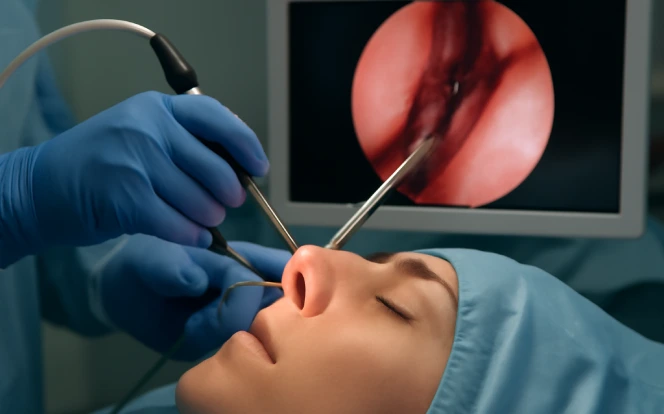
Balloon sinuplasty is a catheter-based procedure performed through the natural nasal passages. A thin catheter is carefully guided into the affected sinus opening using endoscopic visualization. A small balloon is then inflated to gently widen the passage. After dilation, the balloon is deflated and removed.
The aim is to improve ventilation and drainage from the sinus while avoiding external incisions. Depending on the patient’s condition, balloon dilation may be used alone or as part of a broader endoscopic sinus treatment plan.
Symptoms That May Require Sinus Evaluation
A consultation with an ENT doctor may be appropriate if you experience:
- Repeated sinus infections
- Persistent nasal blockage
- Facial pressure or discomfort
- Postnasal drip
- Reduced sense of smell
- Thick or persistent nasal discharge
- Symptoms that continue despite appropriate medical treatment
- Recurrent symptoms affecting sleep or daily activities
These symptoms do not automatically mean that balloon treatment is required. Sinusitis can have different causes, including allergies, infection, nasal polyps and structural abnormalities, so treatment should be based on the underlying problem.
How Balloon Sinuplasty Is Performed
During Balloon sinuplasty in Mumbai, the ENT surgeon first prepares and numbs the nasal passages according to the planned setting and anesthesia requirements. Using an endoscope, the surgeon guides a thin catheter through the nostril toward the affected sinus.
Once correctly positioned, the small balloon is gradually inflated to widen the sinus opening. The balloon is then deflated and removed. The procedure is performed through the nostrils, so there are no external facial incisions. Anesthesia or sedation requirements can vary depending on the treatment setting and individual case.
Benefits of Balloon Dilation
For appropriately selected patients, potential benefits may include:
- Minimally invasive treatment
- No external facial incision
- Preservation of surrounding sinus tissue
- Improved sinus drainage
- Potentially shorter recovery compared with some surgical approaches
- Ability to perform treatment through the natural nasal passages
However, balloon dilation is not a universal replacement for endoscopic sinus surgery. Patients with extensive nasal polyps, certain structural problems, fungal disease or other complex sinus conditions may require a different or combined procedure. The treatment should therefore be selected after detailed ENT assessment.
Diagnosis and Treatment Planning
A detailed assessment is an important part of sinus care. Dr. Shama Kovale uses nasal endoscopy and CT imaging to understand individual sinus anatomy and identify areas of obstruction. Her reference profile describes expertise in endoscopic sinus surgery, chronic sinus conditions and other advanced ENT procedures.
Medical treatment may still be recommended before considering a procedure. Depending on the underlying cause, management can include saline irrigation, nasal steroid sprays, allergy treatment or other medicines. Surgery is generally considered when symptoms persist despite appropriate medical management or when anatomical obstruction requires procedural treatment.
Why Choose Dr. Shama Kovale for Sinus Care?
Dr. Shama Kovale is an experienced ENT Specialist in Mumbai practising at Kokilaben Dhirubhai Ambani Hospital, Andheri West. According to her profile, she has more than 23 years of experience in ENT and voice surgery and is a Senior Consultant at the hospital. She has advanced training and fellowships associated with UC Davis in the USA and Hinduja Hospital in India, and her qualifications include MBBS and MS in ENT. She is also certified in endoscopic sinus surgery and ear microsurgery.
Her clinical expertise includes nose and sinus disorders, endoscopic sinus surgery, ear microsurgery, cochlear implants, airway reconstruction, voice and swallowing disorders. She also leads the Voice and Swallowing Centre at Kokilaben Dhirubhai Ambani Hospital.
Patients seeking Balloon sinuplasty in Mumbai can benefit from an evaluation that considers symptoms, nasal endoscopy, imaging and the specific cause of sinus obstruction rather than relying on a one-size-fits-all approach.
Clinic Environment and Patient-Centred Care
Dr Shama Kovale consults and provides advanced ENT care at Kokilaben Dhirubhai Ambani Hospital in Andheri West, Mumbai. The hospital setting supports access to specialized ENT services and diagnostic facilities. Her profile emphasizes clear communication, individualized treatment planning and continued support during recovery.
Her broader practice covers ear, nose and throat disorders, with particular expertise in voice, swallowing, airway problems, cochlear implants and endoscopic ENT surgery. This multidisciplinary environment can be useful when patients have complex or overlapping ENT concerns.
Recovery and Aftercare
Recovery after balloon dilation varies depending on the extent of treatment and whether another sinus procedure is performed at the same time. Some patients may return to routine activities relatively quickly, while others require additional recovery time.
Patients may be advised to use prescribed nasal medication or saline irrigation and attend follow-up appointments for examination and nasal endoscopy. Avoiding strenuous activity and following instructions regarding nose blowing and nasal care can support healing.
Like any medical procedure, balloon dilation has potential risks. These can include bleeding, infection, anesthesia-related complications and, rarely, injury to nearby structures. Symptoms can also recur, particularly when the underlying inflammatory or allergic condition continues.
Book a Sinus Consultation with Dr. Shama Kovale
If persistent sinus symptoms are affecting your breathing, sleep or quality of life, a detailed ENT evaluation can help determine the underlying cause and suitable treatment options. Balloon sinuplasty in Mumbai may be considered when clinical findings and imaging indicate that balloon dilation is appropriate.
Dr. Shama Kovale consults at Kokilaben Dhirubhai Ambani Hospital, 2nd Floor, ENT Department, Four Bungalows, Andheri West, Mumbai – 400053.
+91 91528 50769
drshamakovaleent@gmail.com
Get Directions to the Clinic – Kokilaben Dhirubhai Ambani Hospital
FAQs
1. What is balloon sinuplasty used for?
Balloon sinuplasty is used to widen selected blocked sinus passages in patients with appropriate chronic or recurrent sinus disease. A CT scan and clinical evaluation help determine whether the procedure is suitable.
2. Is balloon sinuplasty better than FESS?
Balloon dilation and Functional Endoscopic Sinus Surgery (FESS) are different procedures. Balloon dilation widens selected sinus openings using a balloon, whereas FESS may involve removing obstructing tissue or bone. The appropriate option depends on the patient’s diagnosis and sinus anatomy.
3. How long does recovery take after balloon sinuplasty?
Recovery varies between patients. Some people resume routine activities relatively quickly, while others may need several days or longer depending on the procedure performed and their individual healing. Following postoperative instructions and attending follow-up visits are important.
4. Does every patient with chronic sinusitis need balloon sinuplasty?
No. Chronic sinusitis can have different causes, and many patients can be managed with medicines, allergy treatment or other therapies. Balloon dilation is considered only when clinical assessment and imaging indicate that it is appropriate.