
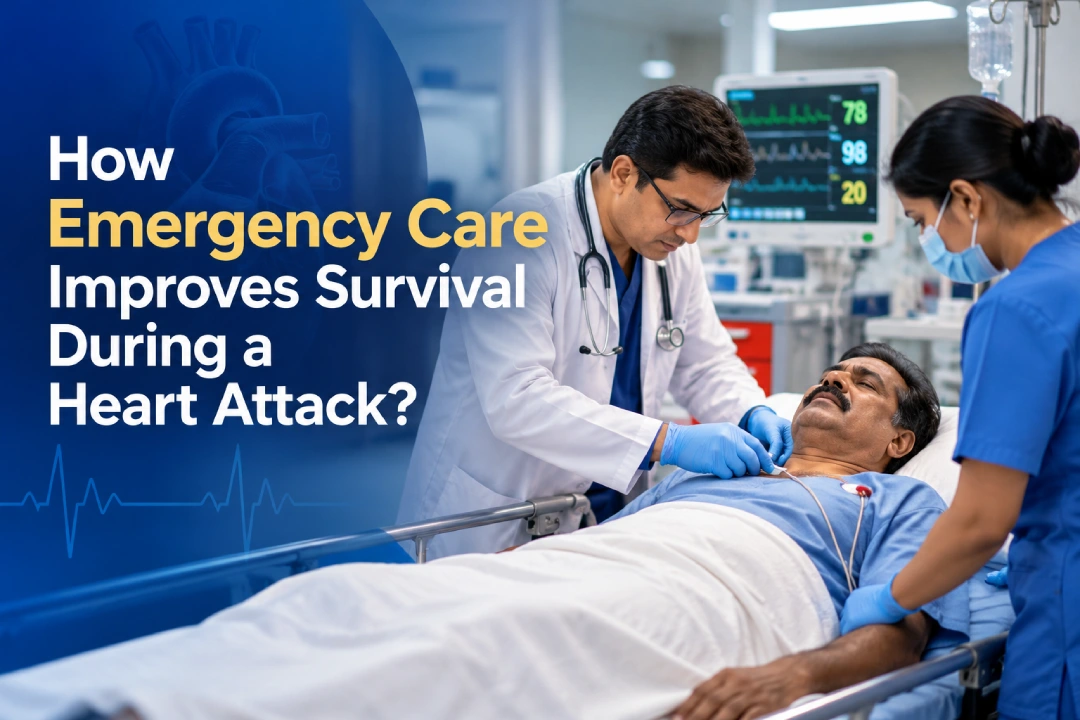
A heart attack is a life-threatening medical emergency that occurs when blood flow to a portion of the heart muscle becomes severely reduced or completely blocked. Without timely treatment, the affected heart tissue can suffer permanent damage, potentially leading to serious complications. Recognising warning signs and understanding Emergency Care During a Heart Attack can help patients and their families respond quickly. Suvarna Hospital in Borivali, Mumbai, provides multispecialty medical services and is a local option for patients seeking medical assessment and emergency assistance.
If a heart attack is suspected, call 112 or 108 for emergency ambulance assistance in India immediately. Do not wait for symptoms to disappear or drive yourself to the hospital.
Understanding a Heart Attack and Its Causes
A heart attack, medically known as myocardial infarction, usually occurs when a coronary artery becomes blocked by a blood clot forming over a ruptured cholesterol-rich plaque.
The coronary arteries supply oxygen-rich blood to the heart muscle. When blood flow is interrupted, the affected tissue begins to suffer damage.
Common risk factors include:
- High blood pressure and elevated cholesterol.
- Diabetes and obesity.
- Smoking and tobacco consumption.
- Family history of cardiovascular disease.
- Physical inactivity.
- Increasing age.
- Chronic kidney disease and other underlying conditions.
Although some heart attacks develop suddenly, others begin with mild symptoms that gradually worsen.
Recognising the Warning Signs of a Heart Attack
Heart attack symptoms can vary from person to person. Some individuals experience severe chest pain, while others report subtle discomfort.
Common warning signs include:
- Chest pain or pressure: Tightness, squeezing, heaviness, or discomfort in the centre or left side of the chest.
- Pain spreading to other areas: Discomfort extending into the arms, shoulders, neck, jaw, back, or upper abdomen.
- Shortness of breath: Difficulty breathing with or without chest discomfort.
- Cold sweating: Sudden sweating without physical exertion.
- Nausea or vomiting: Sometimes accompanied by abdominal discomfort.
- Dizziness or faintness: Light-headedness or sudden weakness.
- Unusual fatigue: Particularly in some women, older adults, and people with diabetes.
A heart attack may occur without severe chest pain. Unexplained breathlessness, nausea, or unusual fatigue can sometimes be the primary symptoms.
Any suspected heart attack requires immediate emergency evaluation.
Why Is Emergency Care During a Heart Attack Important?
During a heart attack, every minute matters because prolonged interruption of blood supply increases the risk of irreversible heart muscle damage.
Prompt emergency assessment can help healthcare professionals identify the condition and begin appropriate treatment.
Early medical intervention may:
- Restore blood flow to affected heart tissue.
- Reduce the extent of heart muscle damage.
- Lower the risk of dangerous heart rhythm abnormalities.
- Improve the chances of survival.
- Reduce complications such as heart failure.
- Support recovery and long-term cardiovascular health.
Delaying treatment can increase the likelihood of serious complications, including cardiac arrest.
Immediate First Aid Steps During a Suspected Heart Attack
Knowing how to respond before medical professionals arrive can be lifesaving.
Step 1: Call Emergency Medical Services
Call 112 or 108 immediately and explain the patient’s symptoms and location. Request an ambulance with emergency medical support.
Step 2: Help the Person Rest
Encourage the patient to sit comfortably and avoid walking or unnecessary physical activity. Loosen restrictive clothing and provide reassurance.
Step 3: Consider Aspirin Only When Appropriate
For an alert adult with suspected heart attack symptoms, emergency dispatchers or healthcare professionals may recommend chewing aspirin, commonly 162–325 mg, if there is no aspirin allergy, active bleeding, or other contraindication.
Do not delay calling an ambulance to obtain aspirin, and follow the emergency professional’s instructions.
Step 4: Assist With Prescribed Medication
If the patient has previously been prescribed nitroglycerin for chest pain, assist them in taking it only according to their prescription or emergency medical guidance.
Never give someone else’s prescription medication.
Step 5: Begin CPR if the Person Becomes Unresponsive
If the person becomes unresponsive and is not breathing normally, start CPR and ask someone to retrieve an automated external defibrillator (AED), if available.
Untrained bystanders can perform hands-only CPR by pushing hard and fast in the centre of the chest at approximately 100–120 compressions per minute.
Continue until emergency responders take over or the person shows signs of normal breathing.
How Hospitals Provide Emergency Heart Attack Treatment
Hospital-based Emergency Care During a Heart Attack generally begins with rapid evaluation, stabilisation, and diagnostic testing.
1. Initial Emergency Assessment
Healthcare professionals assess blood pressure, heart rate, oxygen saturation, breathing, and consciousness.
An electrocardiogram (ECG) is usually performed promptly to identify signs of acute cardiac injury.
2. Diagnostic Investigations
Blood tests, particularly cardiac troponin measurements, help detect heart muscle damage.
Additional investigations may include echocardiography, chest imaging, or coronary angiography when clinically indicated.
3. Medical Stabilisation
Treatment may involve antiplatelet medicines, anticoagulants, pain management, and other medications selected according to the patient’s condition.
Oxygen is generally administered when blood oxygen levels are low rather than routinely to every patient.
4. Restoring Coronary Blood Flow
For certain types of heart attack, urgent coronary angioplasty and stent placement may be required.
In selected circumstances, clot-dissolving medication may be used when timely angioplasty is unavailable and the patient meets treatment criteria.
Some patients may require coronary artery bypass surgery.
The treating team determines the appropriate intervention based on the type of heart attack, available facilities, and the patient’s medical condition.
About Suvarna Hospital: Experience and Healthcare Services
Suvarna Hospital, officially known as Dhankuvarben Hospital and Ramaben Cardiac Centre, is a multispecialty healthcare institution in Borivali West, Mumbai.
Managed by Suvarna Trust, the hospital has served the community for more than 25 years, focusing on accessible, affordable healthcare.
Its official website describes a multidisciplinary approach involving experienced medical professionals, diagnostic services, and coordinated treatment.
Patients searching for the Best Hospital in Borivali may consider factors such as emergency accessibility, medical expertise, diagnostic facilities, and available specialist services.
As a Multispecialty Hospital Borivali residents can contact, Suvarna Hospital provides medical services across several specialties, including cardiac care.
Hospital Environment and Emergency Facilities
Suvarna Hospital is located in Kastur Park, Borivali West, and operates 24 hours a day, seven days a week.
Its published hospital information highlights:
- Emergency medical assistance.
- Multispecialty consultations.
- Diagnostic and treatment services.
- Cardiac-related healthcare services.
- Coordinated care involving different medical specialties.
- A focus on affordability and patient accessibility.
The hospital publishes a dedicated emergency contact number for patients requiring urgent assistance. Specific cardiac procedures and immediate specialist availability should be confirmed with the emergency team.
Benefits and Risks of Emergency Heart Attack Treatment
The principal benefit of timely treatment is reducing the amount of heart muscle damage and improving survival.
However, emergency interventions may involve risks such as bleeding from blood-thinning medications, allergic reactions, kidney complications from contrast agents, or procedural complications during angioplasty.
Medical professionals balance these risks against the danger of delaying treatment. For a confirmed heart attack, timely intervention is generally essential.
Precautions and Recovery After a Heart Attack
Recovery involves medical follow-up, lifestyle changes, and ongoing cardiovascular risk management.
Patients should follow their prescribed medication schedule, attend cardiac rehabilitation when recommended, and monitor conditions such as diabetes, hypertension, and high cholesterol.
Avoiding tobacco, maintaining a heart-healthy diet, gradually increasing physical activity under medical guidance, and attending cardiology appointments can reduce the risk of another cardiac event.
Patients should never stop prescribed antiplatelet medicines without consulting their cardiologist.
Frequently Asked Questions (FAQs)
1. What is the first thing to do during a heart attack?
Call emergency medical services immediately. Help the person rest, avoid unnecessary movement, and follow the emergency dispatcher’s instructions until professional help arrives.
2. How quickly should a heart attack patient reach the hospital?
Immediately. Heart muscle damage can begin within minutes of a coronary artery becoming blocked. Early assessment and treatment improve the chances of a better outcome.
3. Can a heart attack happen without chest pain?
Yes. Some patients experience breathlessness, nausea, sweating, dizziness, or unexplained fatigue without severe chest discomfort. These symptoms still require urgent evaluation.
4. Does Suvarna Hospital provide emergency medical assistance?
Suvarna Hospital lists 24/7 services and an emergency contact number, +91 22 35143030. Patients should contact the hospital to confirm specific cardiac treatment availability while arranging emergency transport.
Contact Suvarna Hospital for Emergency Assistance
For suspected heart attack symptoms, call emergency ambulance services immediately. For hospital emergency enquiries, contact Suvarna Hospital‘s 24-hour emergency number.
+91 9987130994 | +91 22 35143030
dhankuvarbenhospital@gmail.com
Get Directions to the Clinic – Suvarna Hospital