
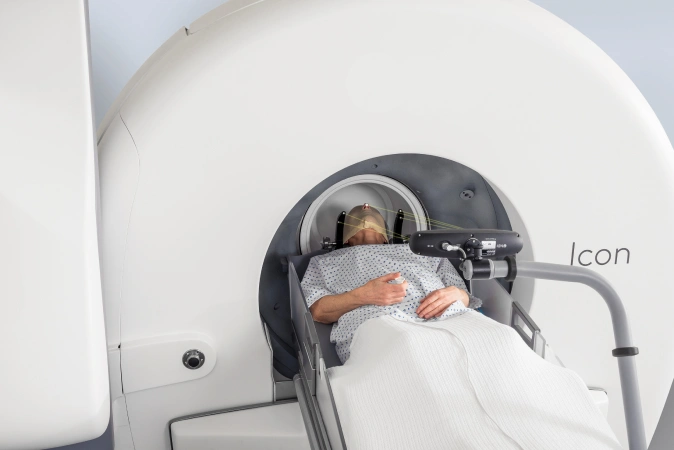
A diagnosis involving a brain tumour or other complex neurological condition can be overwhelming for patients and their families. Treatment decisions often require careful consideration of the condition, its location, available medical options and potential risks. Advances in modern neurosurgery have introduced precision-based treatments such as Gamma Knife radiosurgery, which can target selected abnormalities in the brain without conventional open surgery.
Gamma knife radiosurgery in Mumbai may be considered for certain brain tumours, vascular abnormalities and neurological conditions where highly focused radiation can offer a suitable treatment approach. Dr. Manish Baldia, a functional neurosurgeon with experience in complex brain and spine procedures, provides specialist evaluation and guidance for patients exploring advanced neurological treatments.
What Is Gamma Knife Radiosurgery?
Gamma Knife radiosurgery is a specialised form of stereotactic radiosurgery. Despite the word “knife”, it does not involve a surgical blade or conventional incision. Instead, it uses multiple focused beams of gamma radiation that converge on a precisely identified target inside the brain.
The radiation damages the targeted abnormal cells while limiting exposure to surrounding healthy tissue. Treatment planning involves detailed imaging, such as MRI or CT scans, to determine the target’s location, size and relationship to important structures.
It is important to understand that Gamma Knife is a form of radiation treatment rather than a traditional operation. Its suitability depends on the diagnosis, tumour characteristics, previous treatments and the patient’s overall health.
Conditions That May Be Treated with Gamma Knife
Depending on clinical assessment and treatment-centre protocols, Gamma Knife radiosurgery may be considered for selected conditions, including:
- Brain tumours: Certain benign and malignant tumours may be suitable for focused radiation.
- Brain metastases: Cancer that has spread to the brain may sometimes be treated with stereotactic radiosurgery.
- Arteriovenous malformations (AVMs): Selected abnormal connections between blood vessels may be treated using focused radiation.
- Acoustic neuromas: These are generally benign tumours involving the nerve responsible for hearing and balance.
- Trigeminal neuralgia: In selected patients, radiosurgery may help manage severe facial pain by targeting the relevant nerve pathway.
- Pituitary tumours: Certain pituitary growths may be considered after specialist evaluation.
Not every tumour or neurological condition is suitable for this treatment. A neurosurgeon and radiation oncology team must review the imaging and medical history before recommending an approach.
How Does Gamma Knife Radiosurgery Work?
The treatment process is carefully planned to ensure that radiation is delivered accurately to the intended area. The typical steps may include:
- Initial consultation: The specialist reviews symptoms, previous treatment records, medical history and diagnostic reports.
- Imaging and assessment: MRI or CT scans help identify the abnormality and map its exact location.
- Treatment planning: Specialists calculate the radiation dose and determine how it should be delivered while protecting nearby structures.
- Patient positioning: Depending on the equipment and protocol, a stereotactic head frame or customised immobilisation system may be used.
- Radiation delivery: The patient is positioned in the treatment machine while focused radiation beams are directed towards the target.
- Post-treatment instructions: The care team explains follow-up appointments, medication requirements and symptoms that need medical attention.
The duration and number of sessions vary according to the condition, target size and treatment plan.
Benefits of Gamma Knife Radiosurgery
For appropriately selected patients, this approach may offer several advantages compared with conventional open brain surgery:
- No surgical incision: The treatment does not require an opening in the skull.
- High precision: Stereotactic planning helps focus radiation on the identified target.
- Reduced recovery burden: Many patients do not require the same recovery period as an open surgical procedure.
- Treatment of selected difficult-to-reach lesions: It may be considered for abnormalities located in areas where conventional surgery can be challenging.
- Individualised planning: Radiation dose and treatment strategy are tailored to the patient’s diagnosis and imaging findings.
However, it is not risk-free. Side effects can include temporary swelling, headaches, nausea, fatigue or changes related to the treated area. Some effects may develop gradually, and follow-up imaging is important to assess the response.
Gamma Knife Radiosurgery in Mumbai: Why Specialist Evaluation Matters
Choosing Gamma knife radiosurgery in Mumbai involves more than identifying a treatment technology. Patients need a detailed assessment to determine whether radiosurgery is appropriate or whether another option, such as observation, medication, conventional radiation or surgery, may be more suitable.
Dr. Manish Baldia is a neurosurgeon specialising in functional neurosurgery and complex brain and spine conditions. His clinical background includes stereotactic neurosurgical procedures and radiosurgery for selected tumours and AVMs. He evaluates each case based on the diagnosis, imaging findings, symptoms and treatment goals.
A consultation can help patients understand the potential benefits, limitations and risks of the available options. It is also an opportunity to discuss whether treatment needs to be performed at a specialised Gamma Knife facility and what coordination with the radiation oncology team may be required.
Meet Dr. Manish Baldia – Qualifications and Clinical Experience
Dr. Manish Baldia holds an MBBS degree and an MCh in Neurosurgery from Christian Medical College (CMC), Vellore. He has also completed advanced training in functional neurosurgery and neuromodulation through EEPIN in London, along with a fellowship in functional neurosurgery.
He spent several years at CMC Vellore, including roles as a senior resident and later as an Assistant and Associate Professor of Neurosurgery. His clinical experience includes assisting in more than 1,200 cases and independently performing over 400 complex cranial and spinal procedures. He further developed expertise in functional neurosurgery under Dr. Paresh Doshi, working with procedures such as Deep Brain Stimulation, stereotactic biopsies and stereotactic radiosurgery.
His broader areas of expertise include brain and spinal tumours, movement disorders, epilepsy, Parkinson’s disease, minimally invasive neurosurgery and advanced stereotactic procedures. This background supports a comprehensive approach to evaluating patients with complex neurological conditions.
Patient-Centred Consultation and Clinic Environment
Patients seeking neurological care benefit from a setting where they can discuss symptoms, diagnostic reports and treatment concerns in detail. Dr. Manish Baldia‘s practice at Baldia’s Advance Neuro Parkinson’s and Spine Centre provides a dedicated setting for consultations related to brain, spine and movement disorders.
The focus is on understanding each patient’s condition, reviewing relevant investigations and discussing appropriate treatment pathways. Patients may be advised to bring MRI or CT scans, previous prescriptions, biopsy reports and details of earlier procedures to help make the consultation more informative.
The centre is located at Shop No. 5, Salsette 27, The New Great Eastern Mills, Dr. Babasaheb Ambedkar Road, Byculla East, Mumbai – 400027.
What to Discuss During Your Consultation
If you are exploring Gamma knife radiosurgery in Mumbai, consider asking the specialist:
- Is my diagnosis suitable for Gamma Knife treatment?
- What alternative treatments should I consider?
- What are the possible side effects and long-term risks?
- How many sessions may be required?
- Where will the procedure be performed?
- What follow-up scans and appointments will I need?
Clear answers can help you make an informed decision and understand what to expect before, during and after treatment.
Book a Consultation with Dr. Manish Baldia
If you or a family member has been diagnosed with a brain tumour, AVM or another neurological condition, seeking timely specialist advice can help clarify the available treatment options. Dr. Manish Baldia offers evaluation for complex brain and spine conditions, including stereotactic and functional neurosurgical procedures.
Contact the clinic to discuss your reports and arrange an appointment.
96767 67507
drmanishbaldia@gmail.com
Get Directions to the Clinic – Lalbaug Diagnostics
Frequently Asked Questions
1. Is Gamma Knife radiosurgery an actual surgical procedure?
No. It is a form of stereotactic radiosurgery that uses focused radiation beams to treat selected abnormalities in the brain. It does not involve a conventional surgical incision or a knife.
2. Which conditions can be treated with Gamma Knife radiosurgery?
Selected brain tumours, brain metastases, AVMs, acoustic neuromas, certain pituitary tumours and trigeminal neuralgia may be considered. Suitability depends on individual clinical findings.
3. How long does Gamma Knife treatment take?
Treatment duration varies depending on the target’s size, location and complexity. Some patients may complete treatment in one session, while others may require a different schedule.
4. How can I consult Dr. Manish Baldia for Gamma Knife treatment?
You can contact Dr. Manish Baldia’s clinic at 96767 67507 or email drmanishbaldia@gmail.com to arrange an appointment and discuss your medical reports.