
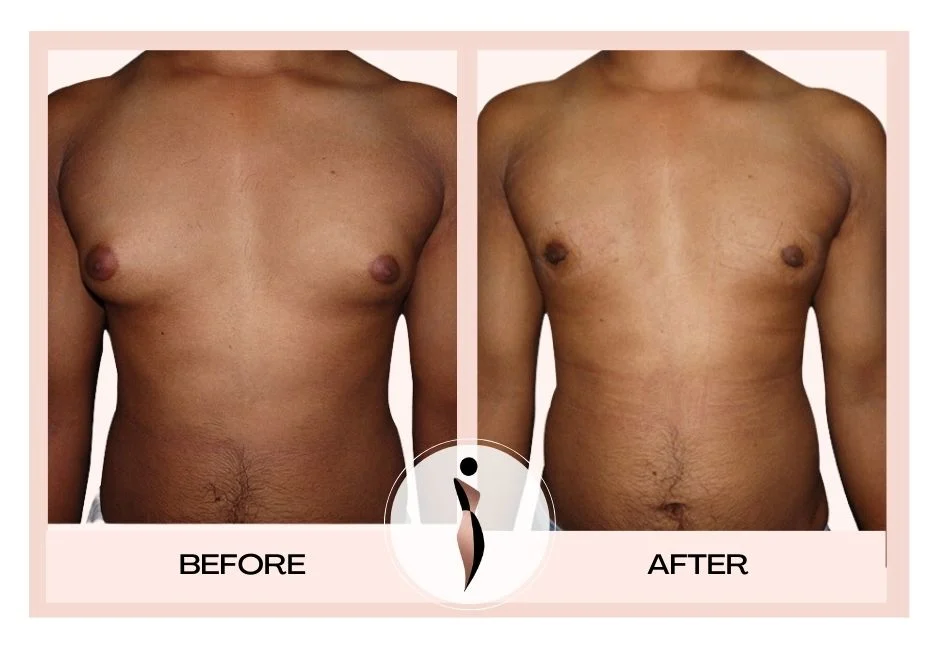
Enlarged male breasts can affect confidence, clothing choices, posture, and overall comfort in social situations. Gynecomastia refers to the enlargement of male breast tissue and may develop because of hormonal changes, certain medications, medical conditions, genetics, alcohol use, steroids, or excess body fat. When persistent enlargement does not improve with lifestyle changes or medical management, surgical correction may be considered. Gynecomastia surgery in Mumbai can help create a flatter, more proportionate chest by addressing excess glandular tissue, fat, or both.
At Shah Superspeciality Clinic, Dr. Amiti Shah evaluates each patient individually before recommending an appropriate treatment approach. Her focus is on understanding the cause and extent of breast enlargement while planning a result that is proportionate to the patient’s overall physique.
What Is Gynecomastia?
Gynecomastia is a condition in which male breast tissue becomes enlarged. It may affect one or both sides of the chest and can appear as a firm lump beneath the nipple or as more generalized breast enlargement. Hormonal fluctuations during puberty and later adulthood are common causes, although medications, obesity, liver disease, genetics, alcohol, steroids, and other medical conditions may also contribute.
It is important to distinguish true gynecomastia from pseudogynecomastia. True gynecomastia involves enlargement of glandular breast tissue, while pseudogynecomastia is primarily associated with excess fat in the chest area.
A detailed consultation can help determine the composition of the enlargement and whether an underlying medical factor needs attention before considering surgery.
Gynecomastia surgery in Mumbai: Who May Be a Candidate?
The suitability for surgery depends on several individual factors. A candidate should generally be in good overall health and have a stable body weight. Patients should also have realistic expectations regarding what surgery can achieve.
Non-smokers or individuals who are willing to stop smoking around the time of surgery may have fewer healing-related concerns. For younger patients, it is generally preferable for breast development to have stabilized before considering an elective corrective procedure.
During consultation, Dr. Amiti Shah examines the chest and discusses medical history, previous treatments, medications, lifestyle factors, and aesthetic goals. This assessment helps determine whether surgery is appropriate and which technique may provide a suitable correction.
How Is Gynecomastia Corrected?
The surgical approach depends on whether the chest enlargement is primarily caused by excess fat, glandular tissue, or a combination of both.
Liposuction:
When excess fat contributes significantly to chest enlargement, liposuction may be used. A small cannula is inserted through carefully planned access points to remove unwanted fat and improve the contour of the chest.
Glandular tissue excision:
When enlarged breast tissue is present, surgical excision may be required. Excess glandular tissue can be removed through an incision, commonly positioned around the edge of the areola.
Combination treatment:
Many patients have both excess fat and glandular tissue. In such cases, liposuction and gland excision may be combined to achieve a more balanced chest contour. Dr. Amiti Shah’s source information notes that corrective surgery commonly involves both liposuction and gland excision, depending on the patient’s needs.
What to Expect During Recovery
Recovery after Gynecomastia surgery in Mumbai varies according to the surgical technique, extent of correction, and individual healing response. Swelling, bruising, and some discomfort around the chest can occur during the initial recovery period.
Patients may often return to work and normal day-to-day activities within approximately one week, depending on their individual recovery. Strenuous exercise and heavy lifting should generally be avoided for around four weeks, or for the duration recommended by the surgeon.
Following postoperative instructions is important for supporting healing and reducing the possibility of complications. Patients should attend scheduled follow-ups and contact their surgical team if they experience unusual symptoms or concerns during recovery.
Why Choose Dr. Amiti Shah for Gynecomastia Correction?
Dr. Amiti Shah is a qualified Plastic Surgeon in Mumbai with training in both general and plastic surgery. Her qualifications include MBBS from Maharashtra University of Health Sciences, DNB in General Surgery from the National Board of Examinations, DNB in Plastic Surgery, and a Fellowship in Breast Reconstructive & Cosmetic Surgery in the UK.
Her expertise includes body-shaping procedures such as liposuction, breast augmentation, breast reduction, body contouring after massive weight loss, and cosmetic gynecological procedures. She also regularly visits premier institutes worldwide as part of her commitment to continuing education and updating her breast cosmetic and reconstructive surgery techniques.
Dr. Amiti Shah is affiliated with several hospitals in South and West Mumbai and is associated with K. J. Somaiya Medical College, where she performs reconstructive surgeries and lectures postgraduate students. Her research has also been published in national and international journals, including work that received a Best Paper Award in 2016.
As a Female Plastic Surgeon In Mumbai, Dr. Amiti Shah provides individualized consultations with attention to both physical and emotional wellbeing. Her clinic, Shah Superspeciality Clinic, is located at Panchshil Plaza in Gamdevi, South Mumbai, providing a dedicated setting for consultations and aesthetic surgical care.
Benefits of Male Chest Reduction
For appropriately selected patients, Gynecomastia surgery in Mumbai may help reduce excess chest volume and create a flatter, more proportionate appearance. Possible benefits include:
- Reduction of excess fatty and glandular breast tissue
- Improved chest contour
- Better proportion between the chest and torso
- Greater comfort in fitted clothing
- Potential improvement in self-confidence
- Carefully positioned and camouflaged scars where surgical excision is required
The expected outcome varies from patient to patient, and the surgical plan should be based on individual anatomy rather than a standard approach.
Consultation With Dr. Amiti Shah
Choosing the right treatment starts with an in-person assessment. Dr. Amiti Shah can evaluate the amount and type of breast enlargement, discuss potential treatment options, explain the expected recovery, and answer questions about the procedure.
If you are considering Gynecomastia surgery in Mumbai, an individualized consultation can help you understand whether liposuction, gland excision, or a combination of techniques is suitable for your chest.
Book a Consultation With Dr. Amiti Shah
87795 36240 | 022 2367 7234
info@dramitishah.com
Get Directions to the Clinic – Shah Superspeciality Clinic
Contact Dr. Amiti Shah‘s team to schedule a consultation and discuss your concerns about male breast enlargement, treatment options, and recovery.
FAQs
1. What causes gynecomastia in men?
Gynecomastia may be associated with hormonal changes, certain medications, obesity, liver disease, genetics, alcohol, steroids, or other medical conditions. In some cases, the exact cause may not be identified.
2. Is gynecomastia surgery performed using liposuction or excision?
The technique depends on the type of tissue causing breast enlargement. Liposuction can address excess fat, while glandular tissue may require excision. A combination of both may be recommended when appropriate.
3. How long does recovery from gynecomastia surgery take?
Recovery varies by patient and procedure. Many patients may return to work and normal activities within about one week, while strenuous exercise and heavy lifting may need to be avoided for approximately four weeks, subject to the surgeon’s advice.
4. Will gynecomastia surgery leave visible scars?
When gland excision is required, the incision can be planned around the areolar edge. Dr. Amiti Shah’s procedure information notes that she focuses on camouflaging the gland-excision scar to make it less noticeable.