
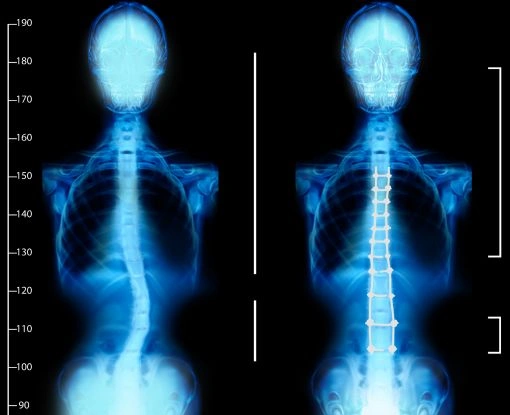
Scoliosis is a spinal condition characterised by an abnormal sideways curvature of the spine, which may affect posture, mobility, physical appearance and overall quality of life. While mild cases can often be managed through observation, physiotherapy or bracing, severe spinal deformities may require surgical correction. Scoliosis surgery in Mumbai offers a treatment option for patients experiencing progressive spinal curvature, persistent discomfort or functional limitations.
Synapse Spine provides specialised assessment and treatment for various spinal conditions, including scoliosis. Its multidisciplinary team includes orthopaedic spine surgeons and neurosurgeons experienced in evaluating complex spinal disorders. Understanding the procedure, benefits, risks and recovery process can help patients make informed treatment decisions.
Understanding Scoliosis and Its Causes
Scoliosis develops when the spine curves sideways, sometimes forming an S-shaped or C-shaped appearance. The condition can occur in children, adolescents and adults, with varying degrees of severity.
Common types include:
- Idiopathic scoliosis: The most common form, often developing during adolescence without an identifiable cause.
- Congenital scoliosis: Results from abnormal spinal development before birth.
- Neuromuscular scoliosis: Associated with conditions such as cerebral palsy or muscular dystrophy.
- Degenerative scoliosis: Develops in adulthood due to age-related changes in spinal discs and joints.
Symptoms may include uneven shoulders, an asymmetrical waistline, prominent ribs, back discomfort or noticeable changes in posture.
Early evaluation helps determine whether observation, bracing, rehabilitation or surgery is appropriate.
When Is Scoliosis Surgery in Mumbai Recommended?
Surgical correction is generally considered when spinal curvature becomes severe, continues progressing or significantly affects everyday activities.
Doctors may recommend surgical evaluation in the following circumstances:
- Severe spinal curvature: A Cobb angle of approximately 45–50 degrees or more, particularly in growing adolescents.
- Progressive deformity: Increasing curvature despite appropriate non-surgical management.
- Persistent discomfort: Significant pain or functional limitations associated with the spinal deformity.
- Breathing difficulties: Severe thoracic curvature affecting chest mechanics or respiratory function.
- Postural imbalance: Significant trunk imbalance affecting movement and daily activities.
Not every patient with scoliosis requires surgery. Treatment decisions depend on age, skeletal maturity, curve flexibility, symptoms and overall health.
How Is Scoliosis Surgery Performed?
Scoliosis surgery in Mumbai commonly involves spinal fusion with instrumentation to correct and stabilise abnormal spinal curvature.
The procedure generally includes several stages.
Preoperative Assessment
The surgeon reviews medical history, physical examination findings and standing spinal X-rays. MRI or CT imaging may be recommended for selected patients.
Anaesthesia and Surgical Access
The procedure is performed under general anaesthesia. Surgeons access the affected spinal segments, most commonly through an incision along the back.
Spinal Correction and Stabilisation
Specialised screws, rods and other instruments help reposition and stabilise the spine. Bone graft material encourages fusion between selected vertebrae.
Postoperative Monitoring
Patients receive pain management, neurological monitoring and rehabilitation guidance following surgery.
Modern surgical planning, imaging and intraoperative monitoring can support procedural accuracy. However, the technique varies depending on the patient’s spinal deformity and individual requirements.
Benefits and Risks of Scoliosis Surgery
Surgical correction aims to improve spinal alignment and reduce the likelihood of further deformity progression.
Potential Benefits
- Improved spinal alignment and overall balance.
- Prevention of further progression of selected severe curves.
- Better posture and trunk symmetry.
- Possible improvement in pain and physical function.
- Improved quality of life for appropriately selected patients.
Possible Risks
As with other major spinal procedures, potential complications include:
- Infection or postoperative bleeding.
- Nerve injury or neurological complications.
- Blood clots and anaesthesia-related complications.
- Implant-related problems.
- Failure of spinal fusion, also called pseudarthrosis.
- Reduced flexibility in fused spinal segments.
Patients should discuss their expected correction, surgical risks and long-term outcomes with their treating surgeon before proceeding.
Academic Qualifications and Clinical Experience of Synapse Spine Surgeons
Synapse Spine brings together specialists from orthopaedic and neurosurgical backgrounds. Its doctors have training and experience in managing spinal deformities, degenerative conditions, spinal tumours and other complex disorders.
Dr. Nandan Marathe – Orthopaedic Spine Surgeon
Dr. Nandan Marathe completed his MBBS and MS Orthopaedics at KEM Hospital, Mumbai, receiving a gold medal for his postgraduate performance. He subsequently completed specialised training in complex spine surgery and spinal deformities at the University of Toronto, Canada.
His additional training includes spinal tumour surgery in Italy and minimally invasive spine surgery in South Korea. His clinical interests include complex spinal deformities and reconstructive spine procedures.
Dr. Aditya Raj – Orthopaedic Spine Surgeon
Dr. Aditya Raj completed orthopaedic training at KEM Hospital, Mumbai, where he received a gold medal. He undertook an AO Spine North America fellowship in complex spine surgery at the University of Toronto.
His further training includes paediatric and adult spinal deformity management at Samsung Medical Centre, South Korea. He has also contributed to academic research on spinal disorders.
Multidisciplinary Spine Expertise
The broader Synapse Spine team includes brain and spine surgeons, neurospine surgeons and pain management specialists.
Patients seeking a Spine specialist Doctor in Mumbai can undergo evaluation to determine whether conservative management or surgical intervention is appropriate.
Clinic Environment, Facilities and Expertise at Synapse Spine
Synapse Spine provides specialist consultations through multiple locations across Mumbai and surrounding areas, including Bandra, Andheri, Borivali, Chembur and other neighbourhoods.
The clinical approach focuses on accurate diagnosis, individualised treatment planning and follow-up care. Patients may require imaging investigations, physiotherapy assessment and surgical consultation depending on their symptoms.
Those searching for a Top Spine Specialist in Mumbai, India may consider factors such as relevant deformity-surgery training, clinical experience, communication and access to appropriate hospital facilities.
Complex surgical procedures require suitable operating theatres, anaesthesia support and postoperative monitoring. Patients should confirm the proposed surgical hospital and available facilities during consultation.
Approximate Cost of Scoliosis Surgery in Mumbai
The cost of Scoliosis surgery in Mumbai varies according to the complexity of the spinal deformity, number of vertebrae requiring fusion, implants, hospital facilities and postoperative care.
For general planning, complex scoliosis correction in private hospitals may cost approximately ₹4,00,000 to ₹12,00,000 or more. This is an illustrative range rather than a verified Synapse Spine quotation.
Additional expenses may include preoperative imaging, investigations, specialised implants, intensive care, rehabilitation and follow-up consultations.
Patients should request an individualised written estimate and clarify insurance coverage before scheduling surgery.
Recovery, Precautions and Aftercare
Recovery following scoliosis correction requires careful monitoring and gradual rehabilitation.
Patients may begin assisted walking within the first few postoperative days, depending on medical stability and the surgeon’s recommendations.
Important precautions include:
- Avoiding heavy lifting, excessive bending and twisting during early recovery.
- Following prescribed medication and wound-care instructions.
- Attending scheduled follow-up appointments.
- Participating in physiotherapy when recommended.
- Maintaining adequate nutrition and hydration.
- Avoiding strenuous exercise until medically cleared.
Return to school, office work and routine activities often occurs gradually over several weeks to months. Full recovery and return to demanding physical activities may take considerably longer.
New weakness, fever, wound discharge, breathing difficulty or severe worsening pain requires prompt medical attention.
Why Consider Synapse Spine for Scoliosis Treatment?
Scoliosis surgery in Mumbai requires careful evaluation, experienced surgical planning and coordinated postoperative care.
Synapse Spine’s team includes surgeons with specialised training in spinal deformity correction and complex spinal procedures. The availability of orthopaedic and neurosurgical expertise supports multidisciplinary assessment of patients with different spinal conditions.
The aim is to recommend treatment according to the patient’s clinical findings rather than assuming that surgery is necessary for every spinal curvature.
Frequently Asked Questions (FAQs)
1. Is scoliosis surgery necessary for every patient?
No. Mild and moderate scoliosis may be managed through monitoring, physiotherapy or bracing. Surgery is generally considered for severe, progressive or functionally significant spinal curves.
2. How long does recovery take after scoliosis surgery?
Patients may resume selected routine activities within several weeks to months. Recovery depends on the surgical technique, extent of fusion, age and overall health.
3. Can scoliosis return after surgery?
Spinal fusion is intended to maintain correction in the operated segments. However, residual curvature, implant complications or changes in adjacent spinal areas can occur, making long-term follow-up important.
4. What is the appropriate age for scoliosis surgery?
There is no single ideal age. Surgery may be considered in adolescents or adults depending on curve severity, progression, skeletal maturity and symptoms.
Book a Scoliosis Consultation at Synapse Spine
Patients experiencing progressive spinal curvature, uneven posture or persistent back discomfort can consult the specialists at Synapse Spine for a detailed assessment.
Contact Synapse Spine
+91 81698 45056 | +91 93726 71858 | +91 93211 24611
synapsespine@gmail.com
Get Directions to the Clinic – Synapse Spine, Mumbai