
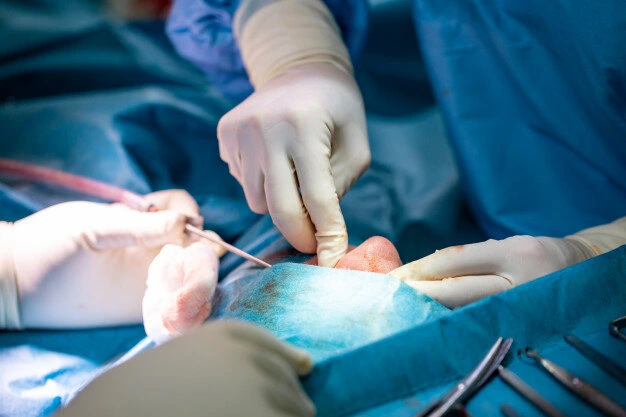
Your nose plays an important role in defining facial balance, appearance, and, in some cases, breathing function. If you are unhappy with the size, shape, symmetry, or structure of your nose, rhinoplasty can offer a personalised surgical approach to address aesthetic and functional concerns.
Rhinoplasty Surgery in mumbai is a specialised procedure that can reshape the nasal bone, cartilage, skin, or a combination of these structures. At Ambrosia Aesthetics, Dr. Siddharth Prakash focuses on understanding each patient’s expectations, anatomy, and goals before developing an individualised surgical plan.
What Is Rhinoplasty?
Rhinoplasty, commonly called a nose job, is a cosmetic and reconstructive procedure designed to change the shape, size, or structure of the nose. Depending on the patient’s needs, the procedure may address aesthetic concerns, breathing difficulties, nasal asymmetry, congenital deformities, or changes caused by injury.
The objective is not simply to create a smaller or different-looking nose. A well-planned rhinoplasty considers facial proportions and aims for a result that looks balanced with the rest of the face. Patients should also have realistic expectations because rhinoplasty cannot simply reproduce another person’s nose or guarantee a specific appearance.
Who May Be a Suitable Candidate?
Rhinoplasty may be considered for individuals who are concerned about the appearance or function of their nose and have realistic expectations about what surgery can achieve.
According to the Ambrosia Aesthetics guidance, suitable candidates may include people who:
- Are concerned about the size or shape of their nose
- Want to improve the appearance of their nose
- Have a clear understanding of the changes they would like
- Have realistic expectations
- Are choosing surgery for their own satisfaction
- Are otherwise healthy and suitable for surgery
- Have reached an appropriate stage of facial growth
A detailed consultation is important because suitability can only be determined after reviewing the patient’s medical history, facial anatomy, nasal structure, and individual goals.
What Can Rhinoplasty Correct?
One of the advantages of rhinoplasty is that the surgical plan can be tailored to specific nasal concerns. Depending on the anatomy and desired outcome, surgery may help:
- Increase or decrease nasal size
- Reduce a prominent nasal hump
- Refine or reshape the nasal tip
- Alter the shape or width of the nostrils
- Improve nasal asymmetry
- Address a deviated septum or certain breathing difficulties
- Correct deformities caused by injury or congenital conditions
Different techniques may be appropriate for different patients. These include open rhinoplasty, closed rhinoplasty, tip plasty, reduction rhinoplasty, alarplasty, septoplasty, revision rhinoplasty, and selected non-surgical approaches using dermal fillers. The appropriate technique depends on the patient’s anatomy and treatment objectives.
Why Consultation Is an Important Part of Rhinoplasty
A successful rhinoplasty begins well before the operation. At Ambrosia Aesthetics, the consultation involves understanding the patient’s concerns, expectations, medical and surgical history, and desired changes.
Dr. Siddharth Prakash examines the face and nose, takes relevant measurements, and assesses which approach may be suitable. Photographs from different angles can also be taken for documentation and surgical planning. The consultation covers preparation, the procedure, expected recovery, follow-up, and potential results.
This detailed approach reflects Dr. Siddharth’s philosophy of educating patients and involving them in the decision-making process. His official profile describes his first consultations as detailed discussions focused on understanding patient needs, what is achievable, and the limitations of surgery.
Why Choose Dr. Siddharth Prakash?
Dr. Siddharth Prakash is a board-certified, internationally trained Cosmetic and Plastic Surgeon. His qualifications include MBBS from GSMC & KEM Hospital, MS and DNB in General Surgery from LTMMC & LTMGH, and DNB Plastic Surgery from Sir Ganga Ram Hospital, New Delhi.
His advanced training includes a Fellowship in Cosmetic & Craniofacial Surgery at Harvard Medical School and Massachusetts General Hospital in Boston, training in facial plastic surgery at New York University School of Medicine, and a fellowship in aesthetic surgery, breast and body contouring at the Ivo Pitanguy Institute in Brazil. He has also completed a certificate course in Advanced Rhinoplasty & Aesthetic Surgery through ISAPS in Istanbul.
His professional affiliations include Ambrosia Aesthetics and leading hospitals such as Lilavati Hospital & Research Centre. His listed professional memberships include the International Society of Aesthetic Plastic Surgery, Association of Plastic Surgeons of India, Indian Association of Aesthetic Plastic Surgeons, and Rhinoplasty Society of India.
Patients researching a Best Plastic Surgeon in India may consider factors such as board certification, specialised training, surgical experience, hospital facilities, communication, and follow-up care rather than relying only on rankings or cost.
What Is the Recovery Like?
Recovery varies depending on the technique and extent of surgery. The reference information from Ambrosia Aesthetics notes that patients may be able to resume basic daily activities relatively soon after surgery. A nasal dressing or splint may remain in place for around 5–10 days, while vigorous exercise and weight training are generally avoided for approximately two weeks during early healing.
Swelling is expected after rhinoplasty and can take several months to settle completely. The final appearance should therefore be assessed progressively rather than immediately after surgery.
Like any surgical procedure, rhinoplasty has potential risks. These can include bleeding, bruising, hematoma, swelling, skin discoloration, and problems with wound healing. A thorough consultation allows patients to understand the potential benefits, limitations, and risks relevant to their individual procedure.
What About Revision Rhinoplasty?
Some patients seek revision rhinoplasty after an earlier nose surgery because of concerns about appearance, asymmetry, nasal blockage, structural weakness, or other irregularities. Revision procedures can be more challenging because previous surgery may have changed the cartilage and created scar tissue.
Dr. Siddharth Prakash’s rhinoplasty information emphasises careful planning for revision cases because altered nasal structures can require a more precise surgical approach.
A Patient-Centred Approach at Ambrosia Aesthetics
Choosing a surgeon is an important part of planning Rhinoplasty Surgery in mumbai. Ambrosia Aesthetics describes its environment as friendly, private, comfortable, and non-commercial, with an emphasis on high-quality patient care. Dr. Siddharth Prakash maintains an independent practice at the clinic in Lokhandwala Complex, Andheri West, while also being associated with leading hospitals in Mumbai.
For individuals exploring Plastic Surgery in Mumbai, a personalised consultation can help clarify whether rhinoplasty is appropriate, what techniques may be considered, and what recovery may involve.
Book a Rhinoplasty Consultation With Dr. Siddharth Prakash
If you are considering nose reshaping for cosmetic or functional reasons, the first step is a detailed consultation with a qualified plastic surgeon. Discuss your concerns openly, understand the realistic possibilities, and make an informed decision based on your anatomy and individual goals.
Ambrosia Aesthetics – Dr. Siddharth Prakash
📞 Call Us: 9930993600 | 9930998023
📧 Email Us: dr.siddharth@live.com
Take the next step: Schedule a consultation with Dr. Siddharth Prakash to discuss your nasal concerns, understand the available options, and develop a personalised treatment plan.
Frequently Asked Questions
1. What is rhinoplasty used for?
Rhinoplasty can reshape the nose for cosmetic or functional reasons. Depending on the patient’s needs, it may address nasal size, shape, tip, nostrils, asymmetry, certain breathing difficulties, or deformities caused by injury or congenital conditions.
2. How long does rhinoplasty recovery take?
Patients may resume basic daily activities relatively quickly, but early healing continues for several weeks. Dressings may remain for around 5–10 days, vigorous exercise is generally avoided for about two weeks, and swelling can continue to settle for several months.
3. Does rhinoplasty leave a scar?
Closed rhinoplasty uses incisions inside the nose and does not leave a visible external scar. With open rhinoplasty, the incision is placed in the lower part of the nose and the resulting scar generally becomes less noticeable as it heals.
4. Is revision rhinoplasty different from primary rhinoplasty?
Yes. Revision rhinoplasty can be more complex because previous surgery may have caused scar tissue or altered the cartilage and nasal structure. Careful evaluation and individualised planning are particularly important in revision cases.