
Back pain, neck stiffness, tingling in the arms or legs, and difficulty walking can interfere with daily activities and quality of life. While many spinal problems improve with conservative treatment, persistent or recurring symptoms may require evaluation by a specialist. Identifying the underlying cause early can help patients understand their treatment options and avoid unnecessary delays in care.
If you are searching for a spine specialist mumbai, Synapse Spine offers comprehensive evaluation and treatment for a wide range of spinal conditions. Its multidisciplinary team includes orthopaedic spine surgeons and neurosurgeons who provide personalised care, from non-surgical pain management to advanced minimally invasive spine procedures.
What Does a Spine Specialist Do?
A spine specialist diagnoses and manages conditions affecting the vertebrae, intervertebral discs, spinal nerves and spinal cord. Depending on their training, specialists may come from orthopaedic surgery, neurosurgery or related disciplines.
The aim is to identify the source of symptoms, assess their severity and recommend an appropriate treatment plan. Not every patient with back or neck pain needs surgery. In many cases, medication, physiotherapy, activity modification or targeted pain management can help relieve symptoms.
At Synapse Spine, the doctors assess each patient’s symptoms, medical history, examination findings and relevant imaging before recommending treatment.
Common Spine Conditions Treated at Synapse Spine
The Synapse Spine team manages a variety of spinal disorders, including the following.
1. Slipped Disc and Herniated Disc
Intervertebral discs act as cushions between the bones of the spine. When a disc bulges or its inner material protrudes, it may irritate or compress nearby nerves. This can cause back or neck pain, numbness, tingling or weakness.
Treatment depends on the location and severity of the disc problem. Many patients improve with non-surgical care, while selected cases may benefit from procedures such as microdiscectomy or endoscopic discectomy.
2. Sciatica
Sciatica refers to pain that travels along the sciatic nerve, often from the lower back through the buttock and down one leg. It may be accompanied by tingling, numbness or weakness.
A specialist evaluates whether the symptoms are caused by a herniated disc, spinal stenosis or another condition. Treatment may include physiotherapy, medication, targeted injections or surgery when clinically indicated.
3. Spinal Stenosis
Spinal stenosis occurs when spaces within the spinal canal or nerve pathways become narrowed. This may place pressure on nerves and cause pain, heaviness, numbness or weakness, particularly during standing or walking.
The appropriate treatment depends on the degree of narrowing, the symptoms and the patient’s overall health.
4. Neck Pain and Spondylosis
Age-related changes in the discs and joints of the neck can contribute to cervical spondylosis. Symptoms may include neck stiffness, pain radiating into the shoulders or arms, and, in more serious cases, signs of nerve or spinal cord compression.
Persistent symptoms or neurological changes should be assessed by a qualified specialist.
5. Spinal Deformities and Complex Conditions
Synapse Spine also lists treatment for scoliosis, spinal deformities, degenerative disc disease, spinal tumours, spinal cord injuries and selected spinal infections. These conditions may require detailed investigations and coordinated care involving specialists from different disciplines.
Spine Treatment Options: From Conservative Care to Surgery
Treatment should be based on an accurate diagnosis rather than pain intensity alone. Synapse Spine provides both non-operative management and surgical options, depending on the patient’s needs.
Non-Surgical Treatment
Initial treatment may include:
- Physiotherapy: Exercises and guided rehabilitation to improve mobility, strength and function.
- Medication: Suitable medicines to help control pain and inflammation, prescribed according to the patient’s medical history.
- Activity modification: Temporary changes to activities that aggravate symptoms, followed by a planned return to movement.
- Pain management procedures: Selected patients may benefit from targeted spinal injections, nerve root blocks or facet joint blocks.
These approaches can help many patients manage symptoms without surgery. A specialist can advise when further investigations or alternative treatment are needed.
Minimally Invasive Spine Surgery
When conservative treatment does not provide adequate relief, or when a specific spinal condition requires surgery, minimally invasive techniques may be considered.
Synapse Spine lists procedures such as endoscopic spine surgery, microdiscectomy, endoscopic discectomy, disc replacement, vertebroplasty, laminoplasty, lumbar spinal fusion and deformity correction.
Minimally invasive procedures use specialised instruments and smaller incisions in selected cases. Potential benefits may include reduced tissue disruption and a shorter recovery period compared with certain traditional operations. However, suitability and outcomes depend on the diagnosis, the procedure and individual patient factors.
The surgeon should explain the expected benefits, risks, alternatives and recovery requirements before treatment.
Meet the Spine Specialists at Synapse Spine
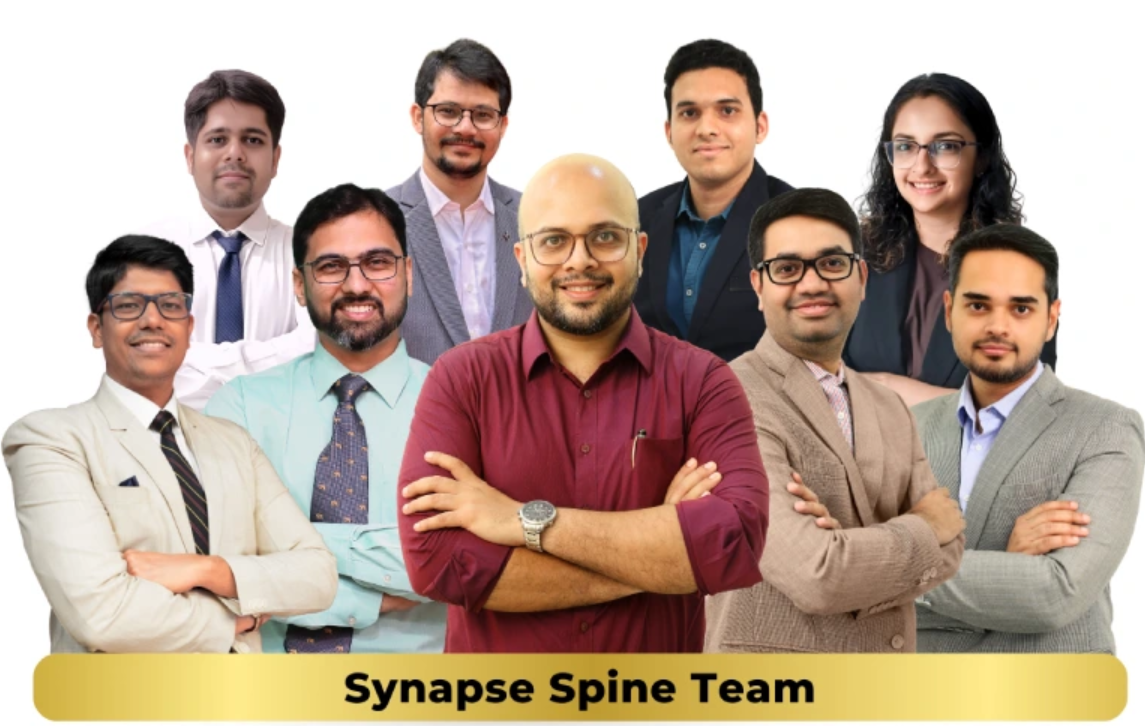
Synapse Spine brings together specialists from orthopaedic and neurosurgical backgrounds. This team-based approach helps patients access expertise suited to different spinal conditions.
Dr. Nandan Marathe – Orthopaedic Spine Surgeon
Dr. Nandan Marathe completed his MBBS and MS in Orthopaedics at Seth GS Medical College and King Edward Memorial Hospital, Mumbai, where he received a gold medal in orthopaedics. His additional training includes a fellowship in complex spine surgery and spinal deformities at the University of Toronto, along with specialised training in spinal tumours, minimally invasive surgery and endoscopic spine techniques.
His clinical interests include complex spinal conditions and deformity correction.
Dr. Anuj Bhide – Brain and Spine Surgeon
Dr. Anuj Bhide holds an MBBS, MS in General Surgery and MCh in Neurosurgery. A gold medallist from Grant Medical College and JJ Hospitals, Mumbai, he has also completed a fellowship in skull base and vascular surgery at Fujita Health University, Japan.
His expertise includes brain and spine surgery, complex neurological conditions and minimally invasive procedures.
A Multidisciplinary Specialist Team
The Synapse Spine website also lists doctors such as Dr. Ajit Mishra, Dr. Aditya Raj, Dr. Abhishek Kulkarni and other orthopaedic and neurosurgical specialists. Their respective areas of expertise include endoscopic spine surgery, spinal deformities, spinal tumours and pain management.
Patients should confirm the current availability of individual doctors and select a consultation based on their specific symptoms and clinical requirements.
A Patient-Focused Clinic Environment
Synapse Spine emphasises modern technology, evidence-based care and personalised treatment planning. Its website highlights facilities and techniques such as endoscopic spine surgery, operating microscopes, neuromonitoring and ultrasonic bone scalpels for appropriate surgical cases.
The clinic network serves patients across multiple locations in Mumbai and the surrounding region, including Bandra, Andheri, Borivali, Vile Parle, Chembur, Goregaon, Malad, Mira Road, Bhayandar and Vasai.
Patients can discuss their symptoms, diagnostic reports and treatment goals with the specialist. The consultation can help clarify whether conservative management, further investigation or a surgical opinion is appropriate.
If you are looking for a spine specialist Doctor in Mumbai, consider the doctor’s relevant qualifications, experience with your condition, communication style and willingness to explain both surgical and non-surgical alternatives.
When Should You Consult a Spine Surgeon?
Many episodes of back pain improve over a few weeks with appropriate initial care. However, arrange a medical evaluation if pain persists, repeatedly returns, radiates into an arm or leg, or interferes with normal activities despite treatment.
Seek urgent medical attention if you develop new or progressive limb weakness, numbness around the groin or saddle area, or loss of bladder or bowel control. These may indicate a serious spinal problem requiring emergency assessment.
A spine surgeon in mumbai can assess whether surgery is necessary, but a surgical consultation does not automatically mean that an operation will be recommended. The safest treatment plan depends on your diagnosis and individual circumstances.
Book a Consultation at Synapse Spine
Living with persistent back or neck pain can be challenging, but an appropriate assessment can help you understand the cause and available treatment options. The Synapse Spine team provides specialist evaluation for common and complex spinal conditions, with treatment ranging from physiotherapy and pain management to advanced surgical procedures when indicated.
Take the next step towards better spinal health. Contact Synapse Spine to arrange a consultation with a specialist and discuss a treatment plan tailored to your needs.
Frequently Asked Questions
1. When should I consult a spine specialist?
Consult a specialist if back or neck pain persists for several weeks, keeps returning, radiates into your limbs or affects daily activities despite initial treatment. Seek urgent care for new weakness, saddle-area numbness or loss of bladder or bowel control.
2. Does every slipped disc require surgery?
No. Many slipped discs improve with medication, physiotherapy and activity modification. Surgery may be considered when symptoms remain disabling despite appropriate treatment or when significant nerve compression requires intervention.
3. What treatments are available at Synapse Spine?
Synapse Spine lists conservative treatments such as physiotherapy, medication and pain management, as well as procedures including endoscopic discectomy, microdiscectomy, disc replacement and spinal deformity correction. The appropriate option depends on the diagnosis.
4. How can I book an appointment at Synapse Spine?
Call +91 81496 86139 or +91 74998 98303, or email synapsespine@gmail.com. You can also visit the official contact page to enquire about appointments and clinic locations.