
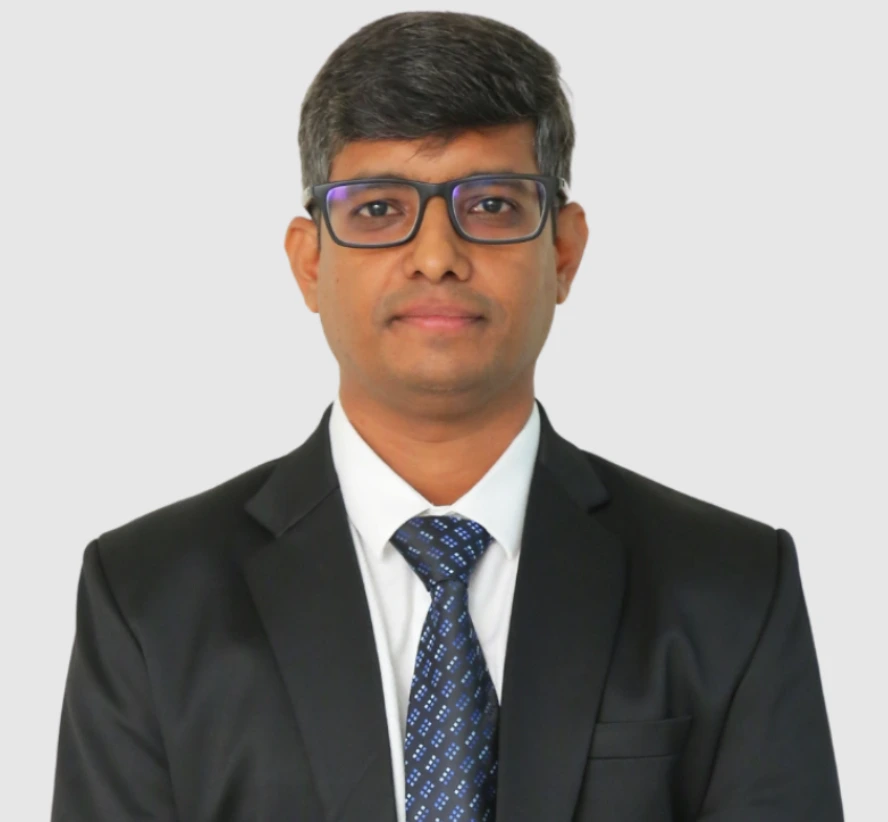
When researching advanced neurosurgical care in Mumbai, I found that patients and families often look beyond a doctor’s title and want to understand qualifications, surgical experience, areas of specialisation and the technology available for complex neurological conditions. For someone searching for the Best Brain Surgeon in Mumbai, these factors are particularly important because brain and spine conditions can require highly specialised diagnosis and treatment. Dr. Manish Baldia is a functional neurosurgeon with expertise in Deep Brain Stimulation (DBS), movement disorders, brain tumour surgery, stereotactic procedures and complex brain and spine surgery. He consults at Lalbaug Diagnostics in Mumbai and other institutions.
Best Brain Surgeon in Mumbai: Qualifications and Clinical Expertise
Dr. Manish Baldia has completed his MBBS and MCh in Neurosurgery from Christian Medical College (CMC), Vellore, completing his MCh in 2017. He subsequently pursued specialised training in functional neurosurgery and neuromodulation through the EEPIN fellowship in London.
His professional profile identifies him as a functional neurosurgeon specialising in Parkinson’s disease, dystonia and other movement disorders, with additional experience in complex brain and spine procedures. His published profile reports more than 120 DBS surgeries and over 1,000 advanced DBS programming sessions.
His experience also includes academic and surgical work at CMC Vellore. According to his profile, he served as an Assistant and Associate Professor of Neurosurgery there, assisting in more than 1,200 cases and independently performing over 400 complex cranial and spinal procedures.
What Does a Neurosurgeon Treat?
A neurosurgeon diagnoses and treats conditions involving the brain, spinal cord, peripheral nerves and related structures. Treatment can range from observation and medication-based management to minimally invasive procedures, radiosurgery and conventional surgery, depending on the diagnosis.
Dr. Manish Baldia’s listed treatment areas include:
- Deep Brain Stimulation
- Parkinson’s disease and movement disorders
- Epilepsy and seizures
- Brain tumour surgery
- Stereotactic brain procedures
- CyberKnife radiosurgery
- Gamma Knife surgery
- Spinal cord tumour surgery
- Minimally invasive spine surgery
- Cranioplasty
The appropriate treatment depends on the patient’s diagnosis, symptoms, imaging findings, general health and treatment objectives.
Deep Brain Stimulation and Movement Disorders
One of Dr. Manish Baldia’s major areas of expertise is functional neurosurgery, particularly Deep Brain Stimulation. DBS is used for selected patients with movement disorders such as Parkinson’s disease and dystonia when symptoms are not adequately controlled with medication or when medication-related complications become significant.
DBS involves implanting electrodes in specific areas of the brain. The electrodes are connected to an implantable pulse generator, which delivers electrical stimulation. The system can then be programmed to modify abnormal neural activity.
Dr. Manish Baldia’s published profile reports extensive experience with DBS surgery and programming, including management of complex and failed DBS cases.
Patient selection is an important part of DBS. Not everyone with Parkinson’s disease or another movement disorder is a candidate. Neurological assessment, medication response, imaging and overall health are considered before surgery.
Brain Tumour Surgery and Stereotactic Procedures
Brain tumours can vary considerably in their location, size, growth pattern and biological behaviour. Some are benign, while others are malignant. Even a benign tumour can cause serious symptoms if it presses on important brain structures.
Depending on the suspected tumour and its location, treatment may involve observation, surgery, radiation, radiosurgery, chemotherapy or a combination of approaches.
Dr. Manish Baldia’s clinical interests include minimally invasive brain tumour surgery, stereotactic biopsy, awake brain tumour surgery and stereotactic radiosurgery.
A stereotactic biopsy may be considered when a precise tissue diagnosis is required and the tumour’s location makes conventional biopsy or resection more challenging. The procedure uses imaging and specialised navigation to target the lesion accurately.
Awake Brain Tumour Surgery
Awake brain surgery is a specialised technique that may be considered for selected tumours located close to areas responsible for speech, movement or other important neurological functions.
During the appropriate phase of surgery, the patient may be awake so the surgical team can assess functions such as speech or movement while operating near critical brain regions.
Dr. Manish Baldia’s published information describes expertise in awake brain tumour surgery and brain mapping, with the aim of maximising safe tumour removal while preserving important neurological functions.
This approach is not appropriate for every patient or every tumour. The decision depends on tumour location, patient factors and the surgical team’s assessment.
Radiosurgery: CyberKnife and Gamma Knife
Stereotactic radiosurgery uses focused radiation to target selected brain lesions without a conventional surgical incision. Despite the term “radiosurgery,” these treatments do not involve a traditional surgical knife.
Gamma Knife and CyberKnife are technologies that can deliver highly focused radiation in appropriately selected cases. They may be considered for certain tumours and other neurological conditions depending on the diagnosis.
Dr. Manish Baldia lists both CyberKnife and Gamma Knife procedures among his treatment areas.
Whether radiosurgery or conventional surgery is appropriate depends on the condition, lesion size and location, previous treatment and other clinical factors.
Epilepsy and Seizure Management
Epilepsy is a neurological disorder characterised by recurrent seizures. Many patients can control seizures with medication, but some continue to experience disabling seizures despite appropriate medical treatment.
Complex epilepsy may require evaluation by a multidisciplinary team involving neurologists, neurosurgeons, neurophysiology specialists and other professionals.
Dr. Manish Baldia’s published treatment profile includes epilepsy and seizure care as part of his neurosurgical practice.
Surgical treatment is considered only for carefully selected patients after appropriate diagnostic evaluation. The goal is to control seizures while preserving neurological function.
Spine Surgery and Minimally Invasive Techniques
Neurosurgical expertise can also extend to conditions involving the spine and spinal cord. Dr. Manish Baldia’s profile lists spinal cord tumour surgery and minimally invasive spine surgery among his areas of practice.
Spinal cord tumours can cause symptoms such as weakness, numbness, balance problems, pain or changes in bladder and bowel function. The treatment approach depends on the tumour’s type, size and location and its effect on the spinal cord.
Minimally invasive techniques may be appropriate for selected spinal conditions and can involve smaller surgical access points. However, the technique used should be determined by the individual diagnosis rather than by the desire for a smaller incision alone.
Academic Background and Recognition
Dr. Manish Baldia’s professional profile also reflects involvement in neurosurgical research and academic work. His published academic page lists research and publications involving movement disorders, DBS, neuromodulation, cranioplasty, spinal conditions and other areas of neurosurgery.
His listed recognitions include a 3-Minute Thesis award at CMC Vellore, Young Neurosurgeon Award, Best Researcher awards, and Best Paper and Poster awards at neurosurgical conferences.
Academic involvement can be relevant when evaluating a specialist because neurosurgery is a rapidly developing field in which surgical techniques, navigation systems, neuromodulation and treatment protocols continue to evolve.
Clinic Environment at Lalbaug Diagnostics
For patients looking for a Neuro Doctor in Mumbai, accessibility and the consultation environment are practical considerations. Dr. Manish Baldia consults at Lalbaug Diagnostics on Dr. Babasaheb Ambedkar Marg in Lalbaug, Parel. The published contact information lists the centre near Ladu Samrat Vada Pav and opposite Avighna IX.
The practice focuses on neurological and neurosurgical conditions, with services spanning movement disorders, DBS, brain tumours, epilepsy, stereotactic procedures and spine-related conditions.
A neurosurgical consultation generally involves reviewing symptoms, previous medical records and imaging such as MRI or CT scans. Depending on the condition, neurological examination and additional investigations may be recommended before treatment is discussed.
Why Choosing the Right Neurosurgeon Matters
Searching for the Best Brain Surgeon in Mumbai should ideally involve more than online rankings or advertising claims. Patients should consider the surgeon’s formal qualifications, relevant experience, specific expertise in the condition being treated, hospital facilities, multidisciplinary support and approach to explaining treatment options.
For complex procedures, patients may also want to ask about the expected benefits, possible complications, alternative treatments, recovery period and follow-up requirements.
A second opinion can be useful when a major brain or spine operation has been recommended, particularly when multiple treatment approaches are available.
Consult Dr. Manish Baldia
If you or a family member has been diagnosed with a neurological or neurosurgical condition, a specialist consultation can help clarify the diagnosis and available treatment options. Dr. Manish Baldia provides consultation for movement disorders, DBS, brain and spine conditions, tumours, epilepsy and stereotactic procedures.
📞 96767 67507
📧 drmanishbaldia@gmail.com
Get Directions to the Clinic – Lalbaug Diagnostics
If you are looking for a Best Brain Surgeon in Mumbai for a neurological or neurosurgical consultation, contact Dr. Manish Baldia to schedule an appointment. Get directions to Lalbaug Diagnostics before your visit and bring relevant MRI or CT scans, medical reports, medication lists and previous consultation records so your condition can be evaluated comprehensively.
Frequently Asked Questions
1. What qualifications does Dr. Manish Baldia have?
Dr. Manish Baldia holds an MBBS and MCh in Neurosurgery from Christian Medical College, Vellore, and has completed specialised fellowship training in functional neurosurgery and neuromodulation through EEPIN in London.
2. What conditions does Dr. Manish Baldia treat?
His listed areas include Parkinson’s disease, dystonia and other movement disorders, epilepsy, brain tumours, spinal cord tumours, and conditions requiring stereotactic, DBS, radiosurgical or minimally invasive neurosurgical procedures.
3. Does Dr. Manish Baldia perform Deep Brain Stimulation?
Yes. DBS is one of his principal areas of expertise. His published profile reports more than 120 DBS surgeries and over 1,000 advanced DBS programming sessions.
4. Where can I consult Dr. Manish Baldia in Mumbai?
He consults at Lalbaug Diagnostics in Parel, Mumbai. His published contact information lists 96767 67507 for appointments and enquiries.