
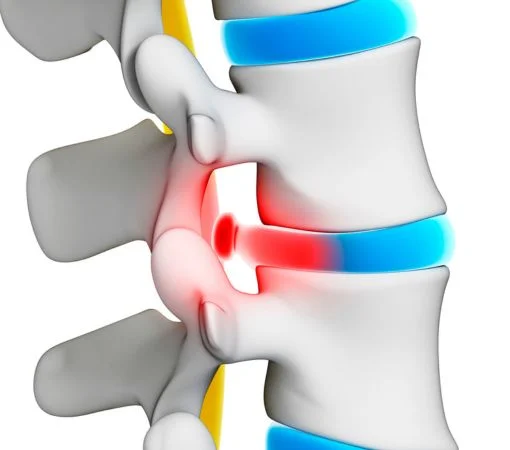
A slipped disc, also called a herniated or prolapsed disc, can cause anything from localized back or neck pain to severe pain radiating into the leg or arm. Numbness, tingling, muscle weakness, and difficulty with movement can also occur when a displaced disc irritates or compresses a nearby nerve.
The good news is that a slipped disc does not always require surgery. Depending on the severity of symptoms, clinical examination, imaging findings, and response to conservative treatment, patients may benefit from medication, physiotherapy, injections, or surgery. Synapse Spine provides comprehensive evaluation and treatment for slipped discs through a multidisciplinary team of spine and neurospine specialists.
For patients searching for the Best Doctor for Slip Disc in Mumbai, understanding the condition and consulting an appropriately trained spine specialist are important first steps.
What Is a Slipped Disc?
The spine contains small cushions called intervertebral discs between the vertebrae. These discs help absorb shock and allow the spine to move comfortably.
A slipped disc occurs when the soft inner portion of a disc protrudes through a weakened or damaged outer layer. Depending on its location, the displaced material can put pressure on nearby nerves.
A slipped disc may occur in the lower back or neck. Lumbar disc problems can cause back pain and sciatica, while cervical disc problems may produce neck pain and symptoms extending into the shoulder, arm, or hand.
Common Causes of a Slipped Disc
Several factors can contribute to disc herniation. Synapse Spine identifies age-related wear and tear, trauma or injury, improper lifting, and genetic predisposition among possible causes.
Risk may increase with:
- Age-related disc degeneration
- Repetitive physical strain
- Incorrect lifting techniques
- Sudden injuries
- Poor posture
- Certain occupational activities
- Individual genetic factors
A slipped disc can sometimes occur without a single identifiable event. Degenerative changes can gradually weaken discs, making them more susceptible to herniation.
Symptoms of a Slipped Disc
Symptoms depend on the location of the affected disc and the nerve being compressed.
Common symptoms include:
- Lower back or neck pain
- Pain radiating into the leg or arm
- Sciatica
- Numbness or tingling
- Muscle weakness
- Altered reflexes
- Difficulty with certain movements
- Reduced mobility
Synapse Spine notes that severe nerve compression can occasionally lead to bowel or bladder problems. These symptoms require urgent medical assessment rather than routine follow-up.
How Is a Slipped Disc Diagnosed?
Diagnosis begins with a detailed medical history and physical examination. A spine specialist evaluates pain patterns, muscle strength, sensation, reflexes, and movement.
Imaging may then be recommended depending on the clinical situation.
MRI
MRI provides detailed images of the spinal discs, spinal cord, nerve roots, and surrounding structures. It can help identify disc protrusion and nerve compression.
CT Scan
CT can provide detailed information about the spinal canal and bony structures.
X-Ray
X-rays primarily show bones and alignment rather than the discs themselves. They may help identify other potential causes of pain, such as fractures or structural abnormalities.
Nerve Tests
Electromyography and nerve conduction studies may occasionally be recommended to assess nerve function and identify ongoing nerve compression.
Synapse Spine lists X-ray, CT, MRI, myelography, and nerve studies among diagnostic tools that may be used depending on the patient’s condition.
Does Every Slipped Disc Require Surgery?
No. Many patients can initially be treated without surgery.
Treatment may include prescribed medication to control pain and inflammation, physiotherapy, activity modification, and selected spinal injections. Synapse Spine describes physical therapy as a tailored approach that can help reduce nerve pressure, relax tight muscles, and improve circulation.
Spinal injections, including epidural or nerve-root injections, may be considered in selected patients to reduce inflammation and provide symptom relief.
Surgery becomes a consideration when symptoms persist despite appropriate non-surgical treatment, significant neurological problems develop, or there is a clear structural indication for intervention.
Surgical Treatment for a Slipped Disc
When surgery is necessary, the procedure depends on the patient’s diagnosis, location of the disc problem, severity of nerve compression, and overall spinal condition.
Synapse Spine lists procedures including:
- Discectomy
- Laminectomy
- Spinal fusion
- Microdiscectomy
- Endoscopic discectomy
- Minimally invasive spine procedures
The objective is generally to relieve pressure on the affected nerve while addressing the underlying spinal problem.
Microdiscectomy
A microdiscectomy removes the portion of a herniated disc that is compressing a nerve. It may be considered in selected patients with persistent sciatica or neurological symptoms caused by a lumbar disc herniation.
Endoscopic Discectomy
Endoscopic techniques use specialized equipment and a small access point to reach the affected disc. Whether an endoscopic approach is suitable depends on the location and characteristics of the disc problem.
Spinal Fusion
Fusion may be considered when disc herniation is accompanied by instability or another structural problem requiring stabilization. It is not routinely required for every slipped disc.
Why Choose a Specialized Spine Team?
Complex spine problems require a thorough understanding of the relationship between discs, vertebrae, nerves, spinal alignment, and biomechanics. Synapse Spine brings together specialists from orthopaedic spine and neurosurgical backgrounds, offering treatment for conditions ranging from slipped discs and sciatica to spinal deformities and more complex disorders.
Multidisciplinary Expertise
Synapse Spine’s team includes orthopaedic spine surgeons, neurospine surgeons, neurosurgical specialists, and doctors with expertise in minimally invasive and advanced spine procedures. This multidisciplinary structure can be valuable when a patient has complicated symptoms or when the diagnosis involves both spinal structures and nerve compression.
For someone looking for a spine specialist Doctor in Mumbai, choosing a team with relevant training across different areas of spine care can help ensure that both non-surgical and surgical options are considered.
What Should You Expect During a Consultation?
A consultation typically begins with a discussion of symptoms, their duration, activities that worsen or relieve them, previous treatments, and any associated numbness or weakness.
The specialist may review existing MRI or other imaging and perform a neurological and musculoskeletal examination.
Based on these findings, the doctor can explain whether continued conservative treatment, physiotherapy, injections, or surgery is appropriate.
Patients should feel comfortable asking about:
- The exact cause of their symptoms
- Whether nerve compression is present
- Available non-surgical treatments
- Whether surgery is necessary
- Which surgical technique may be appropriate
- Expected recovery
- Potential risks and benefits
Clinic Accessibility and Patient-Centred Care
Synapse Spine has a network of clinics across Mumbai and surrounding areas, including Bandra, Andheri, Vile Parle, Goregaon, Malad, Borivali, Mira Road, Bhayandar, Vasai, Virar, and other locations.
The organization describes its approach as multidisciplinary spine care focused on providing appropriate treatment for individual patients. This allows patients with common disc problems as well as more complex spinal conditions to access specialist evaluation.
The choice of a spine surgeon in mumbai should ultimately be based on relevant qualifications, experience, the nature of the spinal condition, and a clear discussion of treatment alternatives.
When Should You Seek Urgent Medical Attention?
Most slipped discs are not medical emergencies, but certain symptoms require prompt evaluation.
Seek urgent medical attention if you experience:
- Sudden or progressive significant muscle weakness
- Loss of bladder or bowel control
- Numbness around the genital or inner-thigh region
- Severe neurological symptoms
- Rapidly worsening symptoms
These symptoms can indicate significant nerve compression and should not be ignored. Synapse Spine specifically identifies bowel or bladder dysfunction as a serious potential complication of severe disc-related nerve compression.
Schedule Your Consultation Today
Persistent back or neck pain, sciatica, numbness, or weakness should not be ignored. A specialist evaluation can help identify whether a slipped disc is responsible for your symptoms and whether conservative or surgical treatment is appropriate.
Consult Synapse Spine for Expert Slip Disc Care
Get a personalized assessment from the Synapse Spine team and understand your diagnosis, treatment options, and next steps.
For patients searching for the Best Doctor for Slip Disc in Mumbai, Synapse Spine offers access to experienced spine specialists and a multidisciplinary approach to diagnosis, non-surgical care, and advanced spine surgery.
Frequently Asked Questions
1. Can a slipped disc heal without surgery?
Yes. Many patients improve with appropriate non-surgical treatment, including medication, physiotherapy, activity modification, and selected injections. Surgery is considered when there is an appropriate indication or when symptoms fail to improve with conservative care.
2. When is surgery recommended for a slipped disc?
Surgery may be considered when persistent symptoms do not respond adequately to non-surgical treatment, or when significant neurological problems or severe nerve compression are present. The decision should follow specialist evaluation and imaging.
3. Which surgery is commonly performed for a slipped disc?
Depending on the diagnosis, options can include microdiscectomy, endoscopic discectomy, or other procedures. Fusion may be appropriate when additional spinal instability or structural problems exist.
4. How can I consult Synapse Spine?
You can contact Synapse Spine at +91 81496 86139 or +91 74998 98303, or email synapsespine@gmail.com to schedule an appointment.