
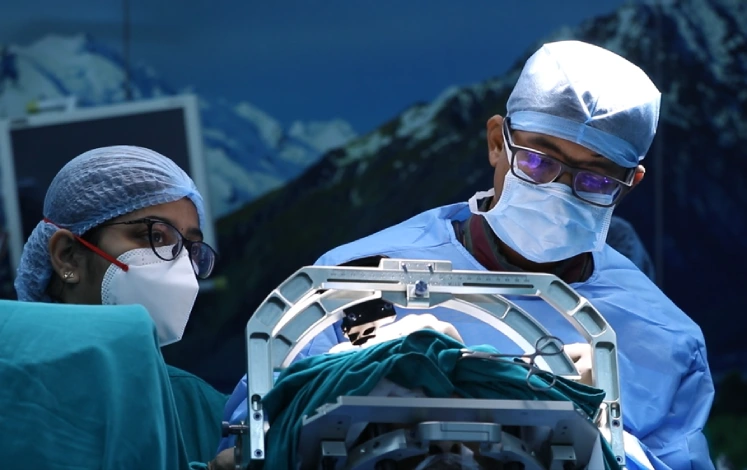
Deep Brain Stimulation (DBS) is an established surgical treatment option for selected patients with movement disorders, particularly Parkinson’s disease. For people whose symptoms are no longer adequately controlled with medication, DBS may help reduce certain motor symptoms and improve quality of life when appropriate patient-selection criteria are met.
For patients researching dbs surgery in mumbai, Dr. Manish Baldia at Lalbaug Diagnostics provides specialist evaluation and neurosurgical care for brain and spine conditions, including Parkinson’s disease and movement disorders. A detailed assessment is essential because DBS is not suitable for every patient.
What Is Deep Brain Stimulation?
Deep Brain Stimulation is a neurosurgical procedure in which thin electrodes are placed in specific areas of the brain involved in movement control. These electrodes are connected to a pulse generator that delivers controlled electrical stimulation.
The system generally consists of:
- One or more implanted electrodes
- Extension wires
- An implanted pulse generator
- A programming system used to adjust stimulation
The electrical stimulation can help regulate abnormal activity within movement-related brain circuits.
Unlike a conventional operation that removes or destroys brain tissue, DBS uses electrical stimulation to modulate neural activity. The stimulation settings can also be adjusted after implantation according to the patient’s response.
Who May Be Considered for DBS?
DBS is most commonly associated with Parkinson’s disease, but it can also be used for selected patients with other movement disorders.
Potential candidates may include patients with Parkinson’s disease who experience:
- Significant motor fluctuations
- Medication-related dyskinesias
- Tremor that remains difficult to control
- “Off” periods when medication stops working effectively
- Motor symptoms that respond to levodopa but are not consistently controlled
However, having Parkinson’s disease does not automatically mean that DBS is appropriate.
Patient selection involves considering the diagnosis, duration and pattern of symptoms, response to medication, cognitive status, general health, expectations, and other neurological factors.
Why Is Patient Selection Important?
DBS is a major neurosurgical treatment and should be recommended only after comprehensive evaluation.
A multidisciplinary team may assess:
- Neurological symptoms
- Response to Parkinson’s medications
- Motor fluctuations
- Cognitive function
- Psychological health
- Overall medical fitness
- Imaging findings
- Ability to participate in postoperative programming and follow-up
The purpose of this evaluation is to determine whether the potential benefits of DBS outweigh the risks for the individual patient.
DBS and Parkinson’s Disease
Parkinson’s disease can cause tremor, stiffness, slowness of movement, balance problems, and other symptoms. Medication, particularly levodopa-based therapy, remains an important component of treatment.
Over time, however, some patients develop fluctuations in their response to medication. They may experience periods when medication works well followed by periods when symptoms return.
DBS may be considered in selected patients whose motor symptoms respond to medication but have become difficult to manage consistently.
The goal is generally symptom control rather than curing Parkinson’s disease.
What Happens During DBS Surgery?
DBS involves carefully placing electrodes into predetermined brain targets.
The process typically includes several stages.
1. Preoperative Assessment
Detailed neurological evaluation and brain imaging are performed to determine the appropriate surgical target and confirm suitability.
2. Electrode Placement
The neurosurgeon guides specialized electrodes into the selected region of the brain.
Advanced stereotactic techniques are used to achieve accurate placement.
3. Pulse Generator Placement
The electrodes are connected to an implanted pulse generator, which is generally positioned under the skin in the chest area.
4. Programming
After surgery and recovery, the stimulation system is programmed. Settings may be adjusted over multiple visits based on symptoms and response.
What Are the Benefits of DBS?
In appropriately selected Parkinson’s patients, DBS can help reduce certain motor symptoms and may decrease the amount of medication required in some cases.
Potential benefits may include:
- Reduced tremor
- Improved movement
- Reduced rigidity
- Reduced motor fluctuations
- Reduced dyskinesias
- Longer periods of controlled movement
The results vary from patient to patient. DBS generally has the greatest effect on symptoms that have previously responded to dopaminergic medication.
Symptoms such as significant cognitive impairment or certain balance problems may not improve in the same way.
Understanding the Cost of DBS Surgery
One of the most common questions patients have is the cost of DBS treatment.
The overall expense can vary substantially depending on several factors, including:
- Type of DBS device selected
- Hospital and surgical charges
- Neurosurgical fees
- Preoperative investigations
- Anesthesia
- Length of hospital stay
- Programming and follow-up
- Additional medical requirements
Device-related expenses can represent an important component of the total treatment cost.
Rather than relying on a single advertised figure, patients should request an individualized estimate after their medical evaluation. Dr. Manish Baldia’s DBS information emphasizes that treatment cost depends on the patient’s individual requirements and the specific DBS system used.
About Dr. Manish Baldia
Dr. Manish Baldia is a neurosurgeon in Mumbai with expertise in brain and spine surgery and movement-disorder-related neurosurgical care. His professional profile describes his work in areas including Parkinson’s disease, Deep Brain Stimulation, epilepsy surgery, brain tumors, spine surgery, and other neurosurgical conditions.
His qualifications and specialist training provide the foundation for evaluating patients who may require advanced neurosurgical treatment. For patients considering DBS, the surgeon’s experience with movement disorders and stereotactic procedures is an important consideration.
Dr. Baldia’s practice focuses on detailed assessment and individualized treatment planning rather than recommending surgery solely on the basis of a diagnosis.
Patients looking for Deep Brain Stimulation Surgery in Mumbai should undergo a comprehensive assessment before deciding whether DBS is an appropriate treatment option.
A Patient-Centred Approach at Lalbaug Diagnostics
Lalbaug Diagnostics is located on Dr Babasaheb Ambedkar Marg in Lal Baug, Parel, Mumbai.
The clinic provides a setting for consultation and evaluation of neurological and neurosurgical conditions. Patients can discuss their symptoms, existing treatment, medical history, and concerns regarding advanced procedures such as DBS.
Because DBS requires long-term follow-up and programming after implantation, patients should consider not only the operation itself but also access to continuing specialist care.
DBS Is a Long-Term Treatment Journey
DBS does not end when the surgical procedure is completed.
After implantation, the stimulation settings may need to be adjusted over time. Programming is individualized according to the patient’s symptoms, response, medication schedule, and treatment goals.
Patients may continue taking Parkinson’s medications, although medication requirements can sometimes change following successful DBS treatment.
Regular neurological and programming appointments are therefore an important part of long-term care.
Risks and Considerations
Like any major surgical procedure, DBS carries potential risks.
Possible complications may include:
- Infection
- Bleeding
- Seizures
- Hardware-related problems
- Lead displacement
- Speech or balance-related changes
- Stimulation-related side effects
There are also risks associated with anesthesia and the patient’s underlying medical conditions.
The exact risks should be discussed with the treating neurosurgeon after reviewing the patient’s medical history and proposed surgical plan.
When Should You Discuss DBS With a Specialist?
Patients with Parkinson’s disease may consider a DBS evaluation when medication is becoming difficult to manage because of motor fluctuations, troublesome dyskinesias, medication-resistant tremor, or significant “on-off” periods.
An evaluation does not necessarily mean that surgery will be recommended.
Instead, it provides an opportunity to understand whether DBS could be beneficial and whether alternative treatment strategies remain available.
For someone searching for the best doctor for parkinsons in mumbai, selecting a specialist who can evaluate the complete clinical picture is more important than choosing a procedure based solely on its reputation or advertised results.
Schedule Your Consultation Today
If Parkinson’s symptoms are becoming difficult to control despite medication, a specialist evaluation can help determine whether DBS or another treatment approach may be appropriate.
Contact Dr. Manish Baldia at Lalbaug Diagnostics for a detailed neurological evaluation and personalized treatment plan based on your seizure history and clinical needs.
📞 Call: 096767 67507
Frequently Asked Questions
1. Is DBS a cure for Parkinson’s disease?
No. DBS does not cure Parkinson’s disease or stop the underlying disease process. It is a treatment designed to control certain symptoms and, in selected patients, improve motor function and quality of life.
2. How long does a DBS implant last?
The lifespan depends on the type of pulse generator and stimulation settings. Rechargeable and non-rechargeable systems have different maintenance requirements. Your neurosurgical team can explain the expected lifespan of the selected device.
3. Can every Parkinson’s patient undergo DBS?
No. DBS is suitable only for selected patients. Diagnosis, medication response, symptom pattern, cognitive health, overall medical condition, and other factors are considered before surgery.
4. Is DBS expensive?
The total cost varies according to the device, hospital, surgical requirements, investigations, and postoperative programming. An individualized estimate should be obtained after clinical evaluation rather than relying on a generic cost figure.