
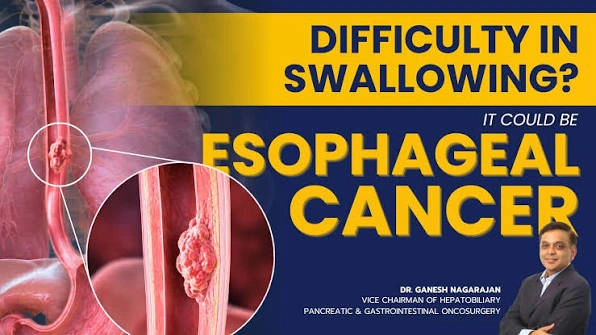
Esophageal cancer, also known as cancer of the food pipe, is a serious condition that requires timely diagnosis and specialised treatment. It can affect a person’s ability to swallow, eat, maintain weight, and carry out everyday activities. Because the disease is sometimes detected after symptoms have progressed, choosing an experienced surgical oncology team is an important part of the treatment journey.
Cancer Surgery Clinic provides comprehensive care for gastrointestinal cancers in Mumbai, with Dr. Ganesh Nagarajan specialising in complex gastrointestinal, hepatobiliary, pancreatic, and cancer surgeries. For patients searching for an Esophageal Cancer Surgeon Mumbai, Dr. Nagarajan offers access to advanced surgical techniques and multidisciplinary cancer care at Nanavati Max Institute of Cancer Care.
What Is Esophageal Cancer?
Esophageal cancer develops in the oesophagus, the muscular tube that carries food from the throat to the stomach. According to Cancer Surgery Clinic, it is the seventh most common cancer worldwide and has a significant prevalence in India.
The two principal types are squamous cell carcinoma and adenocarcinoma. Squamous cell carcinoma is more common in India and has been associated with risk factors such as tobacco and alcohol use. Adenocarcinoma is associated with gastroesophageal reflux disease (GERD) and Barrett’s oesophagus and is more frequently seen in Western populations.
Symptoms may initially appear mild, which can sometimes delay diagnosis. Common warning signs include:
- Difficulty or pain while swallowing
- Unexplained weight loss
- Persistent chest discomfort or pain
- A sensation that food is getting stuck
- Reduced appetite
- Persistent indigestion or reflux
- Vomiting or regurgitation in advanced cases
Persistent swallowing difficulty or unexplained weight loss should be evaluated by a qualified medical professional rather than ignored.
Why Early Diagnosis Matters
Esophageal cancer may be diagnosed at a relatively advanced stage because early symptoms can be mistaken for common digestive problems. Early assessment allows doctors to determine the location and extent of the tumour and develop an appropriate treatment plan.
Diagnosis may involve endoscopy and biopsy, along with imaging investigations that help determine whether the cancer has spread to surrounding tissues or distant organs. The treatment plan depends on the stage, tumour location, patient’s overall health, and whether the cancer can be surgically removed.
Treatment Options for Esophageal Cancer
Treatment for esophageal cancer is usually personalised. Depending on the stage and patient’s medical condition, treatment may involve surgery, chemotherapy, radiation therapy, or a combination of these approaches.
Esophagectomy
For suitable patients with potentially curable disease, surgery is a cornerstone of treatment. An oesophagectomy involves removing the cancerous section of the oesophagus along with surrounding lymph nodes.
After the diseased section is removed, the digestive tract needs to be reconstructed. The stomach is commonly used to create a new passage for food, a technique known as a gastric pull-up. In selected cases, a segment of the colon may be used for reconstruction.
Because oesophagectomy is a complex operation, it requires an experienced surgical team, appropriate anaesthesia support, intensive postoperative monitoring, and nutritional management.
Neoadjuvant Chemoradiation
For locally advanced esophageal cancers, chemoradiation before surgery may be recommended. This approach combines chemotherapy and radiation therapy with the objective of reducing tumour size and making the cancer more suitable for surgical removal.
Cancer Surgery Clinic notes that this approach can improve resectability and survival outcomes in appropriate patients.
Definitive Chemoradiation
Not every patient is suitable for surgery. When surgery is not appropriate because of tumour extent or significant medical conditions, definitive chemoradiation may be considered as the primary treatment.
The decision is made after evaluating the patient’s cancer stage, general health, tumour characteristics, and multidisciplinary treatment requirements.
Minimally Invasive Esophageal Cancer Surgery
Modern surgical oncology has increasingly incorporated minimally invasive approaches for selected patients. At Nanavati Max, Dr. Nagarajan and his team perform minimally invasive oesophagectomy (MIE) using the Da Vinci Xi robotic system and 4K laparoscopic systems.
Compared with traditional open surgery, minimally invasive approaches may help reduce postoperative pain, shorten hospitalisation, and support recovery in appropriately selected patients. However, the choice of technique should always be based on the patient’s cancer and clinical circumstances rather than technology alone.
Dr. Ganesh Nagarajan: Qualifications and Experience
Dr. Ganesh Nagarajan is a senior surgical oncologist specialising in gastrointestinal and hepatobiliary-pancreatic surgical oncology. He currently serves as Vice Chairman/Director of Hepatobiliary, Pancreatic and Gastrointestinal Oncology at Nanavati Max Institute of Cancer Care, Mumbai.
His academic and specialist training includes:
- M.B.B.S. from Bombay University – 2000
- M.S. in General Surgery from Bombay University – 2004
- Four-year residency in Surgical Oncology at Tata Memorial Hospital, Mumbai – 2004–2008
- Fellowship in Hepatobiliary Pancreatic Surgery and Liver Transplantation at Hospital Beaujon, Paris – 2008–2009
- Fellow of the College of Physicians and Surgeons, Mumbai
He is also registered with the Maharashtra Medical Council. His academic background includes distinctions during medical education and research published in international medical journals.
Extensive Experience in Complex Cancer Surgery
Dr. Nagarajan’s clinical experience includes complex gastrointestinal and hepatobiliary-pancreatic cancer procedures. His profile states that he has performed more than 2,000 complex GI cancer surgeries and has provided specialist consultation to over 15,000 patients with GI and HPB cancers across multiple regions.
His areas of expertise include gastrointestinal oncologic surgery, hepatobiliary and pancreatic surgery, robotic and laparoscopic GI and HPB oncology, vascular resections and reconstructions, HIPEC surgery, and other complex cancer procedures.
This extensive surgical background is particularly relevant when treating cancers involving anatomically complex areas such as the oesophagus, where surgical planning and multidisciplinary coordination are essential.
Why Choose Cancer Surgery Clinic for Esophageal Cancer Care?
Cancer Surgery Clinic in Mumbai provides state-of-the-art treatment options for gastrointestinal and hepatobiliary-pancreatic cancers. Patients benefit from a treatment environment connected with the advanced infrastructure of Nanavati Max Institute of Cancer Care.
The oncology operation suites at Nanavati Max include the Da Vinci Xi robotic surgical system, while radiation oncology infrastructure includes Halcyon linear accelerators and TrueBeam Linac with ExacTrac technology. The multidisciplinary team includes GI surgical oncologists, thoracic surgeons, medical oncologists, radiation oncologists, and nutritionists.
This multidisciplinary model allows different specialists to contribute to diagnosis, staging, treatment planning, surgery, systemic therapy, radiation, and nutritional care.
Dr. Ganesh Nagarajan as a Robotic Cancer Surgeon
Dr. Nagarajan is a certified robotic surgeon and a key member of Nanavati Max’s Centre for Robotic Surgery and Robotic Oncology Surgery Program. His training includes experience at Tata Memorial Hospital and Hospital Beaujon in Paris, institutions known for advanced cancer and minimally invasive surgical care.
As a Robotic Cancer Surgeon, his approach is not based on using robotic technology in every case. Instead, he recommends robotic surgery when it can provide a genuine clinical advantage without compromising cancer outcomes. When open surgery is considered more appropriate from an oncological perspective, that approach may be recommended instead.
This patient-centred approach places cancer control and individual clinical needs ahead of technology alone.
Recovery After Esophagectomy
Recovery following oesophagectomy requires careful monitoring and nutritional support. Cancer Surgery Clinic states that hospitalisation is typically around 8–12 days, although the actual duration can vary depending on the patient’s condition and recovery.
Patients generally transition gradually from liquids to soft foods and eventually to a regular diet over approximately 4–6 weeks. Nutritional support is an important part of the recovery process.
The treating team may also provide guidance regarding physical activity, wound care, diet, medications, and follow-up appointments.
Consult an Experienced Esophageal Cancer Specialist in Mumbai
Choosing the right treatment for esophageal cancer requires a detailed evaluation rather than a one-size-fits-all approach. The appropriate combination of surgery, chemotherapy, radiation, and supportive care depends on the cancer stage, tumour location, overall health, and treatment goals.
For patients seeking an Esophageal Cancer Surgeon Mumbai, Dr. Ganesh Nagarajan offers specialised surgical oncology expertise backed by advanced minimally invasive and robotic surgical capabilities and multidisciplinary cancer care at Nanavati Max.
If you have been diagnosed with esophageal cancer or require a second opinion regarding surgery, discussing your reports with an experienced onco surgeon in mumbai can help you understand the available treatment pathways.
📞 +91 730466 3828
📧 hello@cancersurgeryclinic.com
📍 Get directions to the clinic
Take the next step toward specialised esophageal cancer care. Contact Cancer Surgery Clinic to schedule a consultation with Dr. Ganesh Nagarajan, discuss your diagnosis and understand the most appropriate treatment options for your condition.
Frequently Asked Questions
1. Can esophageal cancer be cured?
Esophageal cancer can potentially be treated with curative intent, particularly when diagnosed at an earlier stage and when the tumour can be completely removed. For locally advanced disease, chemotherapy and radiation followed by surgery may provide meaningful treatment benefits. The prognosis varies according to stage and individual patient factors.
2. What is an esophagectomy?
An esophagectomy is a surgical procedure in which the affected portion of the oesophagus and nearby lymph nodes are removed. The digestive tract is then reconstructed, commonly using the stomach.
3. Is robotic surgery suitable for every esophageal cancer patient?
No. Robotic surgery is considered according to the patient’s tumour characteristics, anatomy, overall health, and expected oncological benefit. Dr. Nagarajan’s approach is to use robotic surgery when it offers a genuine clinical advantage without compromising cancer outcomes.
4. How long is recovery after esophageal cancer surgery?
Hospitalisation after oesophagectomy is typically around 8–12 days, while the transition from liquids to soft and regular foods can take approximately 4–6 weeks. Individual recovery varies depending on the extent of surgery and the patient’s overall condition.