
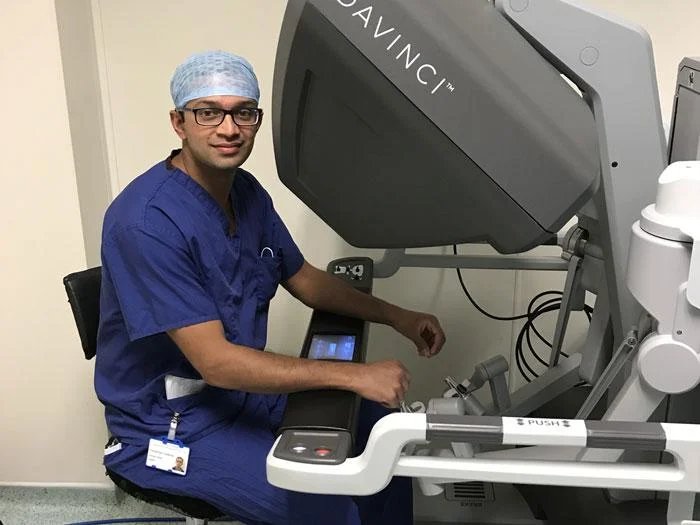
During my research into specialised gastrointestinal care in Mumbai, I found that patients with digestive, colorectal and abdominal conditions often need more than general surgical care. The choice of a specialist can depend on qualifications, experience, surgical expertise and access to appropriate hospital facilities. For patients searching for a Gastrointestinal surgeon in Mumbai, Dr. Chintamani Godbole is a consultant colorectal surgeon with a special interest in colorectal surgery, robotic and laparoscopic procedures, colorectal cancer and peritoneal surface oncology. He consults at Gadre Hospital in Dadar East and is also affiliated with several hospitals in Mumbai.
Gastrointestinal surgeon in Mumbai: Qualifications and Clinical Experience
Dr. Chintamani Godbole completed his MBBS and MS in General Surgery from Seth G. S. Medical College and KEM Hospital, Mumbai. He subsequently completed super-speciality training with a DNB in Gastrointestinal Surgery from Jaslok Hospital and Research Centre. His professional qualifications also include FRCS from Edinburgh, UK.
His specialist training continued in the United Kingdom, where he spent approximately five years developing expertise in colorectal surgery. His fellowships included minimally invasive colorectal surgery, laparoscopic and robotic colorectal surgery, colorectal cancer surgery and peritoneal cytoreductive surgery with HIPEC. He also trained at the Basingstoke Peritoneal Malignancy Institute, a specialist centre for colorectal and peritoneal cancer surgery.
Dr. Chintamani Godbole has also worked as a General and Colorectal Surgical Consultant at University Hospitals Coventry in the UK. His professional profile notes involvement in research projects in India and the UK and publications in peer-reviewed medical journals.
What Does a Gastrointestinal Surgeon Treat?
Gastrointestinal surgeons manage conditions affecting the digestive tract and associated abdominal organs. Depending on their subspecialisation, their practice may include diseases involving the oesophagus, stomach, small intestine, colon, rectum and anus.
Dr. Chintamani Godbole’s practice has a particular focus on colorectal and lower gastrointestinal conditions. His listed areas of expertise include colorectal cancer, inflammatory bowel disease, peritoneal cancers, pelvic floor disorders and conditions affecting the anus and rectum.
Conditions such as Crohn’s disease, ulcerative colitis, rectal prolapse, anal fistula and certain colorectal cancers may require surgical assessment when medication or other treatments are insufficient or when complications develop.
The appropriate treatment depends on the diagnosis, severity of disease, patient’s general health and previous treatment history.
Colorectal Surgery and Cancer Treatment
Colorectal surgery involves procedures involving the colon and rectum. It can be required for colorectal cancer, inflammatory bowel disease, advanced polyps and several structural or functional conditions.
For colorectal cancer, surgery may involve removing the tumour along with a section of surrounding bowel and associated lymph nodes. Depending on the tumour’s location and characteristics, the bowel may then be reconnected. In selected cases, a temporary or permanent stoma may be required.
Dr. Chintamani Godbole specialises in colorectal cancer surgery, including minimally invasive and robotic approaches. His published profile also highlights sphincter-preserving surgery for selected rectal cancers.
Treatment planning for cancer is individualised. Depending on the stage and characteristics of the disease, patients may require surgery, chemotherapy, radiation therapy, targeted therapy or immunotherapy as part of a multidisciplinary treatment plan.
Robotic and Laparoscopic GI Surgery
Minimally invasive surgery has become an important part of modern gastrointestinal and colorectal surgery. Laparoscopic procedures use small incisions through which a camera and specialised instruments are inserted.
Robotic surgery is another minimally invasive approach that allows the surgeon to control specialised instruments using a robotic surgical system. It can provide enhanced visualisation and precise instrument movement in selected procedures.
Dr. Chintamani Godbole has specialised fellowship training in minimally invasive colorectal surgery, including laparoscopic and robotic surgery. His published profile reports more than 200 minimally invasive colorectal surgeries.
Potential advantages of minimally invasive approaches may include smaller incisions, less tissue disruption, reduced post-operative discomfort and potentially shorter hospitalisation in appropriately selected patients. However, not every patient or condition is suitable for minimally invasive surgery.
The final surgical approach should be determined by the disease, anatomy, previous operations and the surgeon’s assessment.
Cytoreductive Surgery and HIPEC
Dr. Chintamani Godbole also has expertise in peritoneal surface oncology, including cytoreductive surgery and HIPEC.
Cytoreductive surgery aims to remove visible sites of cancer from the abdominal cavity in selected patients with peritoneal or gastrointestinal cancers. HIPEC, or Hyperthermic Intraperitoneal Chemotherapy, may be used as an adjunct to cytoreductive surgery in appropriately selected cases.
During HIPEC, heated chemotherapy is circulated within the abdominal cavity after cytoreductive surgery. The suitability of this treatment depends on the type and extent of cancer, the patient’s overall health and other tumour-related factors.
Because these are complex procedures, assessment at a specialised centre and multidisciplinary treatment planning are important.
Ulcerative Colitis and Crohn’s Disease
Ulcerative colitis and Crohn’s disease are chronic inflammatory bowel diseases that can cause symptoms such as abdominal pain, diarrhoea, rectal bleeding and changes in bowel habits.
Many patients can be managed medically, but surgery may become necessary in selected situations, including complications or disease that does not respond adequately to medical treatment.
Dr. Chintamani Godbole’s listed expertise includes surgery for both ulcerative colitis and Crohn’s disease. Surgical planning depends on the specific condition and the patient’s symptoms, disease extent, previous treatment and overall health.
Patients with persistent digestive symptoms should undergo appropriate evaluation rather than assuming that symptoms are caused by inflammatory bowel disease.
Anal and Pelvic Floor Conditions
Gastrointestinal and colorectal surgical practice also encompasses conditions involving the anus, rectum and pelvic floor.
Dr. Chintamani Godbole’s services include treatment for anal fissures, anal fistulas, piles or haemorrhoids, rectal prolapse and pelvic floor disorders. His listed pelvic floor conditions include faecal incontinence, rectal prolapse and obstructed defecation.
Treatment varies considerably depending on the underlying cause. Some conditions can be managed with medication, dietary changes or physiotherapy, while others may require a surgical procedure.
A proper examination is important because symptoms such as pain, bleeding or difficulty passing stool can have several possible causes.
Enhanced Recovery After GI Surgery
Recovery after gastrointestinal surgery has changed significantly with the development of Enhanced Recovery After Surgery, or ERAS, protocols.
Dr. Chintamani Godbole’s published information describes an approach involving early mobilisation and feeding following appropriate bowel surgery. The goal of ERAS is to support recovery and reduce complications associated with prolonged immobility and extended hospitalisation.
The actual recovery period depends on the procedure, patient’s health, surgical approach and presence of complications. Patients should follow their surgeon’s specific instructions regarding diet, activity, wound care and follow-up.
Clinic Environment and Hospital Access
For patients looking for a Colorectal Surgery in Mumbai specialist, access to appropriate hospital infrastructure is an important consideration, particularly when complex surgery may be required.
Dr. Chintamani Godbole consults at Gadre Hospital near Hindmata Cinema in Dadar East. His published practice information also lists affiliations with Jaslok Hospital, Sir H. N. Reliance Foundation Hospital, Breach Candy Hospital and Wockhardt Hospitals in Mumbai.
A specialist consultation typically involves reviewing symptoms, medical history, previous investigations and imaging. Depending on the problem, the doctor may recommend blood tests, imaging, endoscopy, colonoscopy or other investigations before deciding on treatment.
A consultation setting that allows patients to discuss their symptoms and understand the proposed treatment plan is particularly important for colorectal and gastrointestinal conditions, which can sometimes involve sensitive symptoms.
Why Consider a Colorectal Specialist?
A patient searching for a Colorectal Surgeon in Mumbai may benefit from consulting a surgeon whose training specifically focuses on diseases of the colon, rectum and anus.
Dr. Chintamani Godbole’s specialist training in colorectal surgery in the UK, along with his fellowships in minimally invasive colorectal surgery and peritoneal oncology, forms a significant part of his professional profile.
Patients considering surgery should ask about the diagnosis, available treatment options, expected benefits, possible complications, recovery period and follow-up requirements.
For complex cancer surgery, patients may also want to understand how surgeons, oncologists, radiologists, pathologists and other specialists will work together.
When Should You See a GI or Colorectal Surgeon?
Persistent abdominal pain, unexplained weight loss, blood in the stool, prolonged changes in bowel habits, recurrent anal symptoms or a diagnosed gastrointestinal tumour should be medically evaluated.
A referral to a gastrointestinal or colorectal surgeon does not necessarily mean surgery will be required. In many cases, the purpose of the consultation is to determine the diagnosis and discuss whether surgical treatment is appropriate.
Patients who have already undergone imaging or endoscopy should bring their reports and scans to the consultation. A complete medication list and details of previous surgeries can also help the surgeon assess the case.
Consult Dr. Chintamani Godbole at Gadre Hospital
If you have been diagnosed with a colorectal or gastrointestinal condition, or have symptoms requiring specialist surgical assessment, Dr. Chintamani Godbole can evaluate your condition and discuss appropriate treatment options.
📞+91 8108791470 | ☎️ +91 8451865944 (In case of emergency)
📧 drchintamanigodbole@gmail.com
📍Get Directions to the Clinic – Gadre Hospital, Mumbai
If you are looking for a Gastrointestinal surgeon in Mumbai, contact Dr. Chintamani Godbole to schedule a consultation at Gadre Hospital.
Frequently Asked Questions
1. What qualifications does Dr. Chintamani Godbole have?
Dr. Chintamani Godbole holds an MS in General Surgery, DNB in Surgical Gastroenterology and FRCS from Edinburgh. He also completed specialist fellowships in robotic colorectal surgery and colorectal and peritoneal oncology in the UK.
2. What conditions does Dr. Godbole treat?
His specialist practice includes colorectal cancer, peritoneal cancers, Crohn’s disease, ulcerative colitis, rectal prolapse, anal fissures, anal fistula, pelvic floor disorders and other colorectal conditions.
3. Does Dr. Godbole perform robotic and laparoscopic surgery?
Yes. He has specialist training in minimally invasive colorectal surgery, including laparoscopic and robotic techniques. His published profile reports more than 200 minimally invasive colorectal surgeries.
4. Where can I consult Dr. Chintamani Godbole?
He consults at Gadre Hospital near Hindmata Cinema in Dadar East and is also affiliated with several other hospitals in Mumbai. Patients can contact the clinic to confirm the appropriate consultation location and appointment availability.