
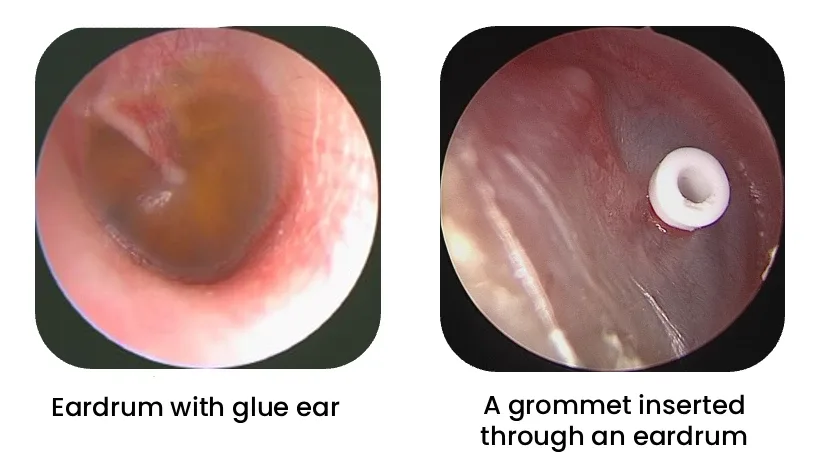
Glue ear is a common middle-ear condition, particularly in children, in which fluid collects behind the eardrum. It can cause muffled hearing, difficulty following conversations and, in younger children, delays in speech and language development. Although some cases improve without surgery, persistent fluid and hearing difficulties may require evaluation by an ENT specialist.
For families seeking treatment for glue ear in mumbai, Dr. Shama Kovale, Senior Consultant ENT Surgeon at Kokilaben Dhirubhai Ambani Hospital, provides evaluation and treatment for ear conditions, including middle-ear fluid and hearing concerns. Treatment may include monitoring, hearing assessment and, when appropriate, grommet insertion.
What Is Glue Ear?
Glue ear, medically known as otitis media with effusion (OME), occurs when fluid accumulates in the middle ear behind the eardrum without the signs of an active acute ear infection. The fluid can become thick and sticky, which is why the condition is commonly called glue ear.
The middle ear is connected to the back of the nose by a narrow passage called the Eustachian tube. This tube helps equalise air pressure and drain fluid from the middle ear. If it does not work properly, fluid may build up behind the eardrum.
Glue ear is particularly common in children because their Eustachian tubes are shorter and more horizontal than those in adults. It can also occur in adults, sometimes following a cold, allergy or upper respiratory infection.
Common Symptoms of Glue Ear
Glue ear does not always cause pain or obvious symptoms. Parents may first notice changes in a child’s hearing or behaviour. Common signs include:
- Muffled or reduced hearing.
- Frequently asking people to repeat themselves.
- Turning up the television or electronic device volume.
- Difficulty understanding instructions, especially in noisy surroundings.
- Delayed speech and language development in young children.
- Reduced attention or difficulty concentrating at school.
- A feeling of fullness or pressure in the ear.
- Occasional balance difficulties.
In adults, glue ear may cause a blocked-ear sensation, reduced hearing or discomfort due to pressure changes. Persistent symptoms should be assessed rather than assumed to be caused by wax or a temporary cold.
What Causes Glue Ear?
Glue ear commonly develops when the Eustachian tube does not ventilate the middle ear effectively. Several factors may contribute:
1. Common colds and respiratory infections: Inflammation following a cold can interfere with Eustachian tube function and prevent normal drainage.
2. Enlarged adenoids: Enlarged adenoids in children may obstruct the opening of the Eustachian tube and contribute to repeated fluid accumulation.
3. Allergies: Nasal allergies can cause inflammation and congestion that affect middle-ear ventilation.
4. Recurrent ear infections: Children who experience repeated middle-ear infections may be more likely to develop persistent fluid.
5. Eustachian tube dysfunction: Poor pressure regulation can cause fluid to remain behind the eardrum.
Identifying the contributing factor helps the ENT specialist decide whether observation, medical management or a procedure may be appropriate.
How Is Glue Ear Diagnosed?
An ENT specialist evaluates symptoms, medical history and the condition of the eardrum. The assessment may include:
- Otoscopy: Examination of the ear canal and eardrum to look for signs of fluid or reduced eardrum movement.
- Tympanometry: A test that measures eardrum movement and helps identify fluid or pressure changes in the middle ear.
- Hearing assessment: An age-appropriate hearing test helps determine whether fluid is affecting hearing.
- Nasal and adenoid assessment: When indicated, the doctor may evaluate nasal obstruction, allergies or enlarged adenoids.
A child’s hearing and speech development are important considerations. The decision to treat depends on how long the fluid has been present, the degree of hearing difficulty and its effect on daily life.
Treatment Options for Glue Ear
Not every case of glue ear requires surgery. Many cases improve naturally, particularly when fluid has developed after a respiratory infection. The treatment plan depends on the patient’s age, symptoms, hearing results and duration of the condition.
1. Observation and Follow-up
When hearing difficulties are mild and there are no significant developmental concerns, the ENT specialist may recommend monitoring. Follow-up appointments and hearing tests help determine whether the fluid is clearing or continuing to affect hearing.
2. Managing Contributing Conditions
If nasal allergies, recurrent infections or adenoid enlargement are contributing to the problem, the doctor may recommend appropriate treatment. Medicines are not routinely effective for clearing uncomplicated glue ear, so treatment should be based on the individual’s assessment rather than self-medication.
3. Hearing Support
For children with persistent hearing difficulties, temporary hearing support may be considered in selected cases. Classroom adjustments, such as seating the child closer to the teacher and reducing background noise, may also help.
4. Grommet Insertion
When fluid persists and causes significant hearing problems, an ENT specialist may recommend grommet insertion. This procedure involves placing a tiny ventilation tube through the eardrum to allow air to enter the middle ear and help fluid drain.
The decision to insert grommets depends on hearing levels, duration of fluid, developmental concerns and the patient’s overall clinical condition.
What Is Grommet Insertion?
Grommet insertion, also called ventilation tube insertion or tympanostomy, is a procedure used to improve ventilation of the middle ear. A small incision is made in the eardrum, fluid may be drained, and a tiny tube is placed in the opening.
The procedure is generally performed under general anaesthesia in children. The published treatment information for Dr. Kovale describes it as a short procedure, often taking around 15–30 minutes. Many patients can return home the same day, depending on their recovery and the hospital’s assessment.
Grommets usually remain in place for several months and commonly come out naturally as the eardrum heals. Follow-up is important to check hearing, tube position and eardrum health. A repeat procedure is sometimes considered if fluid returns and continues to cause problems.
Benefits of Grommet Insertion
For appropriately selected patients, grommet insertion may:
- Improve hearing by allowing the middle ear to ventilate.
- Reduce the impact of persistent fluid behind the eardrum.
- Help children hear speech and classroom instructions more clearly.
- Support communication and learning when hearing has been affected.
- Reduce episodes of middle-ear fluid accumulation in some patients.
The benefits vary from person to person. Grommets do not guarantee that ear infections will never recur, and they do not replace hearing and developmental follow-up.
Recovery and Aftercare
Most children recover quickly after grommet insertion, but the treating team will provide instructions specific to the procedure and the child’s needs. Follow-up appointments help confirm that the tube remains in place and the ear is healing appropriately.
Parents should contact the doctor if the child develops persistent ear discharge, significant pain, fever or worsening hearing. Advice about swimming and water precautions can vary according to the type of grommet and the child’s condition, so follow the surgeon’s instructions rather than applying a blanket restriction.
Meet Dr. Shama Kovale – ENT Specialist at Kokilaben Hospital
Dr. Shama Kovale is a Senior Consultant ENT Surgeon at Kokilaben Dhirubhai Ambani Hospital and Medical Research Institute, Mumbai. She has over 23 years of clinical and surgical experience in ear, nose and throat care, with specialist interests in voice, swallowing, airway conditions and advanced ENT procedures.
Her qualifications include MBBS, Diploma in Otorhinolaryngology (DLO) and MS in ENT from B.Y.L. Nair Hospital and Topiwala National Medical College, Mumbai. Her additional training includes a fellowship in voice and swallowing disorders at the University of California, Davis, USA; laryngology training at Bombay Hospital; and cochlear implant surgery training at P.D. Hinduja Hospital.
Dr. Kovale has worked at institutions including Hinduja Hospital, Bhagwati Hospital and A.J.B. ENT Hospital. She leads a dedicated Voice and Swallowing Centre at Kokilaben Hospital and has received recognition through the Top Docs Mumbai Awards for voice care. Her broader expertise includes ear microsurgery, cochlear implants, endoscopic sinus surgery, airway reconstruction and pediatric ENT care.
Patient-Focused ENT Care and Hospital Facilities
Kokilaben Dhirubhai Ambani Hospital provides a multidisciplinary hospital environment for ENT evaluation, diagnostic testing, surgical procedures and follow-up care. Patients can access specialist assessment and hospital-based facilities when investigations or procedures are required.
Dr. Kovale emphasizes explaining the diagnosis and available treatment options so that patients and parents can make informed decisions. For children with suspected glue ear, this includes considering hearing test results, speech and language development, school-related difficulties and the possibility of natural recovery before recommending a procedure.
If you are searching for ENT Specialists Near Me in Mumbai, an assessment by an experienced ENT surgeon can help establish whether observation or grommet insertion is appropriate. Early evaluation is especially important when a child has persistent hearing difficulties or speech and language concerns.
When Should You Consult an ENT Specialist?
Arrange an ENT assessment if a child frequently asks for repetition, has difficulty hearing in class, experiences recurrent ear problems or shows possible speech delays. Adults should also seek advice if they experience persistent blocked-ear sensations or reduced hearing.
A consultation for glue ear in mumbai can help identify the cause of fluid accumulation, assess its effect on hearing and determine the most appropriate treatment plan. Do not delay assessment when hearing changes persist.
Schedule Your Consultation Today
Consult Dr. Shama Kovale at Kokilaben Dhirubhai Ambani Hospital for timely evaluation and expert hearing care.
Give Us a Ring: +91-91528 50769
Email: drshamakovaleent@gmail.com
Frequently Asked Questions
1. Can glue ear go away on its own?
Yes. Many cases improve naturally as the Eustachian tube function recovers and the fluid drains. The ENT specialist may recommend monitoring and repeat hearing tests, especially if symptoms are mild.
2. When is grommet insertion recommended for glue ear?
Grommet insertion may be considered when fluid persists and causes hearing difficulties or affects a child’s speech, language, learning or daily activities. The decision is based on examination and hearing assessment.
3. Is grommet insertion a major surgery?
It is generally a short procedure, often performed as day care under general anaesthesia in children. The patient may go home the same day if recovery is satisfactory. The surgeon will explain the procedure, risks and aftercare.
4. How long do grommets stay in the ear?
Grommets commonly remain in place for around 6–12 months before falling out naturally, although the duration varies with the tube type and individual healing. Follow-up appointments are needed to monitor the ear and hearing.