
Your voice plays an important role in communication, work and everyday life. Persistent hoarseness, vocal fatigue, difficulty speaking or sudden changes in voice quality may indicate a problem affecting the vocal cords. While some conditions improve with voice rest and medical treatment, others may require a specialised procedure or surgery.
For patients considering vocal cord surgery in mumbai, Dr. Shama Kovale, Senior Consultant ENT Surgeon at Kokilaben Dhirubhai Ambani Hospital and Medical Research Institute, offers evaluation and surgical management of vocal cord conditions. Her expertise in voice and swallowing disorders includes microlaryngoscopy, videolaryngoscopy and laser-assisted procedures.
Understanding Vocal Cord Problems
The vocal cords, also called vocal folds, are two bands of tissue inside the larynx or voice box. They open during breathing and come together to vibrate when you speak or sing. Their movement and vibration produce the voice.
Several conditions can interfere with normal vocal cord function, including:
- Vocal cord nodules: Small growths commonly associated with repeated voice strain or overuse.
- Vocal cord polyps: Benign growths that can cause persistent hoarseness or a breathy voice.
- Vocal cord cysts: Fluid-filled or mucus-containing lesions that may affect vocal fold vibration.
- Vocal cord paralysis: Reduced or absent movement of one or both vocal folds, sometimes causing a weak voice or swallowing difficulties.
- Precancerous lesions: Abnormal tissue changes that require specialist assessment and sometimes biopsy.
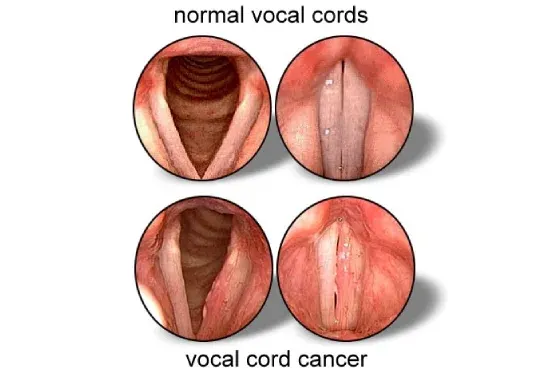
- Vocal cord cancer: A malignant growth that may require surgery, radiation therapy or a combination of treatments.
The appropriate treatment depends on the underlying diagnosis, the patient’s voice requirements and the severity of the condition.
Symptoms That May Require Vocal Cord Evaluation
Voice changes should not be ignored, particularly when they persist or worsen. Common symptoms include:
- Hoarseness or a rough, breathy voice.
- Voice fatigue after speaking for a short time.
- Difficulty producing high or low notes.
- Reduced vocal strength or sudden voice changes.
- Pain or discomfort while speaking.
- Frequent throat clearing or a persistent sensation of irritation.
- Difficulty swallowing or coughing while eating.
- Breathing difficulty or noisy breathing in certain conditions.
Persistent hoarseness lasting more than three weeks deserves an ENT assessment, especially in people who smoke or use tobacco. A neck lump, coughing up blood, progressive swallowing difficulty or breathing problems also require prompt medical attention. Severe breathing difficulty should be treated as an emergency.
What Causes Vocal Cord Conditions?
Vocal cord problems can develop for several reasons. Common contributing factors include:
Voice overuse: Frequent shouting, prolonged speaking, singing without adequate technique or excessive vocal strain can irritate the vocal folds.
Smoking and tobacco use: Tobacco exposure increases the risk of laryngeal cancer and other throat conditions.
Acid reflux: Stomach acid reaching the throat may irritate the larynx and contribute to voice symptoms.
Infections and inflammation: Laryngitis can cause temporary swelling and hoarseness.
Vocal cord injury: Trauma, surgery or prolonged intubation may affect vocal fold movement or tissue.
Abnormal tissue growth: Benign lesions, precancerous changes and cancerous growths can interfere with normal vibration.
Identifying the cause is essential because not every voice problem requires surgery.
How Are Vocal Cord Problems Diagnosed?
An ENT specialist begins with a detailed medical history and examination. The assessment may include:
- Flexible fibreoptic laryngoscopy: A thin camera is passed through the nose to examine the throat and vocal cords.
- Videolaryngoscopy: Provides a visual assessment of the larynx and vocal fold movement.
- Videostroboscopy: In selected cases, this examination helps assess vocal fold vibration and identify subtle abnormalities.
- Biopsy: If a suspicious lesion is identified, a tissue sample may be collected for laboratory examination.
- Imaging: CT or MRI scans may be recommended when a tumour or deeper structural problem needs further evaluation.
A confirmed diagnosis helps the doctor decide whether voice therapy, medical treatment, a surgical procedure or cancer-directed treatment is appropriate.
Types of Vocal Cord Surgery
Vocal cord surgery is not a single procedure. The technique depends on the condition being treated and the objective of treatment.
1. Microlaryngoscopy
Microlaryngoscopy is a procedure in which the surgeon examines the vocal cords using a specialised microscope and instruments. It may be used to remove selected vocal cord polyps, nodules, cysts or other lesions. It can also allow the surgeon to obtain a biopsy.
The procedure is generally performed under general anaesthesia through the mouth, without an external neck incision.
2. Laser-Assisted Vocal Cord Surgery
Laser-assisted surgery uses focused energy to remove or treat selected lesions with precision. It may be considered for certain benign vocal fold lesions and early-stage vocal cord cancers.
The goal is to treat the abnormal tissue while preserving as much healthy vocal fold tissue as possible. The suitability of laser surgery depends on the lesion’s size, location and diagnosis.
3. Coblation-Assisted Procedures
Coblation uses controlled radiofrequency energy in a saline environment to remove or treat selected tissue. It may be used for certain ENT procedures, including selected vocal cord interventions, depending on the clinical indication.
4. Surgery for Vocal Cord Cancer
Treatment for vocal cord cancer depends on the stage, location and extent of the tumour, as well as the patient’s general health and voice requirements. Selected early-stage lesions may be treated using transoral laser microsurgery. Radiation therapy may be an alternative in appropriate cases, while more advanced disease may require a combination of treatments.
A biopsy is important to establish the diagnosis. Surgery is not automatically required for every suspicious vocal cord lesion, and the treatment plan should be discussed after appropriate investigations.
Recovery and Aftercare Following Surgery
Recovery depends on the type of procedure and the condition being treated. After microlaryngoscopy, the surgeon may recommend a period of voice rest followed by a gradual return to speaking. Patients should avoid shouting, singing or prolonged conversations until cleared by their doctor.
Voice therapy may be recommended to improve vocal technique and reduce strain. Adequate hydration, avoiding tobacco and managing reflux can also support vocal health.
After surgery for cancer, additional treatment or longer-term follow-up may be necessary. Patients should attend scheduled appointments and report worsening pain, bleeding, breathing difficulty or other unexpected symptoms promptly.
Meet Dr. Shama Kovale – Voice and ENT Specialist
Dr. Shama Kovale is a Senior Consultant ENT Surgeon at Kokilaben Dhirubhai Ambani Hospital, Mumbai, with over 23 years of clinical and surgical experience. Her specialist interests include voice, swallowing and airway disorders, along with advanced ENT procedures.
She completed her MBBS, Diploma in Otorhinolaryngology (DLO) and MS in ENT from B.Y.L. Nair Hospital and Topiwala National Medical College, Mumbai. Her additional training includes specialised education in voice and swallowing disorders at the University of California, Davis, USA; laryngology training at Bombay Hospital; and cochlear implant surgery training at P.D. Hinduja Hospital.
Dr. Kovale has worked at institutions including Hinduja Hospital, Bhagwati Hospital and A.J.B. ENT Hospital. She leads a dedicated Voice and Swallowing Centre at Kokilaben Hospital and has received recognition through the Top Docs Mumbai Awards for voice care. Her expertise includes microlaryngoscopy, laser-assisted vocal cord procedures, airway reconstruction, cochlear implants and endoscopic ENT surgery.
Patient-Centred Voice Care at Kokilaben Hospital
Kokilaben Dhirubhai Ambani Hospital provides a multidisciplinary setting for ENT consultations, diagnostic evaluation, surgical care and follow-up. Its dedicated Voice and Swallowing Centre, led by Dr. Kovale, offers services such as diagnostic laryngoscopy, swallowing assessments, injection laryngoplasty and treatment for selected voice disorders.
Patients receive an individual assessment and an explanation of suitable treatment options. This is particularly important for professional voice users, teachers, singers and people whose work depends on clear communication. Treatment planning considers not only the medical condition but also the patient’s functional voice needs.
If you are searching for ENT Specialists Near Me in Mumbai, consult an experienced ENT surgeon for persistent hoarseness, vocal cord lesions or suspected throat conditions. Choosing the right specialist can help ensure accurate diagnosis and appropriate treatment.
Schedule Your Consultation Today
Consult Dr. Shama Kovale at Kokilaben Dhirubhai Ambani Hospital for timely evaluation and expert hearing care.
Give Us a Ring: +91-91528 50769
Email: drshamakovaleent@gmail.com
If you have persistent voice changes or difficulty speaking, arrange an ENT consultation to understand the cause and discuss appropriate treatment options.
Frequently Asked Questions
1. When is vocal cord surgery required?
Surgery may be recommended for selected vocal cord polyps, cysts, persistent lesions, suspicious growths or certain cases of vocal cord cancer. Some conditions can be managed with medication, voice therapy or observation instead.
2. Is laser surgery used for vocal cord cancer?
Yes. Transoral laser microsurgery may be suitable for selected early-stage vocal cord cancers. The choice between surgery, radiation therapy or combined treatment depends on the tumour’s stage, location and individual clinical factors.
3. How long does it take to recover after vocal cord surgery?
Recovery varies according to the procedure and the condition treated. Some patients need a period of voice rest followed by gradual voice use and therapy. The surgeon will provide an individual recovery plan.
4. Can vocal cord surgery affect my voice?
Any procedure involving the vocal cords can affect voice quality. The surgeon aims to treat the underlying condition while preserving vocal function, but the outcome depends on the lesion, extent of treatment and healing. Voice therapy may support recovery.