Unwanted facial and body hair can make regular grooming time-consuming. Shaving, waxing, threading and plucking provide temporary results, but hair often grows back and some methods may cause irritation, ingrown hairs or discomfort. For people seeking a longer-lasting way to manage unwanted hair, laser-based treatments can be an option worth exploring.
At Ambrosia Aesthetics, Dr. Niketa Sonavane offers personalised skin and hair treatments, including laser-based hair reduction for women and men. Treatment planning considers skin tone, hair characteristics, the area being treated and individual concerns. If you want to simplify your grooming routine or address recurring ingrown hairs, a consultation can help you understand whether this procedure is appropriate for you.
What Is Laser Hair Removal?
Laser hair removal is a cosmetic procedure that uses concentrated light energy to target pigment in hair follicles. The absorbed energy generates heat, which damages the follicles and reduces their ability to produce hair. Because hair grows in different cycles, multiple sessions are usually necessary to achieve meaningful, long-term hair reduction.
Results vary depending on hair colour, thickness, skin tone, hormonal factors and the technology used. The treatment generally works best on pigmented hair, while white, grey, very blonde or red hair may respond less effectively. Modern laser systems can treat a range of skin tones when the device and settings are selected appropriately.
It is important to understand that laser treatment usually provides long-term hair reduction rather than a guarantee of complete, permanent hair removal. Some regrowth may occur, and maintenance sessions can be helpful.
Which Areas Can Be Treated?
At Ambrosia Aesthetics, treatment may be considered for several facial and body areas, depending on suitability.
- Face: Upper lip, chin, cheeks and selected areas with unwanted facial hair.
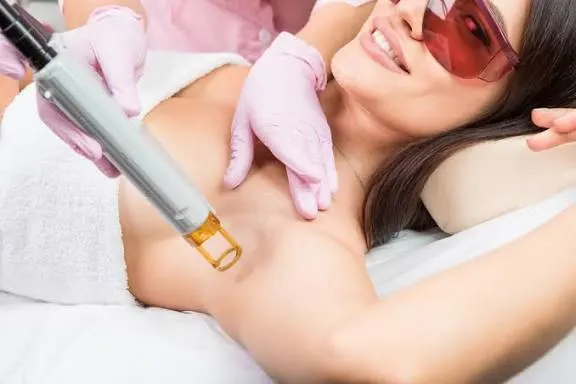
- Underarms: To reduce recurring hair growth and the need for frequent shaving.
- Arms and legs: For people who prefer less frequent grooming.
- Bikini line: To reduce unwanted hair around the bikini area.
- Back, chest and abdomen: Options for men and women who want to manage hair in these areas.
- Full body: A treatment plan covering multiple areas, subject to consultation and scheduling.
People with polycystic ovary syndrome (PCOS) or other hormonal conditions may experience persistent or increased facial and body hair. Laser treatment can help reduce existing hair, but it does not treat the underlying hormonal cause. A dermatologist may recommend additional assessment or treatment where appropriate.
Benefits of Laser Hair Reduction
1. Longer-lasting reduction in hair growth
With a suitable treatment plan, many people experience slower regrowth and hair that becomes finer over time. This may reduce the frequency of shaving, waxing or threading.
2. Targeted treatment
Laser energy targets pigment in the hair follicle, allowing specific areas to be treated. The device and settings must be chosen carefully to protect the surrounding skin.
3. Help with recurring ingrown hairs
Shaving and waxing can contribute to ingrown hairs in some individuals. Reducing hair growth may help lessen this problem, although results depend on the cause and individual skin response.
4. Treatment tailored to individual needs
A personalised plan considers the treatment area, hair density, skin tone, medical history and previous reactions to hair removal methods. This helps determine suitable settings and session intervals.
Why Choose Dr. Niketa Sonavane at Ambrosia Aesthetics?
Dr. Niketa Sonavane is a dermatologist, skin specialist and hair specialist with more than 17 years of experience, according to her official profile. She completed her MBBS with distinction and pursued a Diploma in Dermatology and Venereology (DDV) at Topiwala National Medical College and B.Y.L. Nair Hospital, Mumbai. Her profile also describes further training in cosmetic dermatology and international learning experiences with dermatologists and plastic surgeons.
Her clinical interests include cosmetic dermatology, skin rejuvenation, pigmentation, acne and scar management, and hair-related treatments. Her approach emphasises understanding individual concerns and developing treatment plans suited to each person’s skin and hair needs.
Patients researching a Top Dermatologist in Mumbai should consider qualifications, relevant experience, consultation quality, treatment suitability and safety protocols. Dr. Sonavane’s practice at Ambrosia Aesthetics offers consultations for patients who want to discuss their hair reduction goals and understand the options available.
The clinic promotes personalised treatment planning and a patient-focused experience. Before starting, patients should receive an explanation of the proposed procedure, expected results, possible side effects, aftercare and likely number of sessions.
What Happens During a Treatment Session?
Step 1: Consultation and skin assessment
The clinician reviews your skin type, hair growth, medical history, medications and previous cosmetic treatments. Tell the team if you have recently tanned, have a history of cold sores in the treatment area, or use medicines that may increase light sensitivity.
Step 2: Preparation
The treatment area is prepared according to the clinic’s instructions. You may be asked to shave the area before your appointment and avoid waxing or plucking for a period beforehand, because the follicle needs to remain present for the laser to target it. Protective eyewear is used during treatment.
Step 3: Laser application
The device delivers light pulses to the selected area. You may experience warmth or a brief snapping sensation. Session length varies: small areas may take only a few minutes, while larger areas take longer.
Step 4: Aftercare and follow-up
Temporary redness, mild swelling or sensitivity can occur. Follow the clinic’s advice on soothing the skin, sun protection and avoiding irritating products. Your clinician will recommend an appropriate interval before the next session, based on the treatment area and hair-growth cycle.
Is Laser Hair Removal Safe?
Laser treatment can be performed safely when the patient is properly assessed and the equipment and settings are appropriate. However, it is not risk-free. Potential side effects include redness, swelling, burns, blistering, pigment changes and, rarely, scarring or increased hair growth in the treated area.
Darker skin tones require particular care because inappropriate settings may increase the risk of burns or pigmentation changes. Choose a qualified, experienced provider, follow pre-treatment instructions and disclose any medicines or skin conditions. Avoid treating recently tanned or sunburned skin unless your clinician confirms it is appropriate.
Book a Consultation with Dr. Niketa Sonavane
If you are considering laser hair reduction, a personalised consultation is the best starting point. A Dermatologist in Mumbai can assess your skin and hair characteristics, explain realistic outcomes and help determine whether laser treatment is suitable for your needs.
📞 9930993600 | 9930992400
Book an appointment with Dr. Niketa Sonavane at Ambrosia Aesthetics to discuss a treatment plan suited to your skin and hair needs.
Frequently Asked Questions
1. How many sessions are usually needed?
Many people need approximately six to eight sessions, although the number varies by treatment area, hair type, skin characteristics and hormonal factors. Some people need additional sessions or periodic maintenance treatments.
2. Is laser hair removal suitable for all skin tones?
A range of skin tones can be treated, but the device and settings must be selected carefully. A consultation helps assess suitability and reduce the risk of burns or pigment changes. Very light or grey hair may respond poorly because it contains less pigment.
3. Does laser hair removal hurt?
Sensation varies by individual and treatment area. People may feel warmth, tingling or a brief snapping sensation. Cooling methods can improve comfort, but the procedure may still cause some discomfort.
4. What should I avoid after treatment?
Follow your clinician’s specific instructions. Generally, protect the treated skin from direct sun, use recommended sun protection and avoid harsh exfoliants, hot baths or other irritating activities until the skin settles. Contact your clinic if you develop significant pain, blistering or unusual skin changes.