
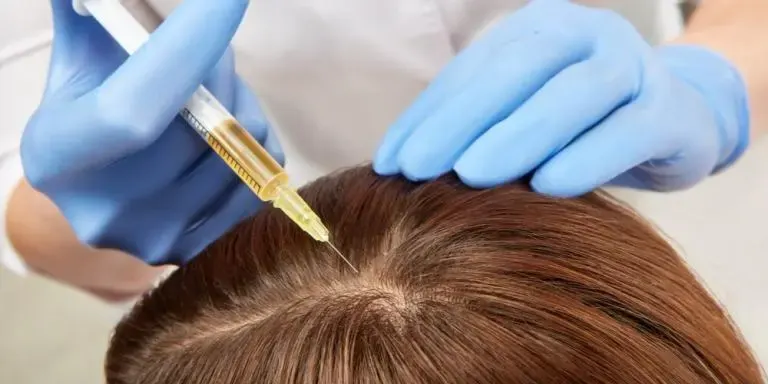
During my review of hair-restoration treatments in Mumbai, I found that hair loss can have several underlying causes, making a proper dermatological assessment an important first step. PRP hair treatment has gained attention as a minimally invasive approach that uses components from a patient’s own blood to support hair growth in selected cases of hair thinning and loss. Dr. Niketa Sonavane at Ambrosia Aesthetics is a dermatologist whose practice includes aesthetic dermatology, hair-related concerns and advanced skin and hair treatments.
Rather than treating every type of hair loss in the same way, a dermatologist can evaluate the pattern and possible cause of hair thinning before recommending an appropriate treatment plan.
PRP Hair Treatment: How It Works and Who May Benefit
PRP stands for platelet-rich plasma. The procedure involves drawing a small amount of the patient’s blood, processing it to concentrate platelets and injecting the prepared plasma into areas of the scalp affected by hair thinning.
Platelets contain growth factors that may support tissue repair and cellular activity. In hair treatment, PRP is used with the aim of creating a more favourable environment for existing hair follicles.
The treatment is not a hair transplant and does not create new hair follicles. Its potential role is generally to support weakened or miniaturised follicles in suitable patients.
Understanding Hair Loss Before Treatment
Hair loss can occur for many reasons. Common causes include:
- Androgenetic alopecia
- Hormonal changes
- Nutritional deficiencies
- Thyroid disorders
- Stress-related shedding
- Certain medications
- Scalp conditions
- Autoimmune disorders
- Post-pregnancy hair shedding
The pattern and duration of hair loss can provide useful clues about the underlying condition.
A dermatology consultation may involve examination of the scalp, discussion of medical history and, when appropriate, laboratory investigations. Identifying the cause is important because PRP may not be appropriate as a standalone treatment for every form of hair loss.
How Does the PRP Procedure Work?
The procedure usually begins with a small blood sample taken from the patient’s arm. The blood is processed using a centrifugation method to separate the platelet-rich component from other blood components.
The concentrated plasma is then injected into selected areas of the scalp using fine needles.
The exact preparation technique, platelet concentration, injection pattern and number of sessions can vary according to the treatment protocol and patient’s condition.
A topical or local anaesthetic may be used when appropriate to improve comfort during injections.
How Long Does a Session Take?
PRP sessions are generally performed as outpatient procedures. The duration depends on the amount of scalp being treated and the protocol used by the dermatologist.
Patients can usually return home after the session, although the treating doctor may provide specific instructions regarding scalp care and activities.
Who May Be a Candidate?
PRP may be considered for selected individuals experiencing certain forms of hair thinning, particularly when viable hair follicles are still present.
Potential candidates may include people with:
- Early-stage pattern hair loss
- Diffuse hair thinning
- Reduced hair density
- Certain forms of non-scarring hair loss
However, suitability cannot be determined from hair loss alone. A dermatologist should assess the scalp and identify the likely diagnosis before recommending treatment.
People with scarring alopecia or conditions that permanently destroy hair follicles may require different treatment approaches.
Number of Sessions and Results
PRP treatment is generally performed as a series of sessions rather than a single procedure. The number and frequency of treatments depend on the patient’s hair-loss pattern, treatment response and clinical assessment.
Hair growth is gradual, so results should not be expected immediately after an injection. Existing follicles need time to respond, and patients may require maintenance treatment depending on their individual circumstances.
Treatment outcomes vary. Factors such as age, cause of hair loss, severity, follicle health and adherence to the recommended treatment plan can influence results.
Benefits of PRP for Hair
One of the potential advantages of PRP is that it uses the patient’s own blood components.
Possible benefits include:
- Minimally invasive treatment
- No surgical hair transplant required
- Relatively short outpatient sessions
- Potential support for weakened hair follicles
- Can sometimes be combined with other hair-loss treatments
However, PRP should be considered as one component of a broader hair-loss management strategy when appropriate.
Possible Side Effects and Limitations
PRP is generally considered a minimally invasive procedure, but temporary effects can occur after scalp injections.
These may include:
- Mild pain or tenderness
- Temporary redness
- Swelling
- Bruising
- Scalp sensitivity
- Minor bleeding at injection points
More significant complications are uncommon but can occur with any injection-based procedure.
Patients should discuss their medical history, medications, bleeding disorders and scalp conditions with their dermatologist before treatment.
PRP Compared With Hair Transplantation
PRP and hair transplantation are different treatments.
PRP aims to support existing follicles. A hair transplant, on the other hand, involves surgically transferring hair follicles from one area of the scalp to another.
PRP may be considered when follicles are weakened but still present. Hair transplantation may be considered for selected patients with areas of permanent hair loss and sufficient donor hair.
In some cases, dermatologists or hair-restoration specialists may use PRP as an adjunct to other treatment approaches.
Dr. Niketa Sonavane: Qualifications and Clinical Experience
Dr. Niketa Sonavane is a dermatologist associated with Ambrosia Aesthetics in Mumbai. Her professional profile focuses on dermatology, aesthetic medicine, skin health and hair-related concerns.
Her practice includes assessment and management of common dermatological conditions as well as aesthetic treatments. Her approach to hair concerns involves understanding the underlying cause rather than treating hair loss as a single condition.
Patients looking for a Top Dermatologist in Mumbai can consider factors such as specialist qualifications, clinical experience, treatment expertise and the availability of diagnostic assessment when choosing a dermatologist.
Clinic Environment at Ambrosia Aesthetics
Ambrosia Aesthetics provides a dedicated clinical environment for dermatological and aesthetic consultations and treatments.
For patients seeking hair-loss care, the consultation can provide an opportunity to discuss the duration and pattern of hair loss, previous treatments, family history, lifestyle factors and expectations.
A comfortable consultation setting can be particularly useful because hair loss may affect confidence and quality of life. Clear communication about diagnosis, treatment choices, expected results and limitations is an important part of responsible dermatological care.
Dr. Niketa Sonavane’s Expertise in Dermatology
Dr. Niketa Sonavane’s dermatology practice covers skin, hair and aesthetic concerns. Her clinical work includes treatment approaches for hair loss as well as various dermatological and cosmetic conditions.
Patients searching for a Dermatologist in Mumbai should understand that hair loss can have multiple causes. A specialist assessment can help distinguish pattern hair loss from nutritional, hormonal, inflammatory or other conditions.
Depending on the diagnosis, the dermatologist may recommend topical medication, oral medication, PRP, lifestyle measures, nutritional correction or referral for another treatment when appropriate.
Precautions Before and After Treatment
Before PRP, patients should disclose all medications and supplements they take, particularly medicines that can affect bleeding.
After treatment, the dermatologist may recommend avoiding excessive scalp manipulation and following specific washing and activity instructions for a short period.
Patients should not apply unapproved products to the scalp immediately after treatment unless advised by their doctor.
It is also important to attend follow-up appointments so that the dermatologist can assess progress and determine whether additional sessions are appropriate.
When Should You See a Dermatologist for Hair Loss?
Hair shedding is normal to some extent, but persistent or sudden hair loss deserves professional evaluation.
Consider consulting a dermatologist if you notice:
- Rapidly increasing hair fall
- Visible scalp thinning
- Receding hairline
- Bald patches
- Persistent scalp itching or scaling
- Hair loss after illness or pregnancy
- Sudden unexplained shedding
Early assessment can help identify potentially reversible causes and prevent unnecessary delays in treatment.
Consult Dr. Niketa Sonavane
If you are experiencing persistent hair thinning or hair loss, you can consult Dr. Niketa Sonavane at Ambrosia Aesthetics for an assessment of your scalp and hair condition.
📞 9930993600 | 9930992400
📧 dr.niketa@live.com
Get Directions to the Clinic – Ambrosia Aesthetics, Mumbai
A personalised dermatology assessment can help determine whether PRP or another hair-loss treatment is appropriate for your condition.
Frequently Asked Questions
1. What is PRP hair treatment?
PRP hair treatment uses platelet-rich plasma prepared from a patient’s own blood and injects it into selected areas of the scalp. The growth factors in platelets may support existing hair follicles.
2. Is PRP suitable for everyone with hair loss?
No. Hair loss has multiple causes, and PRP may not be appropriate for every condition. A dermatologist should first determine the cause and assess the health of the hair follicles.
3. How many PRP sessions are needed?
The number of sessions varies according to the individual’s diagnosis, degree of hair loss and response to treatment. A dermatologist can recommend an appropriate schedule after evaluation.
4. Does PRP permanently cure hair loss?
PRP is not considered a permanent cure for all forms of hair loss. Results vary, and some patients may require maintenance treatments or a combination of therapies to manage ongoing hair loss.