
If you are searching for robotic ureteral reimplantation mumbai, understanding the cause of ureteral blockage or damage is an important first step toward protecting kidney function. The ureters are narrow muscular tubes that carry urine from the kidneys to the bladder. When a ureter becomes narrowed, injured, blocked, or affected by disease, urine drainage can be disrupted and may eventually affect kidney health. Dr. Vivek Venkat at Jewel Urology Center provides specialized care for complex ureteral conditions, including reconstructive procedures using advanced robotic and minimally invasive techniques.
What Is Ureteral Reimplantation?
Ureteral reimplantation is a reconstructive surgical procedure that reconnects a healthy section of the ureter to the bladder. The goal is to bypass the damaged or narrowed portion, restore normal urine flow, and protect the kidney from the effects of prolonged obstruction.
The procedure may be recommended when a damaged section of the ureter cannot be adequately repaired through less invasive measures. The exact surgical technique depends on the location and length of the affected ureteral segment and the patient’s individual anatomy.
Why Might Ureteral Reimplantation Be Required?
Several conditions can interfere with normal urine drainage through the ureter. These include:
- Ureteral strictures: Scar tissue can narrow the ureter and restrict urine flow.
- Ureteral injuries: The ureter can occasionally be injured during gynecological, colorectal, stone, or other pelvic procedures.
- Recurrent ureteral obstruction: Repeated blockages may require definitive reconstruction.
- Ureteral tumors: Removing a tumor can leave a ureteral defect that needs reconstruction.
- Congenital abnormalities: Some individuals are born with abnormalities affecting the ureter’s connection to the bladder.
- Vesicoureteral reflux: Abnormal backward movement of urine from the bladder toward the kidney may require surgical correction in selected cases.
Early evaluation is important because prolonged obstruction can cause hydronephrosis, recurrent infections, pain, and deterioration of kidney function.
Symptoms of Ureteral Problems
The symptoms depend on the location and severity of the ureteral problem. Some patients may have noticeable symptoms, while others are diagnosed through imaging performed for another condition.
Common symptoms can include:
- Flank or side pain
- Recurrent urinary tract infections
- Hydronephrosis or swelling of the kidney
- Blood in the urine
- Urinary urgency or frequency
- Discomfort while urinating
- Reduced kidney function
Persistent obstruction should not be ignored. A urologist can determine whether the ureter is narrowed or blocked and assess the effect on kidney drainage.
How Is Ureteral Obstruction Diagnosed?
Accurate diagnosis is essential before deciding whether reconstruction is necessary. Depending on the clinical situation, investigations may include ultrasound, CT urography, MRI, retrograde pyelography, kidney function tests, and ureteroscopy.
An ultrasound can identify hydronephrosis, while CT urography can provide detailed information about the kidneys, ureters, bladder, and location of obstruction. Retrograde pyelography may help define the length and position of a ureteral stricture.
The information obtained through these investigations allows the surgeon to select the most appropriate reconstructive technique.
Surgical Techniques for Ureteral Reimplantation
The surgical approach depends on how much of the ureter is affected and where the damaged section is located.
Standard Ureteral Reimplantation
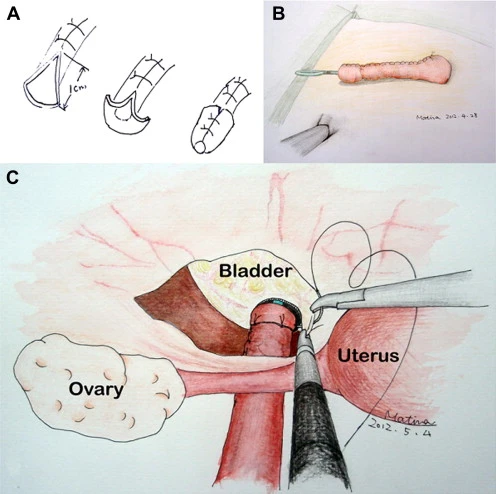
In a standard procedure, the healthy ureter is disconnected from its original insertion and reconnected directly to the bladder. The objective is to create a secure, tension-free connection that allows urine to drain normally.
Psoas Hitch
If additional ureteral length is required to reach the bladder, a psoas hitch may be performed. This involves mobilizing the bladder and attaching it closer to the ureter.
Boari Flap
For larger defects in the lower ureter, a Boari flap may be used. A flap created from bladder tissue helps bridge the gap between the healthy ureter and bladder.
Complex Ureteral Reconstruction
Some patients with extensive defects may require more advanced reconstructive procedures, including the use of an intestinal segment in selected circumstances. The choice depends on the location and extent of the ureteral defect.
Advantages of Robotic Ureteral Reimplantation
Robotic surgery has become an important advancement in reconstructive urology. The robotic platform provides high-definition three-dimensional visualization, enhanced precision, improved suturing capability, and better access to deep pelvic structures.
For appropriately selected patients, robotic surgery may offer several potential advantages compared with traditional open surgery, including:
- Smaller surgical incisions
- Reduced surgical trauma
- Less blood loss
- Reduced postoperative discomfort
- Shorter hospital stay
- Faster return to routine activities
The suitability of robotic surgery depends on the patient’s specific ureteral condition, anatomy, previous surgeries, and overall health.
What Happens After Ureteral Reimplantation?
Following ureteral reconstruction, a temporary ureteral stent is commonly placed to support healing. A urinary catheter may also be required for a period following surgery. Follow-up imaging may be performed to evaluate urine drainage and confirm successful healing.
The treating team may monitor:
- Urine drainage
- Kidney function
- Symptoms and pain
- Healing of the reconstructed ureter
- Long-term urinary drainage
Stent removal is generally performed after adequate healing, according to the surgeon’s postoperative plan.
Why Choose Dr. Vivek Venkat?
Dr. Vivek Venkat is a fellowship-trained Urologic Oncologist and Robotic Urologist with more than 15 years of experience in complex urological procedures, robotic surgery, laser treatments, and comprehensive kidney care. He completed advanced fellowship training in Uro-Oncology and Robotic Surgery at the University of Miami Miller School of Medicine, USA, and served as a Clinical Instructor in Urologic Oncology and Robotic Surgery at the University of Miami Hospital.
He holds an M.Ch. in Urology from Christian Medical College, Vellore, an M.S. in General Surgery from K.E.M. Hospital, Mumbai, and is ECFMG certified in the USA. He has also served as an Assistant Professor of Urology and Renal Transplantation at CMC Vellore.
His expertise includes robotic surgery, minimally invasive urology, kidney and prostate cancer surgery, bladder cancer treatment, complex urological procedures, ureteral reconstruction, ureteral injury repair, and ureteral stricture treatment. The ureteral reimplantation treatment page specifically highlights his advanced fellowship training in robotic urology and reconstructive surgery and expertise in complex ureteral reconstruction.
Patients seeking a Best Uro Surgeon in Mumbai can benefit from his specialized training and patient-focused approach to complex urological conditions.
Patient-Centered Care at Jewel Urology Center
Complex ureteral problems require careful diagnosis, detailed surgical planning, and appropriate postoperative monitoring. Dr. Venkat’s practice emphasizes evidence-based treatment, precision, safety, personalized attention, and comprehensive follow-up care. His clinic profile also highlights a patient-first approach and expertise in advanced robotic and minimally invasive procedures.
For patients seeking advanced urological care, the combination of specialized robotic training and reconstructive expertise can be particularly valuable when a ureteral injury, stricture, or obstruction requires surgical correction.
Protecting Kidney Function Through Timely Treatment
Ureteral obstruction can have consequences beyond urinary discomfort. If urine cannot drain normally for an extended period, pressure can build within the kidney and potentially impair renal function. Reconstructive surgery aims to restore normal urine drainage and prevent ongoing damage.
Modern robotic ureteral reimplantation mumbai procedures can provide a minimally invasive approach to complex ureteral reconstruction in appropriately selected patients. Early diagnosis and individualized treatment planning are important for achieving durable results and maintaining long-term kidney health.
Book a Consultation with Dr. Vivek Venkat
If you have been diagnosed with a ureteral stricture, ureteral injury, hydronephrosis, recurrent obstruction, or another condition affecting urinary drainage, a specialist consultation can help determine the most appropriate treatment.
📧appointments@drvivekvenkat.com
📍Jewel Urology Center
Take the next step toward specialized ureteral and reconstructive urological care. To schedule a consultation with Dr. Vivek Venkat at Jewel Urology Center and discuss your diagnosis, treatment options, and suitability for minimally invasive or robotic reconstruction.
Frequently Asked Questions
1. What is ureteral reimplantation?
Ureteral reimplantation is a reconstructive procedure in which a healthy portion of the ureter is reconnected to the bladder to bypass a damaged, narrowed, or obstructed section and restore normal urine drainage.
2. Can robotic surgery be used for ureteral reimplantation?
Yes. Robotic techniques can be used for many reconstructive ureteral procedures. Robotic surgery provides three-dimensional visualization, enhanced precision, and improved suturing capability, which can be useful for complex reconstruction.
3. Will I need a stent after ureteral reimplantation?
A temporary ureteral stent is commonly placed after ureteral reimplantation to support the reconstructed area while it heals. The timing of stent removal depends on the individual surgical plan and healing process.
4. How long does recovery take after ureteral reimplantation?
Recovery varies according to the complexity of reconstruction and the patient’s overall health. Many patients can gradually return to routine activities over the following weeks, with follow-up focused on urine drainage, kidney function, and successful healing.