
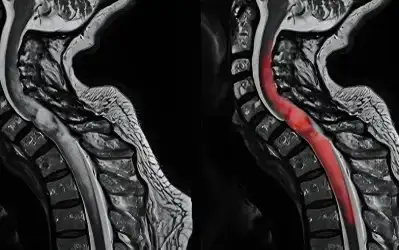
A spinal cord tumor is a serious medical condition that requires timely diagnosis and expert treatment. Whether benign or malignant, these tumors can compress the spinal cord and surrounding nerves, leading to pain, weakness, numbness, and even paralysis if left untreated. Fortunately, advances in neurosurgery, high-resolution imaging, and microsurgical techniques have significantly improved treatment outcomes and patient recovery.
If you are looking for Spinal Cord Tumor Treatment in Mumbai, Dr. Manish Baldia offers comprehensive evaluation and advanced neurosurgical management tailored to each patient’s condition. Practicing at Lalbaug Diagnostics, Dr. Baldia combines extensive experience with state-of-the-art surgical techniques to provide safe, evidence-based care for patients with spinal tumors.
What Is a Spinal Cord Tumor?
A spinal cord tumor is an abnormal growth that develops within or around the spinal cord. Tumors may originate from the spinal cord itself, its protective coverings, or spread from cancers elsewhere in the body.
Spinal cord tumors are broadly classified as:
- Intramedullary tumors – Develop within the spinal cord.
- Intradural extramedullary tumors – Grow inside the spinal covering but outside the spinal cord.
- Extradural tumors – Develop outside the spinal covering, often involving the vertebrae.
Some tumors are non-cancerous (benign), while others are malignant and require prompt medical attention.
Common Symptoms of Spinal Cord Tumors
Symptoms vary depending on the tumor’s size and location but commonly include:
- Persistent back or neck pain
- Pain radiating to the arms or legs
- Numbness or tingling
- Muscle weakness
- Difficulty walking
- Loss of coordination
- Changes in bowel or bladder control
- Progressive paralysis in severe cases
Since these symptoms may worsen over time, early evaluation by a neurosurgeon is essential.
Causes and Risk Factors
Although the exact cause of most spinal cord tumors remains unknown, certain factors may increase the risk:
- Genetic disorders such as Neurofibromatosis
- Previous radiation exposure
- Metastatic cancer
- Family history of nervous system tumors
- Rare inherited syndromes
Prompt diagnosis allows treatment before irreversible neurological damage occurs.
Diagnosis of Spinal Cord Tumors
Accurate diagnosis is crucial for planning successful treatment.
Dr. Manish Baldia performs a comprehensive evaluation that may include:
- Detailed neurological examination
- MRI of the spine
- CT scan when indicated
- Contrast-enhanced imaging
- Biopsy in selected cases
- Histopathological examination after surgery
Advanced imaging helps determine the exact location, size, and characteristics of the tumor, allowing individualized treatment planning.
Treatment Options
Treatment depends on the type, size, location, and nature of the tumor, as well as the patient’s neurological status.
Microsurgical Tumor Removal
Modern microsurgical techniques enable precise removal of spinal tumors while preserving healthy spinal cord tissue whenever possible.
Minimally Invasive Spine Surgery
Selected patients may benefit from minimally invasive approaches that reduce tissue damage, postoperative pain, and recovery time.
Radiation Therapy
Certain tumors may require focused radiation therapy following surgery or as primary treatment when surgery is not appropriate.
Chemotherapy
Chemotherapy may be recommended for specific malignant tumors depending on their pathology.
Rehabilitation
Postoperative rehabilitation involving physiotherapy and neurological rehabilitation plays a vital role in restoring mobility, strength, and independence.
Benefits of Early Treatment
Early diagnosis and treatment provide several important advantages:
- Prevention of permanent nerve damage
- Better preservation of neurological function
- Improved surgical outcomes
- Relief from pain
- Reduced risk of paralysis
- Faster rehabilitation
- Better long-term quality of life
Delaying treatment may result in irreversible neurological deficits that become difficult to recover.
Why Choose Dr. Manish Baldia?
Patients seeking advanced neurosurgical care trust Dr. Manish Baldia for his expertise in complex brain and spine surgeries.
Dr. Manish Baldia is a highly qualified neurosurgeon specializing in brain, spine, and functional neurosurgery. He has extensive clinical and surgical experience in managing complex neurological disorders using advanced microsurgical and minimally invasive techniques.
His qualifications and expertise include:
- Advanced training in Neurosurgery
- Extensive experience in brain and spine tumor surgery
- Expertise in minimally invasive spine surgery
- Functional neurosurgery
- Skull base surgery
- Brain tumor surgery
- Spine trauma management
- Cerebrovascular surgery
- Neuro-oncology
- Advanced neuronavigation-guided procedures
In addition to treating spinal tumors, Dr. Baldia is experienced in movement disorder surgery, including Deep Brain Stimulation Surgery in Mumbai, offering comprehensive care for patients with complex neurological conditions.
His patient-centered approach emphasizes accurate diagnosis, individualized treatment planning, and compassionate long-term follow-up to achieve the best possible outcomes.
Advanced Care at Lalbaug Diagnostics
Patients receive consultation and evaluation at Lalbaug Diagnostics, a modern healthcare facility equipped with advanced diagnostic infrastructure.
The clinic offers:
- Modern imaging facilities
- Comprehensive neurological evaluation
- Personalized treatment planning
- Comfortable consultation environment
- Coordinated multidisciplinary care
- Efficient appointment scheduling
- Patient-focused support throughout treatment
The combination of advanced diagnostics and expert neurosurgical care ensures timely diagnosis and effective management.
Comprehensive Neurosurgical Expertise
Every spinal tumor is unique, requiring individualized treatment based on tumor location, neurological function, age, and overall health.
Whether surgery, observation, or multimodal therapy is required, Dr. Baldia develops customized treatment plans that prioritize neurological preservation and long-term recovery.
Patients searching for the best doctor for parkinsons in mumbai often recognize Dr. Baldia’s broader expertise in functional neurosurgery and movement disorders, reflecting his comprehensive experience in treating complex neurological diseases.
If you are experiencing persistent back pain, limb weakness, numbness, or progressive neurological symptoms, early specialist consultation is strongly recommended. For patients seeking Spinal Cord Tumor Treatment in Mumbai, timely diagnosis combined with advanced neurosurgical care can significantly improve recovery and help preserve neurological function.
Schedule Your Consultation Today
If you or a loved one is experiencing symptoms suggestive of a spinal cord tumor, don’t delay expert evaluation. Early diagnosis and timely treatment can make a significant difference in preserving neurological function and improving recovery.
Consult Dr. Manish Baldia for comprehensive neurosurgical evaluation and advanced treatment tailored to your condition.
🕘 Clinic Hours: 9:00 AM – 9:00 PM
📞 Phone: 096767 67507
📍 Get Directions to the Clinic and schedule your consultation with Dr. Manish Baldia for expert diagnosis and personalized neurosurgical care.
Frequently Asked Questions (FAQs)
1. Are all spinal cord tumors cancerous?
No. Many spinal cord tumors are benign, but even non-cancerous tumors can compress the spinal cord and require treatment to prevent neurological damage.
2. Is surgery always required for spinal cord tumors?
Not always. Treatment depends on the tumor’s size, location, growth pattern, and symptoms. Some small, slow-growing tumors may be monitored, while others require surgery or additional therapies.
3. How long is recovery after spinal cord tumor surgery?
Recovery varies depending on the complexity of surgery and neurological status. Many patients benefit from structured rehabilitation to improve mobility and strength after treatment.
4. What symptoms require immediate medical attention?
Persistent back pain accompanied by weakness, numbness, difficulty walking, loss of bladder or bowel control, or rapidly worsening neurological symptoms should be evaluated urgently by a neurosurgeon.